
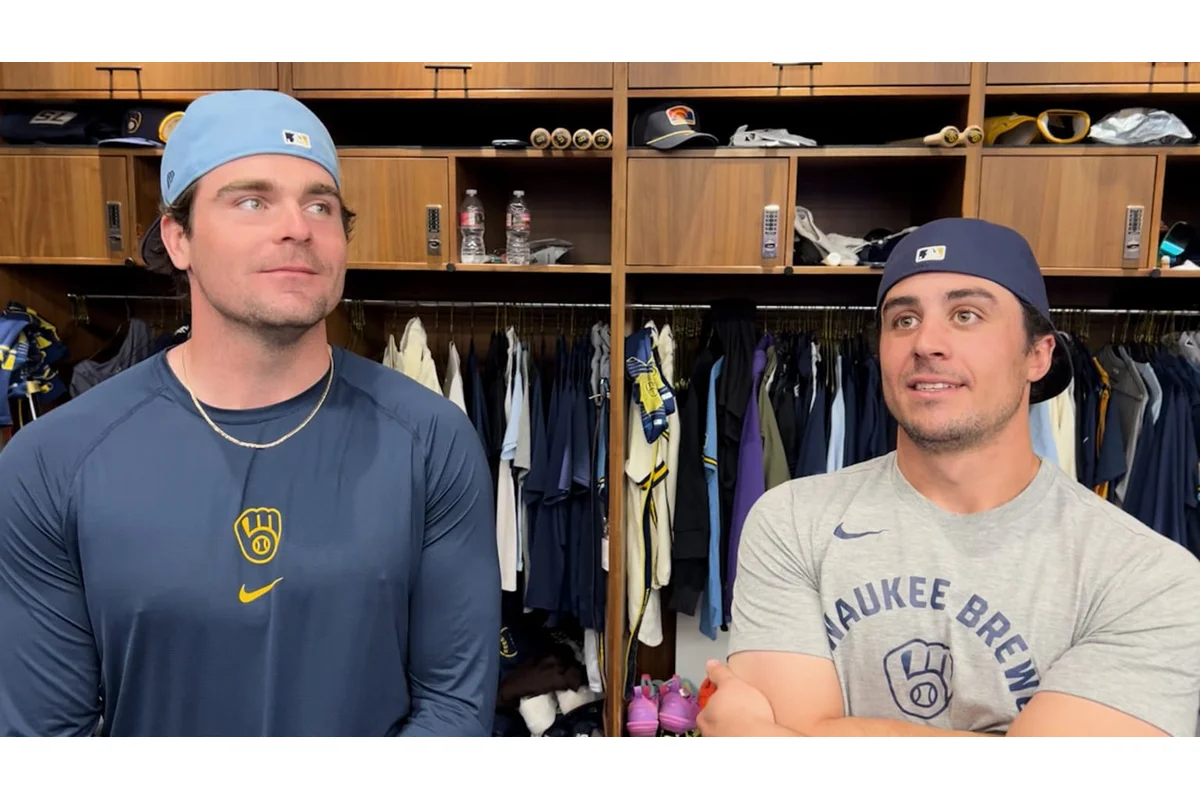
Major League Baseball will introduce its Automated Ball-Strike (ABS) system starting with the 2026 season, aiming to modernize how strikes and balls are called. However, Milwaukee Brewers outfielder Sal Frelick has pointed out a significant flaw in the system’s design that risks undermining its accuracy.
Frelick, who batted .288 in the previous season and earned a Gold Glove, emphasized that the system’s calibration overlooks batting stances that involve crouching, creating a mismatch between the actual strike zone and what the technology recognizes.
The Impact of Batting Stance Variations on Strike Zone Measurement
Major League Baseball currently defines each hitter’s strike zone as a percentage of their standing height, as explained by Baseball America’s Editor-in-Chief JJ Cooper. This measurement does not adjust for players who crouch significantly during their batting, which lowers their vertical position, particularly around the letters on their jerseys.
In theory, such lowered stances should shrink the strike zone, but MLB’s ABS system uses a fixed zone based on a hitter’s upright frame. Frelick described this issue:
“We’re under the impression right now that wherever you get measured at doesn’t come into play if you then crouch in your batting stance.” Sal Frelick, Milwaukee Brewers outfielder
He further explained the concern among players:
“So, if you’re a guy who gets really low in your batting stance, they still take the frame from when you were just standing upright. Again, this is just what I’m hearing. We’re talking about it. So, if guys are like really crouched down in their batting stance, they’re like, ‘I don’t want to get measured standing straight up because my zone is gonna be higher.’ So, yeah, guys are talking about it.” Sal Frelick, Milwaukee Brewers outfielder
Previous Attempts and Potential Consequences for the 2026 Season
MLB did experiment with measuring players’ strike zones based on their actual batting stances in the Florida State League, but eventually decided to revert to a height-based calculation. This decision means that the ABS system may call balls on pitches that appear to be strikes for players with low stances, causing confusion on the field.
Atlanta Braves pitcher Chris Sale has already voiced skepticism about the new system, refusing to use it. Frelick’s revelation underscores a broader concern that the strike zones defined by the ABS system might not reflect real hitting conditions, especially for players adopting crouched positions.
This flaw could lead to more player and fan frustration as pitch calls may be frequently challenged and overturned, particularly when the automated zone does not align with the batter’s actual stance.
What This Means for Players and the Future of Pitch Calling Technology
While the introduction of the ABS system marks a significant step toward consistency in calling balls and strikes, the unaddressed issue of differing batting stances highlights an important technical gap. Adjustments will likely be necessary if the league wants to ensure fairness and accuracy, especially for hitters who naturally crouch low to the plate.
The system’s current limitations emphasize the challenges in balancing technology with the dynamic nature of player styles and game conditions. As Major League Baseball moves forward, further scrutiny and feedback from players like Sal Frelick may drive improvements before or during the 2026 season, potentially reshaping how the strike zone is defined for the sport’s new era.
Sal Frelick says several players are under the impression that their ABS zone measurements aren't being applied to crouched batting stances.
"If you're a guy who likes to get really low in his stance, they still take the frame from when you were just standing upright." pic.twitter.com/6OTrSY5DoU
— Foul Territory (@FoulTerritoryTV) February 23, 2026
This is correct. It's a percentage of your height.
MLB experimented with the stance measurement in the FSL years ago and quickly moved to a the height-percentage approach. https://t.co/ASYwguVmbz
— JJ Cooper (@jjcoop36) February 23, 2026
