
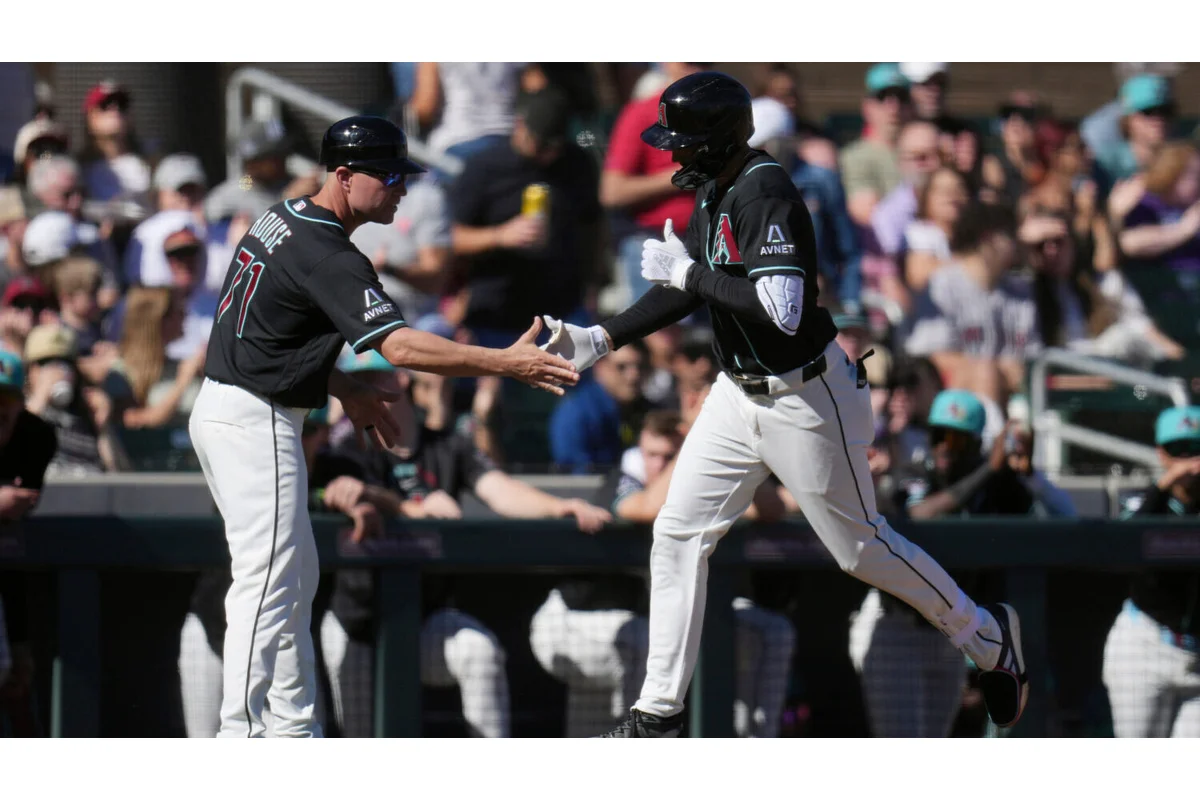
Jordan Lawlar, once a top shortstop prospect with the Arizona Diamondbacks, has made an unexpected move to center field as of 2026. This change reflects the team’s adjustments to roster blockages and the evolving needs in the outfield. Lawlar’s transition to center field, showcased during a recent game where he went 1-for-2 with a walk and a home run, has generated significant attention both for its potential upside and its boldness.
Originally drafted out of high school in 2021 with a top-10 pick, Lawlar was regarded as a future star thanks to his plus power, elite defense at shortstop, and outstanding speed. The 2024-2025 projections placed him at a 60 Future Value grade, signaling his high ceiling. Despite these expectations, injuries and the rise of Geraldo Perdomo have limited Lawlar’s playing time at shortstop, forcing the Diamondbacks to consider alternative positions to maximize his talent.
The Obstacles Behind Lawlar’s Infield Prospects
Lawlar’s pathway to a starting role in Arizona’s infield has been complicated by several factors. The emergence of Perdomo as a reliable shortstop, combined with the presence of Ketel Marte and top prospect Tommy Troy, creates a crowded infield situation unlikely to clear anytime soon. Even attempts to trade Marte during the offseason did not yield favorable results, reinforcing the Diamondbacks’ need to find a creative solution for Lawlar’s long-term development.
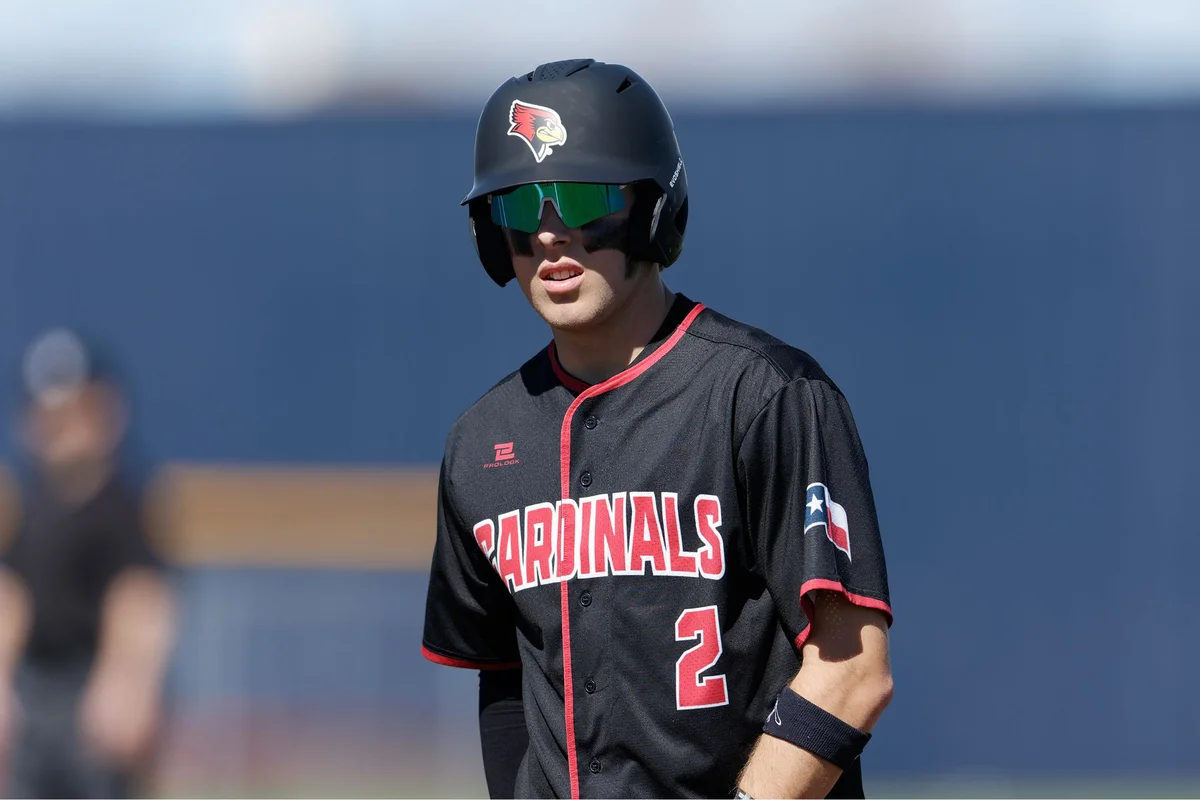
Moving Lawlar to second base seemed unlikely, as that position is currently even more congested than shortstop in Arizona’s roster hierarchy. Meanwhile, the potential shifting of Lawlar to third base was once viable, especially with Eugenio Suárez no longer with the team. However, the acquisition of Nolan Arenado, despite his injury and performance concerns, complicates any straightforward assignment for Lawlar at third base.
First Game Observations: Lawlar’s Debut in Center Field
Lawlar’s debut in center field came on a Saturday, marking a significant milestone in his career. In his first game, he managed a home run, a walk, and a solid defensive play on a fly ball from Ezequiel Tovar. This performance demonstrated his athleticism and adaptability, suggesting that the Diamondbacks’ experiment could have merit.
Evaluating Lawlar’s Suitability for Center Field
Lawlar’s physical tools strongly support the feasibility of his move to center field. With elite speed measured at 30 feet per second on sprints, his range is well within the expectations for center fielders. Historically, the transition from shortstop to center field is well-trodden; players like Jackson Merrill and even legends like Mickey Mantle successfully made this switch.
Moreover, concerns about Lawlar’s infield throwing ability, particularly awkward throws on the run, could be alleviated by the different arm angles and throwing mechanics required in the outfield. Eric Longenhagen’s observations highlight that outfield throws often benefit from more stable foot placement and time to set up, potentially allowing Lawlar’s arm to improve in this role. This phenomenon mirrors the career of Mookie Betts, whose arm played better in right field than at shortstop.
Despite these positives, Lawlar must acclimate to the distinct defensive responsibilities in center field, including reading fly balls, positioning, and footwork—skills that differ markedly from infield play. His experience outside the infield is limited, with just three games in the Dominican Winter League before this recent appearance. Patience is necessary as he develops these competencies.
The Challenge of Maintaining Offensive Production Amid Defensive Changes
The most critical question for Lawlar’s future may be how effectively he can translate his offensive promise to major league pitching. Injuries have hampered his availability over the past five years, including issues with his shoulder, ribs, scapula, thumb, and hamstring. While some were acute injuries, a lengthy injury history raises concerns about possible chronic setbacks. Transitioning to the outfield might reduce the physical strain compared to the infield, potentially enhancing his durability.
In limited 2025 major league action, Lawlar struggled at the plate, hitting .182/.257/.288 with a 35.1% strikeout rate in 28 games. Though a small sample size, this was a challenging introduction to major league pitching. His minor league track record, paired with his skill set marked by solid power and a respectable walk rate, suggests his hitting ability could develop further. However, Lawlar must prove he can consistently handle big-league pitching to fully realize his offensive potential.
Assessing the Long-Term Fit: Center Field vs. Other Positions
From a strategic standpoint, placing Lawlar in center field makes sense within Arizona’s roster dynamics. While shortstop would have been the most advantageous spot offensively, that position remains securely in Perdomo’s hands. The offensive expectations at third base and center field are relatively comparable, with league-wide offensive output slightly lower in center field during recent seasons. This shift may also reduce injury risk and enhance Lawlar’s throwing performance, increasing his overall value to the team.
Arizona’s infield depth, with Marte, Perdomo, and Troy controlled through 2030, leaves few openings. On the other hand, the center field position holds a clear vacancy. Despite the strong right field presence, anchored by Corbin Carroll, and the presence of promising but unproven players like Ryan Waldschmidt and Lourdes Gurriel Jr., the Diamondbacks need consistent contributions from center field. Lawlar has the potential to fill this gap as a two-way contributor, an asset that teams rarely find easily.
Alternative Options and the Path Forward
Some argue the team might consider placing Alek Thomas in center field, with Lawlar in left, especially while Lawlar adapts to the outfield. Thomas’s glove is his strongest attribute, though he lacks other standout tools, limiting his offensive upside. In contrast, the Diamondbacks appear willing to gamble on Lawlar’s potential upside despite the uncertainty, recognizing that short-term caution will not suffice in the competitive National League West.
If Lawlar succeeds in center field and improves offensively, he could become a star comparable to players like Jackson Merrill of the Padres, or even surpass them. To reach that stage, Lawlar needs ample defensive reps in center field starting immediately. This approach will either accelerate his learning curve or quickly signal the need for alternative plans, which could span multiple contingencies given the team’s investment in him.
Looking Ahead: Patience and Potential
Jordan Lawlar’s career remains at a critical juncture after years on the brink of a full major league role. His shift to center field offers a fresh start, balancing challenges with opportunity. The success of this move could not only unlock his potential but also address a pressing need for the Diamondbacks. The baseball world will watch closely as Lawlar continues to adapt, develop, and hopefully establish himself as a key contributor in Arizona’s lineup.
