
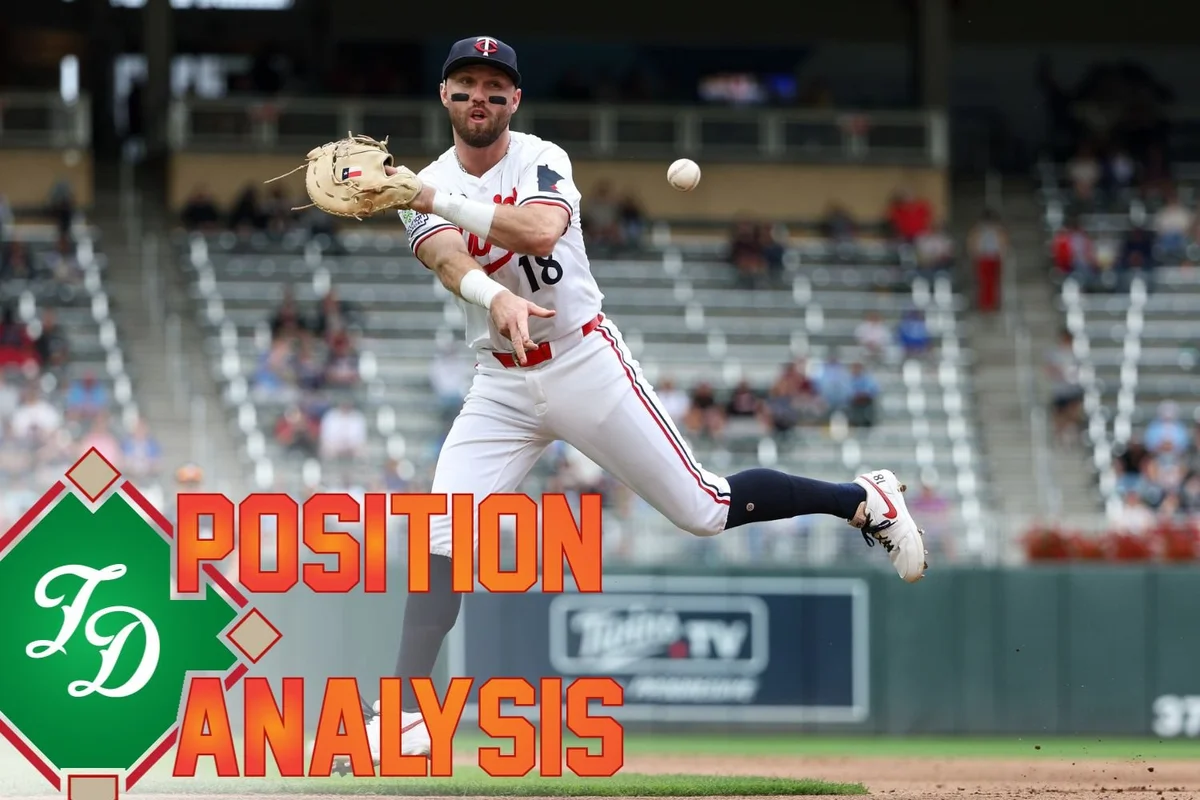
The Minnesota Twins enter the 2024 season with yet another uncertain situation at first base, a position that has long lacked homegrown talent. Over recent years, the team’s regular first basemen have consistently come from outside the organization, including free agent additions such as Ty France in 2022, Donovan Solano in 2023, and Carlos Santana in 2024. This season continues that trend with Josh Bell and Victor Caratini joining the mix along with waiver wire pickups Kody Clemens and Eric Wagaman, reflecting a strategy that views first base primarily as a spot to fill cheaply rather than invest heavily in developing from within.
Current First Base Options and Organizational Depth
The Twins’ depth chart currently lists Kody Clemens as the projected starter with Josh Bell serving as the primary backup. Victor Caratini, Eric Wagaman, and minor league prospect Aaron Sabato round out the positional depth, while prospects Hendry Mendez and Billy Amick provide limited future upside, although neither is a true first base regular in the system. This patchwork group contributes to a rather bleak outlook for the position heading into the season.
According to recent Fangraphs projections, Minnesota ranked 22nd out of 30 MLB clubs in replacement-level wins above replacement (fWAR) at first base last year and is expected to fall further to 24th this season, underscoring the lack of impact players available at the position.
Positive Aspects of the Twins’ First Base Squad
In a lineup filled with uncertainty, the acquisition of Josh Bell offers a degree of stability. Bell comes with a decade-long track record of consistent hitting, sporting a career OPS+ of 114 and regularly posting above-average offensive production. He is a switch hitter who works counts, puts the ball in play, and provides respectable power, making him a potentially valuable offensive piece in the Twins’ lineup.
However, Bell’s defensive limitations cast doubt on his ability to secure regular time at first base. In 2025 with Washington, Bell played significantly more at designated hitter (98 starts) than at first base (33 starts), suggesting the Twins may similarly favor utilizing him as a DH to maximize his value. This would shift substantial playing time to Clemens, Caratini, and Wagaman, a group that offers versatility but lacks high-end potential.
Kody Clemens began the offseason as the favored starter, supported by comments from GM Derek Falvey who stated,
“We want to give Kody a lot of runway there,”
at the GM meetings. Clemens showed flashes of genuine power last season and brings above-average speed and defense for a first baseman, skills that are particularly valuable for a Twins team seeking incremental improvement on defense.
While Clemens remains penciled in as the primary first baseman, the fluid nature of the position suggests playing time will be divided among several players, with Bell and Caratini expected to receive substantial opportunities both at first base and DH. Eric Wagaman offers an additional right-handed platoon option, contributing to a modest depth pool, though the ensemble does not inspire confidence in overall quality.
Challenges Weighing on the Twins’ First Base Prospects
If Bell, Caratini, and Clemens could be combined into a single player, Minnesota would have an ideal first baseman boasting experience, solid offense, and adequate defense. The reality, however, is that each player’s individual limitations significantly hinder the position’s potential impact.
Bell represents the strongest offensive profile but struggles defensively, a recurring drawback throughout his career. Caratini, who commanded a $14 million contract in free agency due to his value as a catcher and solid hitting, offers below-average offensive output when shifted to first base. Clemens excels in speed and fielding but carries a modest career OPS+ near 81, only reaching 94 in his recent “breakout” season. Meanwhile, Wagaman, who logged the most first base time last year among this group, was among the least effective regulars in the league.
Overall, Minnesota is likely looking at a scenario where they can expect only average offensive contributions paired with non-crippling defense. This echoes the same pattern witnessed last year when Ty France filled first base duties without producing enough to elevate the team’s performance. If the FanGraphs projection of the Twins ranking 24th out of 30 at first base proves accurate, the position will again be a glaring weakness.
Uncertain Future for First Base Development Within the Organization
Minnesota’s limited short-term solutions would be tempered somewhat by a promising farm system presence, but currently, no clear star is emerging to solidify the role in the years ahead. Hendry Mendez, acquired during last year’s Harrison Bader trade, is an outfield prospect who might see experimental time at first base, but that possibility is in its infancy. Apart from Mendez, there are no top-tier prospects dedicated primarily to first base, making the outlook murky.
The Twins’ historical approach, described as a
“Billy Beane-esque anyone can play first base”
philosophy, has failed to yield impact players at the position since the days of Luis Arraez and Miguel Sanó. The organization’s reluctance or inability to nurture homegrown talent for first base further strains their ability to develop a reliable starter internally, leaving them dependent on journeymen and low-cost veterans.
Final Assessment: First Base Remains a Weak Spot for Minnesota
First base stands out as perhaps the most rudderless and underwhelming position for the Twins as they prepare for the upcoming season. Each candidate—Bell, Clemens, Caratini, and Wagaman—has attributes that suit alternative roles better than first base: Bell as a designated hitter, Caratini as a catcher, and Clemens and Wagaman in platoon or bench capacities. None of these players project as a true star at the position, signaling continued struggles ahead.
With Derek Shelton at the helm as manager, it will be revealing to observe how playing time is allocated among these players, but expectations should be tempered given the track record and current roster composition. Until Minnesota can identify or develop a first baseman with a more complete skill set, this weakness is unlikely to improve significantly and may continue to hamper the organization’s overall competitiveness.
