
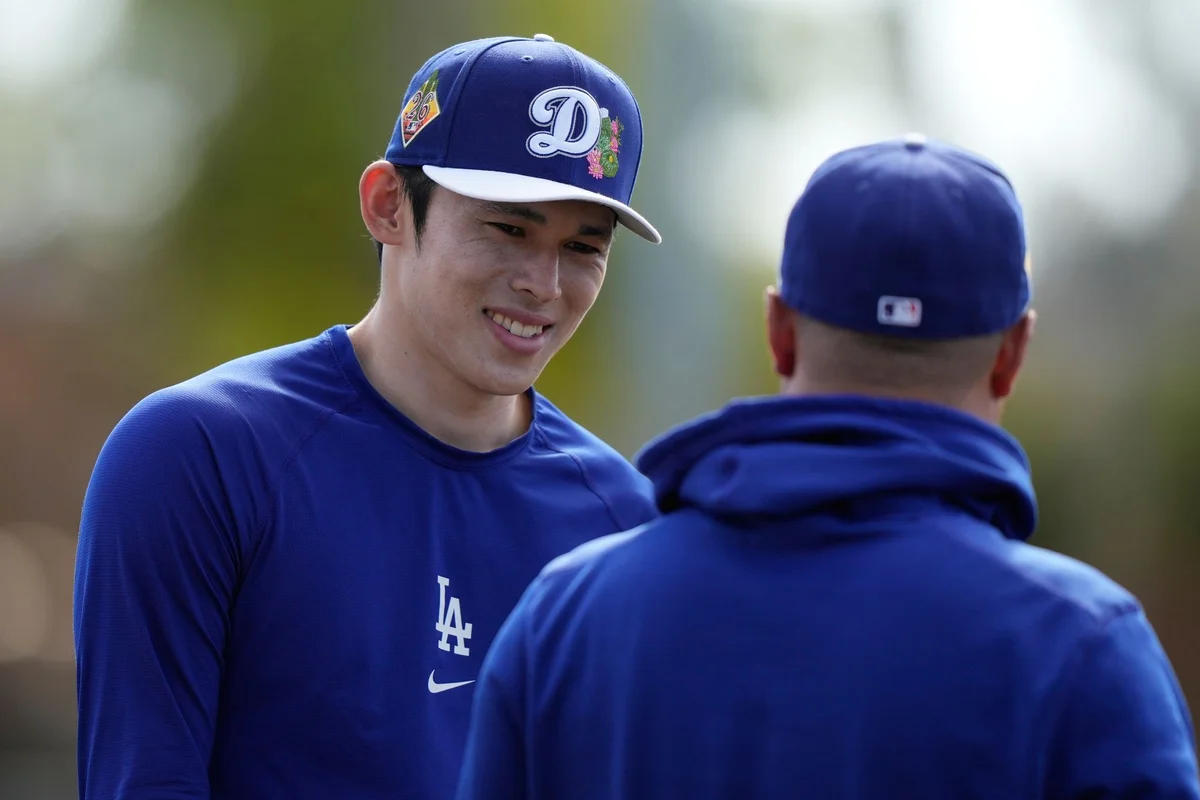
During the Dodgers’ road game against the Arizona Diamondbacks in Scottsdale, Ariz., rookie pitcher Roki Sasaki faced significant challenges with his pitching control. Despite showcasing a fastball that clocked nearly 97 mph, Sasaki’s lack of command undermined his effectiveness in this early exhibition season start, highlighting the importance of precise Roki Sasaki pitching control.
Dodgers manager Dave Roberts observed that Sasaki appeared to be overthrowing, which contributed to his inconsistent strike zone accuracy. The young pitcher’s struggle to locate his pitches meant that learning new breaking balls like his cutter or slider would not yield immediate success.
Details of Sasaki’s Performance Against the Diamondbacks
Sasaki’s outing was initially planned as a two-inning start, but it ended prematurely after he issued a five-pitch walk to the second batter in the second inning. In total, Sasaki threw 36 pitches, with only 17 finding the strike zone. His control difficulties resulted in three runs scored against him, with the defense yielding two doubles among three hits. The fastball reached speeds up to 96.9 mph, but it was inconsistent in placement.
Roberts explained the control issues by saying, “I thought he was overthrowing,” reflecting on Sasaki’s effort in his first game of the season.
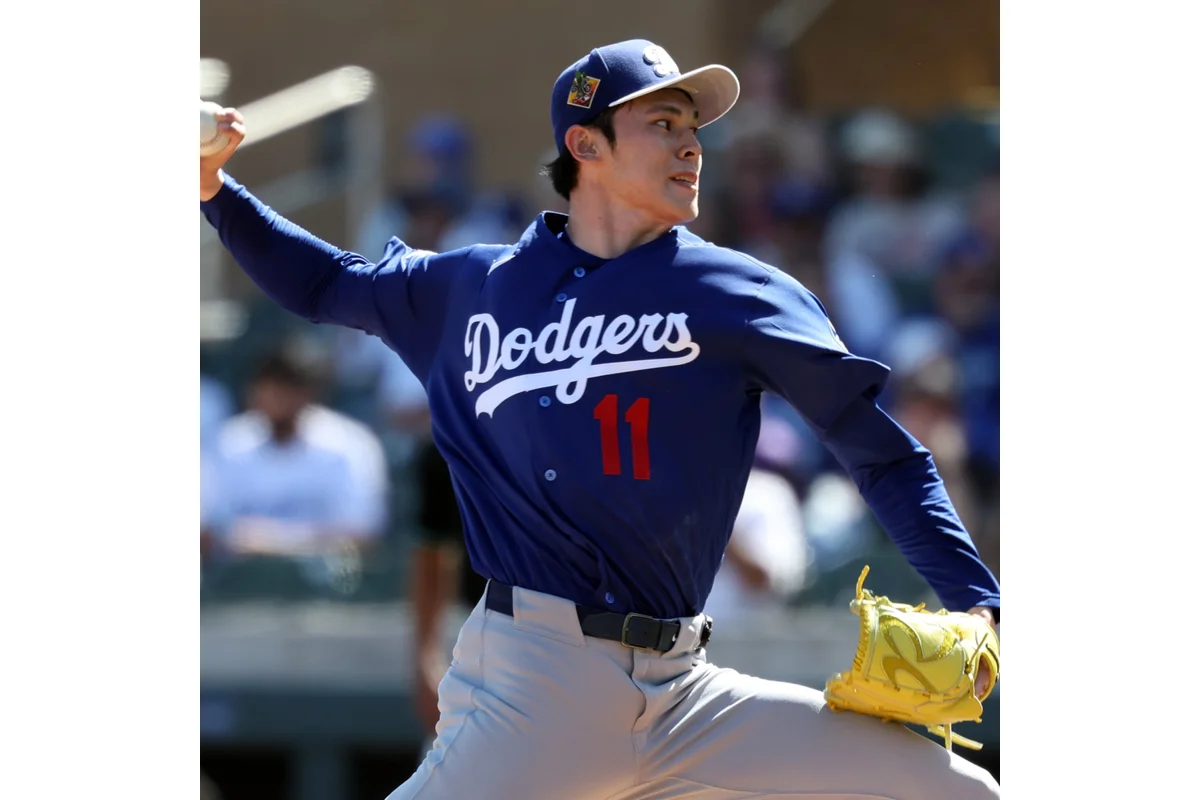
Despite these struggles, Sasaki remained confident and focused on gradual improvement through the spring training period.
Sasaki’s Perspective on His Development and Control
Speaking through a translator, Sasaki emphasized that he is still working on refining his control early in the season and expects it to improve with time. He said,
“At this stage (of the year), I generally don’t have it all together. I think my control is something that will gradually become better.”
He regarded the entirety of spring training as progress, unaffected by a rocky first official game. Sasaki added,
“Physically, I’m in a much better place than I was last year. I personally think my delivery is coming along nicely. I just feel that I was able to do more of what I wanted in my bullpens. I think there are parts of me that were affected by the nerves of pitching in a game.”
Additionally, he noted that adjustments to the new pitch clock rules disrupted his usual pitching rhythm during the game.
Expanding His Pitch Arsenal While Relying on Strong Fundamentals
Previously pitching for the Chiba Lotte Marines in Japan, Sasaki’s confidence has largely come from his fastball and forkball. This season, he is working on integrating a cutter or slider and a sinker that moves counter to those pitches to add deception. In the game against the Diamondbacks, he threw 11 cutters, primarily in the first inning when he gave up three runs, and four sinkers, including a 95.1 mph sinker.
Sasaki used a PitchCom device to call his own pitches and described his approach,
“It was an exhibition game, so I threw the pitches I wanted to work on.”
Interestingly, he found his forkball to be his most effective pitch during the game, contrasting with bullpen sessions where it has not performed as well. He stated,
“I felt like my fastball was better in the bullpen.”
Concerns About Transition from Closer to Starter Role
The Dodgers have seen Sasaki mostly in a relief role during his limited major league experience last year, where he took over as closer due to team needs rather than design. His move to starter raises questions about his stamina and control, especially given his history of shoulder impingement that kept him sidelined for four months last season.
His dominant control in Japan contrasts sharply with what the Dodgers have witnessed in the United States, making his spring training performances crucial for gaining trust. His foundation remains his fastball and forkball, but his new pitches aim to provide a strategic advantage rather than replace those primary weapons.
Roberts acknowledged the anxiety typical of a first start, describing Sasaki’s struggles as influenced by first-game adrenaline, but expressed hope for clear development in the run-up to the regular season.
Outlook for the Upcoming Exhibition Games and Regular Season
Sasaki is scheduled for six exhibition starts this spring, a marked increase from just two in his rookie season before opening the official schedule in Tokyo last year. He looks to build on this experience to prepare himself more thoroughly.
He expressed optimism about continuing to improve, stating,
“With five more games remaining, I think I can prepare myself well.”
With Dave Roberts signaling confidence that Sasaki’s spot in the rotation is stable, the Dodgers will rely on his ability to harness better command of his pitches moving forward. The development of Roki Sasaki pitching control will likely play a decisive role in his success as a starter and the Dodgers’ plans this season.
