
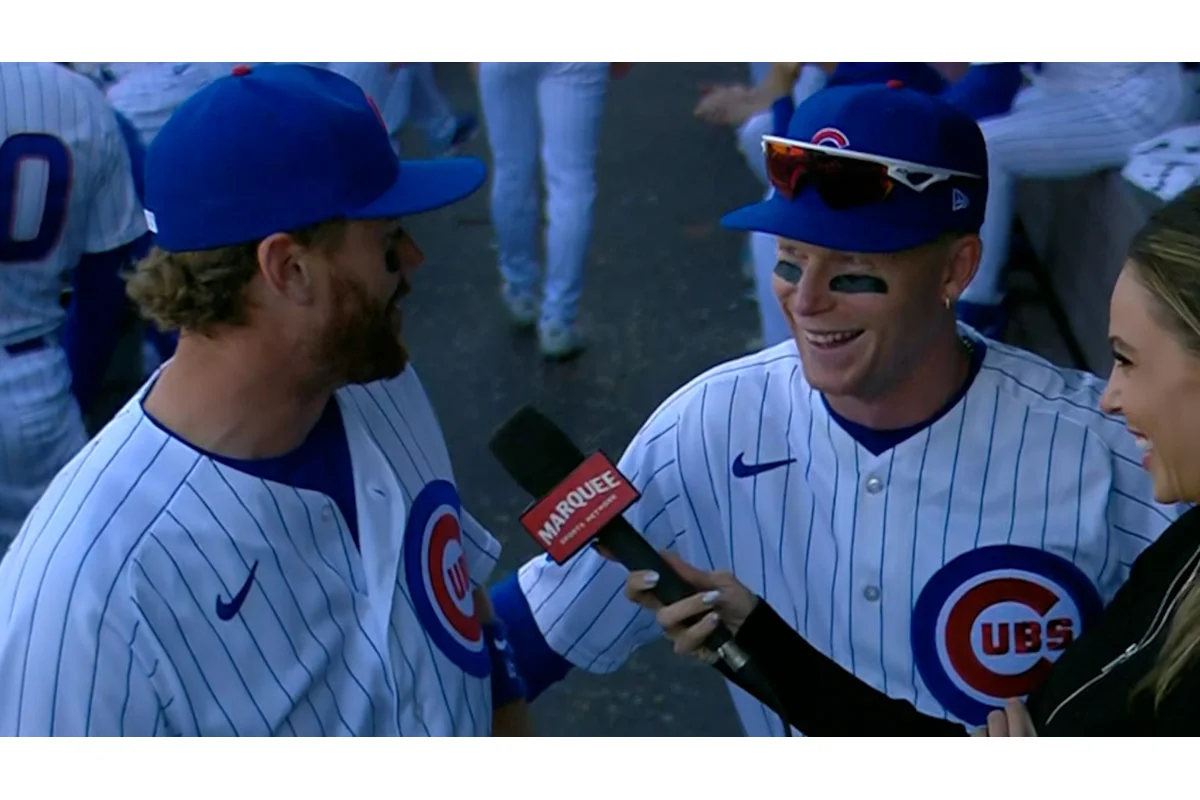
Pete Crow-Armstrong has made it clear that he is ready to commit long-term to the Chicago Cubs if the team offers an extension he considers fair. The 23-year-old outfielder is coming off a standout season, winning a Gold Glove, hitting 31 home runs, and stealing 35 bases, making him a potential cornerstone for the franchise. However, locking him into a long-term deal could force the Cubs to make difficult roster decisions, potentially leading to the departure of several key players.
Seiya Suzuki’s Future Could Be in Question
The Cubs face a challenging situation with their outfield, particularly with starters Seiya Suzuki and Ian Happ scheduled for free agency after this season. While ideally the team would like to keep both players, re-signing them alongside extending Crow-Armstrong’s contract would likely be financially unfeasible. Among the two, Ian Happ may have a stronger case to stay because of his consistent defensive excellence, having won four straight Gold Gloves in left field.
Although Suzuki is the better hitter, Happ’s overall value and loyalty to the Cubs, where he has spent all nine major league seasons, position him as a more practical re-signing target. At 31 years old, both players are near the later stages of their prime, but Happ’s well-rounded skill set makes Suzuki the more likely candidate to leave via free agency.

Nico Hoerner’s Role Could Be at Risk
Replacing Suzuki might free up salary space that could allow the Cubs to keep both Crow-Armstrong and second baseman Nico Hoerner. However, recent high-profile signings, such as Alex Bregman’s lucrative deal, suggest that ownership under Tom Ricketts may be reluctant to increase payroll significantly.
Hoerner, though lacking in power compared to Suzuki and Happ, is recognized as one of the top second basemen in baseball due to his exceptional all-around skills. Despite this, trade rumors persist, likely because of the financial implications looming before his 2026 free agency. With prospects like Matt Shaw ready to step in, and others such as James Triantos and Jefferson Rojas developing, the Cubs may consider using young talent to contain payroll.
While trading Hoerner is not an ideal scenario, it is a possibility if the team moves to secure Crow-Armstrong long-term and manages costs by opting for less expensive internal options at second base.
Jameson Taillon’s Future on the Team Looks Uncertain
Jameson Taillon, signed by the Cubs on a four-year, $68 million deal before the 2023 season, has provided steady if unspectacular contributions as a mid-rotation starter. His sub-4.00 ERA in three years reflects reliable performance, logging an average of nearly 150 innings per year. However, turning 35 in November, Taillon’s value beyond the 2026 season is questionable.
Despite his durability, Taillon has only twice made 30 starts in a season during his nine-year career, and his underlying pitching metrics do not perfectly align with his overall ERA. The Cubs also benefit from pitching depth within their system, with Justin Steele expected back from injury and promising arms like Ben Brown, Jordan Wicks, and top prospect Jaxon Wiggins edging closer to the majors.
Given this depth, the team is likely to favor internal options over expensive veteran contracts, putting Taillon’s long-term tenure with Chicago in doubt.
Kevin Alcantara’s Role May Be Limited by Crow-Armstrong’s Presence
Kevin Alcantara ranks among the Cubs’ top prospects, largely thanks to his elite speed and defensive ability in the outfield. However, with Crow-Armstrong projected as the long-term center fielder, Alcantara’s path to consistent playing time appears blocked, especially if he cannot establish himself as a reliable corner outfielder.
While his .818 OPS in Triple-A was promising, Alcantara’s nearly 30 percent strikeout rate and limited major league sample size (5-for-21) raise questions about his offensive potential. This suggests he may remain a fourth outfielder unless his hitting improves significantly.
The uncertainty surrounding Alcantara’s role makes him a potentially valuable trade asset. Teams in search of a future center fielder may be interested, especially based on his power, athleticism, and upside. Trading Alcantara could help address other roster needs and bolster the Cubs’ chances of maximizing overall value while committing to Crow-Armstrong in center field.
The Impact of Extending Pete Crow-Armstrong on the Cubs’ Roster
Extending Pete Crow-Armstrong is a logical move for the Cubs considering his breakout season and the promise he holds. However, this decision carries significant roster implications. Key players such as outfielders Seiya Suzuki and Kevin Alcantara, second baseman Nico Hoerner, and pitcher Jameson Taillon could all be traded, allowed to leave, or replaced by younger talent as Chicago attempts to balance budget constraints with competitive success.
General manager Tom Ricketts and the Cubs’ front office will need to carefully navigate these challenges to maintain a strong core while managing payroll effectively. Particularly with free agency looming for several veterans, decisions on who to prioritize for re-signing could reshape the team’s competitive outlook over the next several seasons.
Ultimately, how the Cubs handle these potential departures while extending Crow-Armstrong will be crucial to their pursuit of sustained success. Fans and analysts alike will be watching closely as Chicago prepares for important contract negotiations and potential trades in the coming years.
