
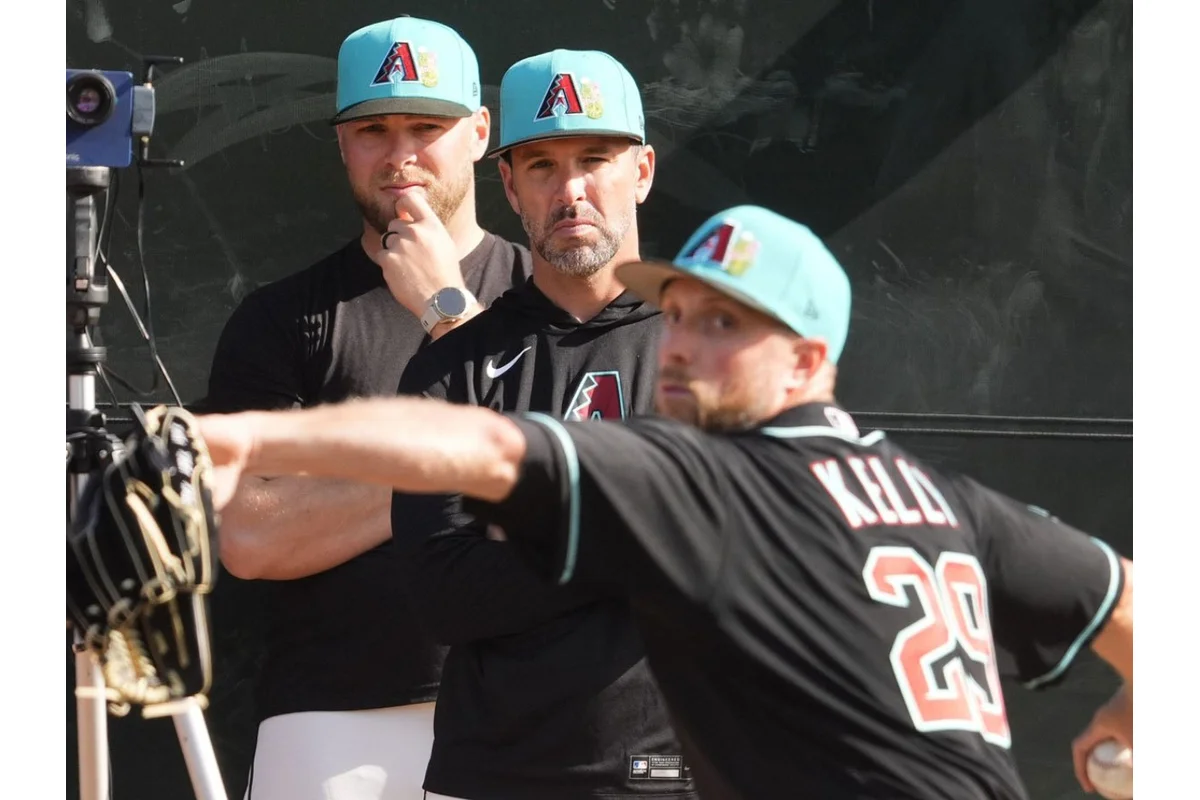
Merrill Kelly, a free agent pitcher after the 2025 Major League Baseball season, declined a lucrative offer from the San Diego Padres due to California’s high tax rates. Instead, the 37-year-old chose to return to the Arizona Diamondbacks, citing financial reasons tied to the state’s steep taxation as the primary factor in his decision.
Kelly, who split the 2025 season between the Diamondbacks and Texas Rangers, delivered impressive statistics including a 3.52 ERA, 167 strikeouts in 184 innings, and a 1.11 WHIP. His strong performance made him a sought-after pitcher, precisely what the Padres needed to strengthen their struggling rotation.
Padres’ Roster Challenges and Contract Offers
The San Diego Padres faced multiple rotation issues entering the 2026 season. Yu Darvish was sidelined for the year, Dylan Cease had signed with the Toronto Blue Jays, Michael King was recovering from injury, and Joe Musgrove was returning after missing 2025 due to Tommy John surgery. Meanwhile, depth options like Randy Vazquez, JP Sears, and Matt Waldron have yet to inspire confidence.
Recognizing the need for a reliable starter, the Padres proposed a three-year deal to Kelly, surpassing the Diamondbacks’ shorter, two-year offer. However, despite the longer term and higher guaranteed money from San Diego, Kelly opted to re-sign with Arizona.

How California’s Tax Environment Impacted Kelly’s Decision
Kelly openly condemned California’s tax system during an appearance on the Foul Territory show, directly linking the tax burden to his choice. Highlighting the stark difference between California’s top tax rate of 13.3% and Arizona’s 2.5%, he explained that accepting the Padres’ offer would have meant taking home less money overall.
I don’t think it’s any secret on how much money you get taken out of your pocket when you go to California,
Kelly said.
I love San Diego,
he continued,
It’s just, like I said, they take too much money out of my pocket, man. The taxes over there are a different level.
Kelly had his financial advisor run the numbers, leading to his decision to “come home” to Arizona. The California Post confirmed this analysis, noting that on a $20 million salary, the difference in income tax alone would amount to over $2 million per year, with additional deductions for state disability insurance and higher property costs exacerbating the disparity.
We had my numbers guy run the numbers, and it just made more sense to come home,
he added.
Wider Implications for California Sports Teams and Players
This situation sheds light on a growing challenge for California sports franchises as the state’s elevated tax rates discourage free agents from signing, potentially impacting team competitiveness. Some teams, like the Los Angeles Dodgers, have attempted to offset this by structuring contracts with deferred payments in lower-tax states to maximize players’ take-home earnings.
Kelly’s decision illustrates how California’s tax policies, under Governor Gavin Newsom’s administration, can indirectly influence player movement and team composition. The Padres, despite their efforts, lost out on a top-tier pitcher largely due to these financial considerations, which may have repercussions for their playoff aspirations.
This episode fuels ongoing debate over California’s tax structure, especially concerning high-income earners, and raises questions about the state’s ability to retain top athletic talent in a highly competitive sports market.
