
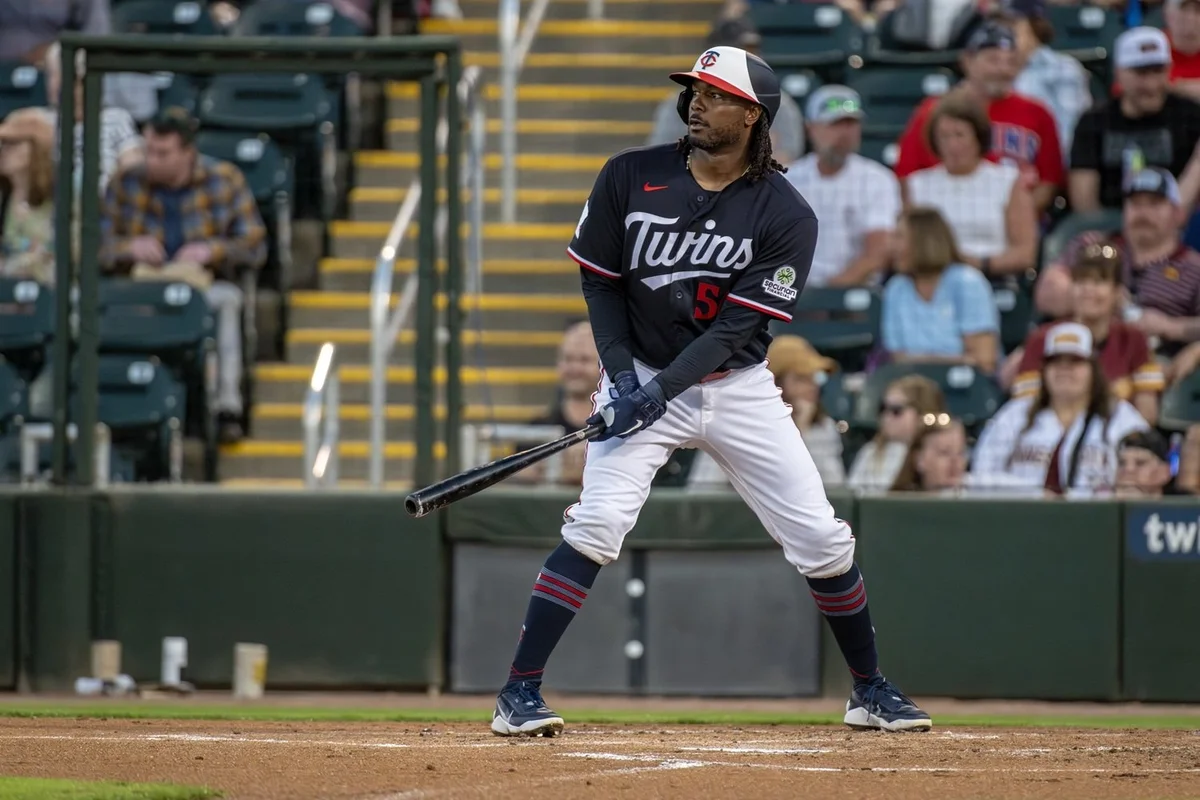
The Minnesota Twins made their headline offseason move by signing veteran switch-hitting first baseman Josh Bell, aiming to stabilize their lineup’s core. Bell’s consistent offensive output in recent years aligns well with the Twins’ objective of boosting run-scoring opportunities and capitalizing on them more effectively.
Consistent Offensive Production Over Recent Seasons
Over the past four years, Bell has quietly maintained solid offensive metrics, posting an average 109 OPS+ with roughly 20 home runs and 24 doubles annually. This dependable production provides the Twins with a reliable middle-of-the-order bat that could be vital for driving in runs and energizing the offense.
Defensive Flexibility Compensates for Bell’s Limitations
Although Bell’s defensive skills at first base have been below average, with a -4 Outs Above Average (OAA) rating in 2025, Minnesota has structured its roster to accommodate this. Players such as Kody Clemens and Victor Caratini offer alternative coverage at first base, giving manager Derek Shelton versatile lineup options.
Historical Context of Veteran First Basemen on the Twins
The Twins have frequently brought in veteran first basemen on short-term contracts, with varying success. In recent years, Ty France, Carlos Santana, and Donovan Solano have each filled the position. Both France and Santana earned American League Gold Glove awards for their defense; however, offensive consistency at the position has fluctuated, creating a need for a dependable bat like Bell’s.
Bell’s Unique Offensive Value in the Twins Lineup
Bell presents a different skill set compared to previous first basemen, especially when considering the stages of their respective careers upon joining Minnesota. His main value lies in his batting, and early reports from spring training indicate Bell is focused on settling in and reacclimating to the team environment.
“Definitely a good first couple of weeks, shaking hands, meeting different people,”
Bell said.
“I think spring training, for the most part, is the same, no matter what camp you go to. It’s like shaking the cobwebs off. Try to establish your routine. Obviously, stay healthy out there as more and more innings get put onto your plate. But I’m definitely happy to be here and excited for the opportunity ahead.”
Embracing a Leadership Role Within a Mixed Roster
With a mix of veteran and younger players on board, Bell recognizes the leadership duties that come with experience, emphasizing communication as his starting point.
“I think it all starts with conversation, getting to know different people,”
Bell explained.
“People come to me with different questions. And for me, it’s just about being honest about my experience. I’ve had a few more reps than other people in this clubhouse. But we all have the same love for the game. We’re all trying to get to the pinnacle: postseason. See what we can do here collectively to do that.”
He also stressed that leadership is demonstrated through quiet moments rather than grand gestures.
“So that’s the goal, lead by example, lead by a conversation here or there,”
he said.
“That’s what Shelty wants out of me, so I’m happy to do that.”
Offensive Approach Adjustments During the 2025 Season
Bell’s offensive strategy evolved throughout the last season. Despite a strong camp and early success, he began the year struggling at the plate, hitting only .178 with a .605 OPS through June 12. After that date, Bell improved significantly, posting an .839 OPS for the remainder of the season by refining his approach to driving the ball.
“Yeah, I thought I was in a great position leaving camp (in 2024),”
Bell said.
“I had a homer that first series, you know how that goes, I felt like I was on top of the world. Lot more fly outs than I was used to, a lot more soft contact than I was used to. Ball flight was there, but it wasn’t crushed the way I normally do when I get balls in the air.”
He worked to simplify his mechanics, focusing on hitting hard contact and driving the ball to all fields, resulting in a stronger finish to the campaign.
“So, I kind of honed things down and got back to squaring up the baseball and reestablished myself in the box and [was] able to drive the ball to all fields,”
Bell said.
“Then, as the season went on, I got a couple hot streaks to increase the power numbers and leave the yard a few times. So definitely a learning experience, not the start that I wanted, but hoping for a better start this year.”
Preparing for 2026 By Building on Late-Season Momentum
Heading into 2026, Bell is maintaining the routines that contributed to his strong second half, rather than making drastic changes.
“Yeah, you got the same routine as I had the last four months, pretty much the same thing in the cage,”
Bell said.
“So you feel good, feel good for both sides about getting the reps now and addressing it, and getting out there and competing.”
Approach to Unlocking Power in the Batter’s Box
Bell attributes his power surge to focusing on hard contact and not overcomplicating his at-bats. By concentrating on driving pitches within his zone, he lets his natural strength generate home runs.
“I think it was just about not missing balls in my zone,”
Bell remarked.
“When I focus on driving balls to all fields, the at-bat tends to end when it needs to. So I’m not up there fouling balls off and grinding. Balls coming in my zone, at-bats over. If I screw it up, it’s 100 plus, and if it’s in the air, better things happen.”
He emphasized avoiding pressure before the pitch and trusting his ability to deliver power when the opportunity arises.
“I think it was more just that, not trying to do too much pre-pitch, understanding if it comes into my zone, I have the strength to get it out of the ballpark, not trying to force that issue.”
Playing Time Dependent on Performance Consistency
Bell views his inclusion in the Twins’ lineup in straightforward terms, strictly tied to how well he performs on the field.
“I feel like if I’m playing well, I’ll be in the lineup,”
Bell said.
“That’s the way I see it.”
For Minnesota, Bell’s power-hitting potential presents a hopeful contrast to the rotating cast of veterans who have manned first base in recent seasons. Should Bell replicate his second-half 2025 production, the Twins could finally secure the middle-of-the-order offensive impact they have been seeking.
As the 2026 season approaches, Bell’s ability to maintain consistency and leadership will be critical for Minnesota’s ambitions. Questions remain about whether he can sustain the power numbers and contribute as the lineup’s driving force, making his performance a key storyline to watch.
