
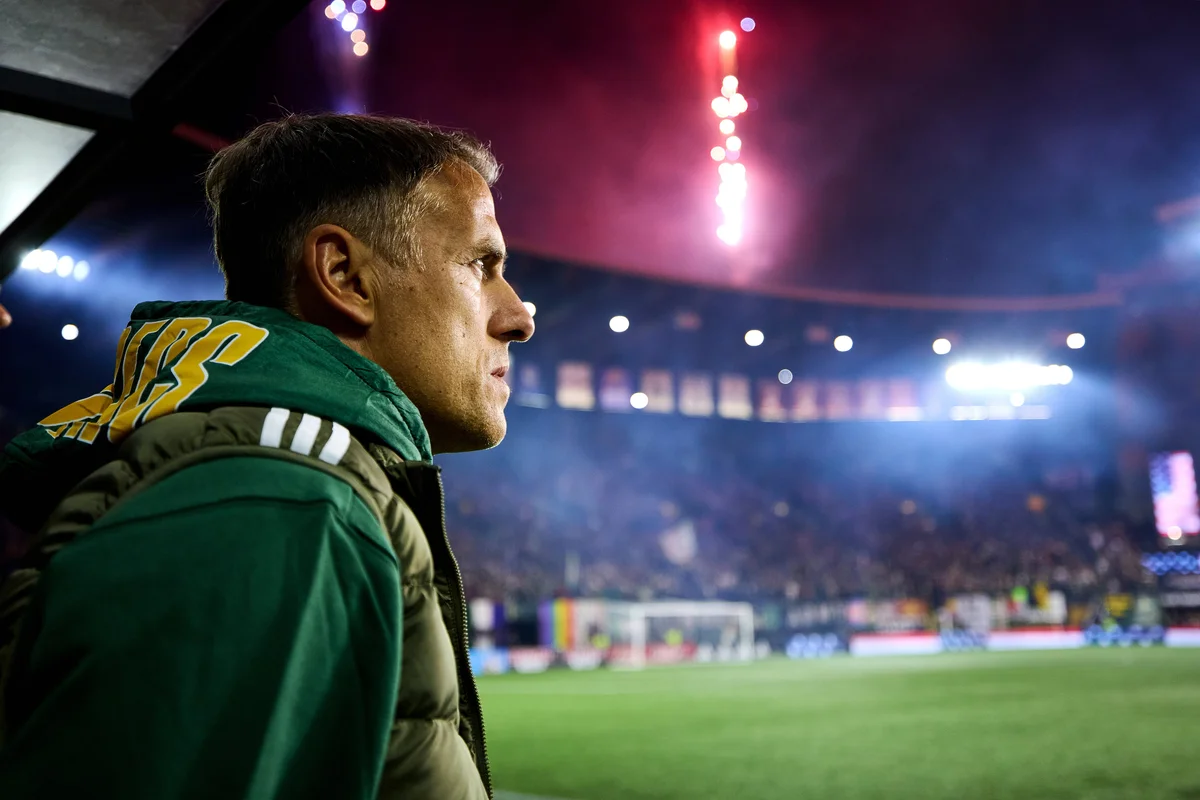
As the Portland Timbers prepare for the 2026 MLS season, the club sits at a pivotal moment that may define head coach Phil Neville’s future. After two years of middling performance, the 2026 season represents a critical opportunity for Neville to establish the Portland Timbers as legitimate contenders in the competitive Western Conference by delivering clear improvement.
Years of Mediocrity Masked as Progress
Although the Timbers secured playoff berths in both 2024 and 2025, their finishes barely scratched the postseason cutoff, ranking ninth and eighth respectively. These results signal endurance rather than dominance, with the team eking out spots among some of the weaker squads in the league. The quick exits from the playoffs underline that this pattern of mediocrity is no longer acceptable as Neville embarks on his third season at the helm. The margin for error has all but vanished.
Steady Yet Stagnant Results
Under Neville, the Timbers’ records in the last two seasons tell a story of stagnation: 12 wins, 11 losses, and 11 draws in 2024, followed by 11 wins, 12 losses, and 11 draws in 2025. These results place Portland consistently around the playoff fringe, never quite threatening the conference’s elite teams but avoiding full collapse. However, given that nine of the 15 Western Conference clubs qualify for the playoffs, merely scraping entry is a low bar for a team with Portland’s history and aspirations, where excellence was once the norm.
Preseason Hints and Questions
Portland concluded the Coachella Valley Invitational with a narrow 4–3 victory over the Chicago Fire, highlighted by Felipe Mora’s stoppage-time goal. Yet, this triumph was their sole win in the tournament, balanced by a scoreless draw against D.C. United and a 3–2 loss to the San Jose Earthquakes. For a squad that’s meant to emphasize defensive solidity, conceding six goals across two preseason matches raises concerns around the team’s identity and defensive reliability heading into the regular season.
Offensive Struggles and Scoring Challenges
The Timbers’ offensive production in 2025 was underwhelming, ranking near the bottom with just 41 goals scored—fewer than all but Austin FC and Real Salt Lake. Leading scorers Antony and Kevin Kelsy netted only seven goals apiece, numbers far too low for a club aiming for the Supporters’ Shield or MLS Cup. Meanwhile, designated player David Da Costa contributed four goals and six assists but at a steep cost of $3.425 million, raising questions about his overall value relative to expectations.
Another DP, Kristoffer Velde, brought in from Olympiacos toward the end of last season, showed glimpses of potential during limited appearances but struggled to consistently influence games. The offseason also saw a significant roster change with the release of Jonathan Rodriguez, who, despite a knee injury in 2025, displayed in 2024 the type of DP production Portland seeks, having scored 17 goals and provided eight assists in 35 matches. General manager Ned Grabavoy’s decision to part ways with Rodriguez highlights a cautious approach regarding injury risks as the club eyes the summer transfer window to target a new designated player capable of sparking the offense.
Defensive Shape and Seasonal Trade-Offs
Defensively, the Timbers conceded 48 goals in 2025, ranking sixth in the Western Conference, with seven clean sheets and holding opponents to one or fewer goals in 23 matches. While defensively solid, this approach has often translated into uninspiring, conservative soccer—preferring to absorb pressure rather than aggressively challenge opponents. The defensive roster was strengthened by adding center-back Alex Bonetig from Western Sydney Wanderers and right-back Brandon Bye from New England Revolution, the latter bringing valuable MLS experience through 189 appearances.
Midfield Reinforcement with Cole Bassett
Cole Bassett’s arrival may represent Portland’s most impactful signing in recent memory, particularly among American players. A product of the Colorado Rapids academy, Bassett has amassed 172 appearances with 31 goals and 21 assists, playing as a dynamic box-to-box midfielder capable of both creating and scoring. His European loan stints at Feyenoord and Fortuna Sittard further attest to his ability to perform at a high level. Portland secured Bassett for $2.65 million from a conference rival, a move that could prove decisive if coach Neville manages to fully unlock his potential and elevate the team’s attacking tempo.
Goalkeeping Stability Remains Elusive
The departure of Maxime Crepeau to Orlando City after 15 appearances in 2025 has left James Pantemis as the clear first-choice goalkeeper entering the new season’s final contract year. Pantemis conceded 58 goals across 41 matches, figures that alone do not establish him as an elite presence. The Timbers’ inconsistent goalkeeper rotation last season—marked by frequent switches between Crepeau and Pantemis after heavy losses—reflected a lack of confidence and stability. While Neville maintained Pantemis in the playoffs, including after a 4–0 defeat on the final day, repeating this stop-start management approach in 2026 could jeopardize defensive cohesion.
The Weight of Historic Coaching Precedents
Phil Neville’s tenure follows in the footsteps of two of Portland’s most celebrated coaches: Caleb Porter, who led the Timbers to an MLS Cup victory, and Giovanni Savarese, who guided the team to two MLS Cup finals. Both predecessors averaged over 1.50 points per game, noticeably higher than Neville’s current average of 1.38. This gap highlights the elevated expectations placed upon Neville, compounded by his previous struggles at Inter Miami—another MLS franchise marked by instability during his tenure. His surprise appointment in Portland has so far raised doubts about whether he can recapture the team’s former success.
Escalating Western Conference Competition
When Neville took charge, the Western Conference was competitive but manageable. Now, the landscape has intensified significantly, making playoff spots harder earned. The Timbers cannot afford to settle for midtable finishes during the grueling season. To regain legitimacy, Portland needs to exceed 50 goals scored, maintain a balanced yet ambitious defense, and settle on a definitive No. 1 goalkeeper. Additionally, designated players must be capable of tipping the scales in pivotal moments rather than merely participating.
This roster contains key components. Bassett’s midfield dynamism could be transformative, while Da Costa and Velde have shown quality during more attacking play. The defense has veteran reinforcements but requires a renewed identity that blends resilience with initiative. Most importantly, the coaching staff must commit to a more assertive style if the Timbers hope to compete for Western Conference supremacy.
The pressure mounting on Neville is palpable: failure to produce notable progress early in the season could end his time in Portland before the playoffs are set. After narrowly avoiding relegation to the fringes in previous years, the club must make a decisive leap or reconsider its leadership direction. The 2026 Portland Timbers season could very well determine whether this project advances meaningfully or remains stalled in uncertainty.
