Portland Timbers Overview
The Portland Timbers are a professional soccer club based in Portland, Oregon, competing in Major League Soccer (MLS) as a member of the Western Conference. Established on March 20, 2009, and beginning league play in 2011, the Timbers play their home matches at Providence Park and are owned by Peregrine Sports. The club is led by CEO Heather Davis, with Phil Neville serving as head coach. Known for the fervent support of the Timbers Army and a deep-rooted connection to the city of Portland, the franchise has built a strong identity within American soccer.
The Timbers captured the MLS Cup in 2015, becoming the first Cascadia club to win the league championship, and added the MLS is Back Tournament trophy in 2020. They have also won the Cascadia Cup on multiple occasions and continue to compete in one of North America’s most passionate soccer rivalries with Seattle Sounders FC and Vancouver Whitecaps FC.
Founding and Organizational Origins
The modern Portland Timbers were officially announced as Major League Soccer’s eighteenth franchise on March 20, 2009, by MLS Commissioner Don Garber. The expansion team grew out of an earlier process led by Merritt Paulson, who in 2007 acquired the second-division USL Timbers along with the Portland Beavers baseball club. Paulson’s group included his father, former Treasury Secretary Henry Paulson, and pursued a Major League Soccer expansion berth for Portland.
A central requirement for joining MLS was a soccer-ready venue. Paulson worked with city officials and Major League Soccer on a plan that would renovate PGE Park for soccer while building a new baseball stadium for the Beavers. After lengthy negotiations with the Portland City Council, including Mayor Sam Adams, the proposal moved forward and the team retained the historic Timbers name, preserving the legacy of previous Portland soccer clubs that carried the same identity dating back to 1975.
Growth Into Major League Soccer Competition
To prepare for their MLS entry, the Timbers established a foundation of operations under Gavin Wilkinson, who was promoted to general manager and technical director, and named former Colorado Rapids assistant John Spencer as the franchise’s first head coach on August 10, 2010. The club signed five players before the 2010 MLS Expansion Draft, including Steve Cronin, Bright Dike, Ryan Pore, Eddie Johnson, and Jeremy Hall, then made additional selections in the November 24, 2010 expansion draft and the 2011 MLS SuperDraft, where they used the second overall pick on Akron midfielder Darlington Nagbe.
The Timbers played their first MLS match on March 19, 2011, hosting the reigning champion Colorado Rapids and falling 3–1, with Kenny Cooper scoring the club’s first MLS goal. PGE Park was reconfigured for soccer and rebranded as Jeld-Wen Field for the inaugural season, providing the franchise with a dedicated home in downtown Portland before the stadium was later renamed Providence Park in 2014.
Portland Timbers Competitive Journey
Across their MLS existence, the Portland Timbers have progressed from a slow expansion side into a Western Conference powerhouse and MLS champion. Their competitive arc includes a first-place Western Conference finish in 2013, an MLS Cup title in 2015, a second MLS Cup appearance in 2018, the MLS is Back Tournament crown in 2020, and another Cup final in 2021, establishing them as one of the league’s most consistent performers.
Early Seasons and Development (2011–2012)
The Timbers’ first MLS season, in 2011, ended with a sixth-place finish in the Western Conference and a twelfth-place finish overall. The club struggled to find consistency on the field during its expansion year, despite strong fan support that filled Jeld-Wen Field each match. The following season proved even more difficult, as head coach John Spencer was dismissed on July 9, 2012, after a loss to Real Salt Lake. Gavin Wilkinson took over on an interim basis, and the Timbers finished with the third-worst record in MLS and eighth in the West, though they did capture the Cascadia Cup for the first time as an MLS side.
Caleb Porter Era Breakthrough (2013–2017)
The arrival of head coach Caleb Porter transformed the franchise. In 2013, the Timbers finished first in the Western Conference and third overall, earning their first MLS playoff appearance and a berth in the 2014–15 CONCACAF Champions League. After a step back in 2014, Porter’s side returned to the postseason in 2015, ultimately defeating Columbus Crew SC 2–1 in MLS Cup behind goals from Diego Valeri and Rodney Wallace to claim the club’s first league championship.
Portland defended its title poorly in 2016, failing to win any away matches, but bounced back in 2017 with a first-place Western Conference finish, the Cascadia Cup, and a record-setting season from Valeri, who scored in nine consecutive matches and became the first Timbers player to win the Landon Donovan MLS Most Valuable Player Award. Porter resigned after the 2017 campaign, leaving the franchise with an established winning culture.
Modern Program and Current Direction (2018–Present)
Giovanni Savarese took over as head coach in December 2017 and quickly guided the Timbers to the 2018 MLS Cup, where they fell 2–0 to Atlanta United. In 2020, Savarese’s team won the MLS is Back Tournament, defeating Orlando City SC 2–1 in the final behind goals from Larrys Mabiala and Dario Župarić. The following year, the Timbers captured the Western Conference crown and hosted MLS Cup 2021 at Providence Park, ultimately falling to New York City FC 4–2 on penalties after a 1–1 draw. Savarese was dismissed midway through the 2023 season and replaced by Phil Neville.
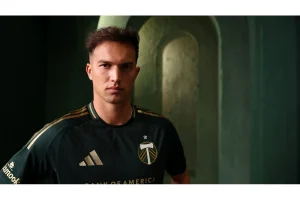
Under Neville, the Timbers returned to the Western Conference playoff picture in 2024 with a club-record four division titles on their resume, though they were eliminated by Vancouver Whitecaps FC 5–0 in the play-in round. The 2025 season ended with an eighth-place Western Conference finish and a final-day 4–0 home loss to expansion side San Diego FC. Heading into the 2026 MLS campaign, the Timbers are preparing for a new era, with Bank of America taking over as primary jersey sponsor.
Philosophy and Competitive Strengths
The Timbers have historically built their success on attacking depth, creative midfielders, and a strong home atmosphere at Providence Park. Players such as Diego Valeri, Sebastián Blanco, and Evander have flourished within a possession-oriented system that emphasizes chance creation, while the club’s supporter culture consistently provides a measurable competitive edge on home soil.
Key Milestones and Major Moments
The franchise’s most significant milestones include their 2015 MLS Cup triumph, the 2020 MLS is Back Tournament championship, and a streak of 163 consecutive home sellouts from 2011 through the early 2020s. The 2013 Western Conference title marked the club’s first major competitive breakthrough in MLS, while the 2015 victory made them the first Cascadia side to claim the league championship.
Portland Timbers Achievements and Results
The Timbers’ trophy case features two major titles, three conference championships, four division championships, and six Cascadia Cup wins, alongside a sustained record of playoff appearances since their 2013 breakthrough. Their list of verified accomplishments reflects both on-field success and the consistent organizational strength that has defined the franchise in Major League Soccer.
Major League Soccer Achievements
The Portland Timbers have won one MLS Cup, in 2015, when they defeated Columbus Crew SC 2–1 at MAPFRE Stadium behind a first-half brace from Diego Valeri and Rodney Wallace. They have also captured the MLS is Back Tournament in 2020, beating Orlando City SC 2–1 in the final at the ESPN Wide World of Sports Complex. In total, the club has reached three MLS Cup finals (2015, 2018, and 2021), with two of those appearances ending as runner-up.
Conference Achievements
The Timbers have won the Western Conference title three times, in 2015, 2017, and 2021. Each championship run included signature playoff victories over rivals such as FC Dallas, Vancouver Whitecaps FC, and Colorado Rapids, reinforcing the club’s status as a consistent Western Conference contender in Major League Soccer.
Divisional Achievements
Portland has claimed the Western Conference regular-season crown four times, finishing first in 2013, 2017, 2021, and 2024. These divisional titles helped secure top seeds in the MLS playoffs and produced multiple Cascadia Cup-winning campaigns, including the 2017 season under Caleb Porter and the 2024 season under Phil Neville.
Series Achievements
Beyond league play, the Timbers have qualified for the CONCACAF Champions League three times and have captured the Cascadia Cup on six occasions, including wins in 2009, 2010, 2012, 2017, 2022, and 2024. Their domestic cup runs include a 2013 Lamar Hunt U.S. Open Cup semifinal appearance and a 2015 fourth-round victory over Seattle Sounders FC, highlighting the club’s continued relevance across multiple competitions.