
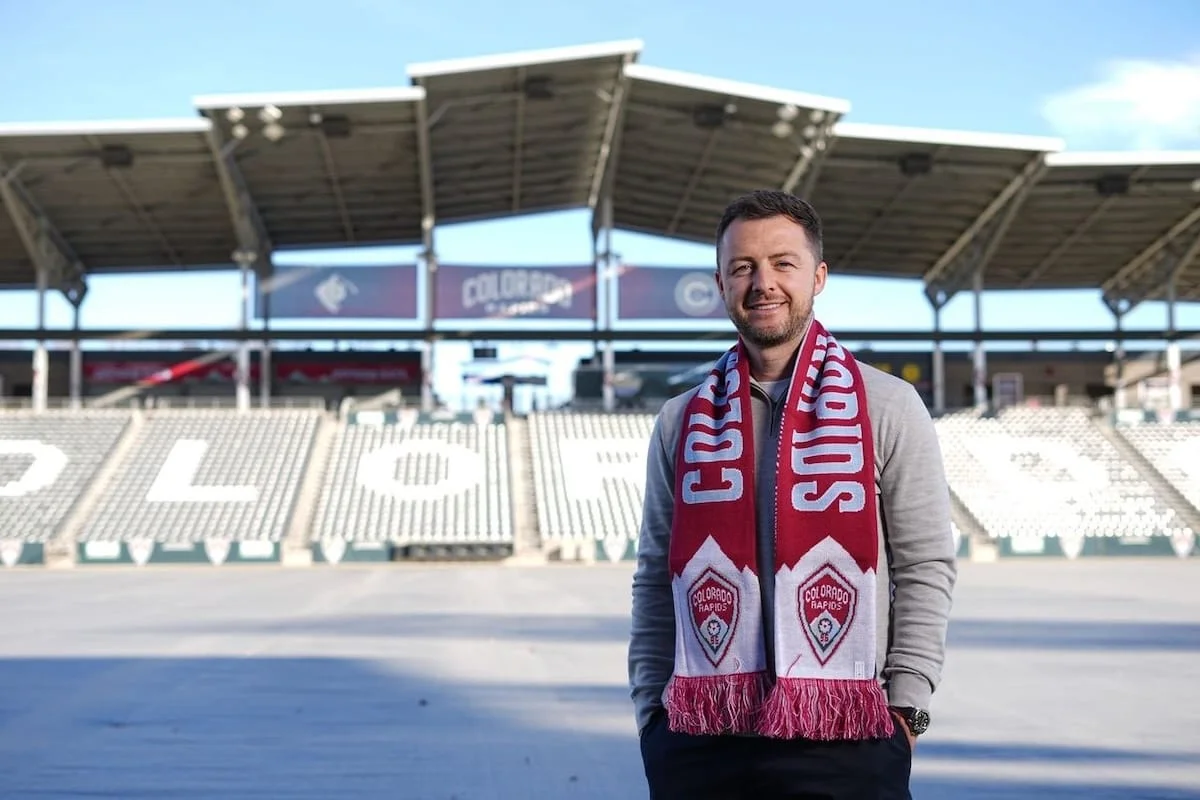
The Colorado Rapids are entering a crucial phase as the 2026 season approaches, marking the beginning of a new chapter under head coach Matt Wells in Commerce City. With a focus on building a competitive team, the Rapids face significant questions about their readiness to challenge for titles and implement Wells’ vision on the field.
Building a Competitive Team Under New Leadership
Following a disappointing 2025 season that ended without a playoff berth and resulted in the departure of former coach Chris Armas, the Colorado Rapids are working through a period of transition. Kroenke Sports & Entertainment President of Team and Media Operations Kevin Demoff expressed the organization’s ambitions bluntly after the coaching change:
“This club should be competing for titles.”
While the Rapids are not yet ready to contest for trophies, confidence in first-year head coach Matt Wells is rising. Known for his meticulous and straightforward approach to coaching, Wells has begun instilling a tactical framework during the preseason. Though it took time for the team to adapt to his style, a convincing 4-1 victory against Orlando in the final preseason match hinted at the potential of this new system. That game showcased rare moments of dynamic and precise play, an encouraging glimpse of what the Rapids aim to achieve.
According to Demoff, the club envisions a future centered on success and fan engagement.

“I think our expectation is to compete for an MLS Cup, and a successful season is taking meaningful steps in that direction and being in that conversation,”
he said during a preseason press event.
“Nothing short of being competitive, playing attractive football, drawing people here and growing the brand is acceptable.”
Adapting to an Aggressive and Creative Style of Play
One memorable sequence from the preseason victory over Orlando illustrated Wells’ vision for the Rapids’ style of play: starting from deep in their defensive corner, the team completed nine consecutive one- or two-touch passes involving nine different players within 10 seconds, culminating in a pinpoint cross from Darren Yapi that Rafael Navarro headed into the goal. This display of collective movement and quick ball circulation is the kind of soccer Wells promises to establish more consistently.
Wells’ emphasis on a positional approach demands that players maintain structure early in buildup while adapting their movements based on opponent pressing patterns. He also encourages breaking free from overly cautious passing in the final third, aiming for greater aggression and conviction in attack.
“We play a positional game. It’s important for players, in the first buildup, to hold their positions. They understand what movements to make, but the movements are all dictated by how the opponent presses,”
Wells remarked.
“We’ve still been far too precise (in the final third). I want to drop the precision there, and I want us to play with much more aggression, conviction, more bodies in the box. Constantly attacking, constantly trying to score goals, even if at risk for a counterattack.”
This style fits particularly well with Paxten Aaronson, the 22-year-old midfielder signed late last season for a club-record fee and secured on a five-year contract. Aaronson’s strengths lie in driving the ball through congested spaces, accelerating attacks, and serving as the offensive lynchpin, all of which align with Wells’ desire for relentless forward momentum. Although he may not lead in goals scored, the Rapids anticipate Aaronson will be crucial in both building offense and applying pressure defensively.
Similarly, winger Dante Sealy offers a promising offensive threat. Also 22, the Trinidad and Tobago international was Wells’ first acquisition, directly fulfilling the coach’s need for an inverted winger capable of scoring. Sealy’s 2025 campaign with CF Montréal yielded nine goals, a tally unmatched by any Rapids winger in the last decade. His potential to contribute consistently could inject much-needed firepower into Colorado’s attack.
Challenges From Previous Struggles and Lessons Moving Forward
The 2025 season revealed persistent vulnerabilities for Colorado, exemplified by a significant 3-0 loss to the L.A. Galaxy. The Galaxy, missing star midfielder Riqui Puig due to an ACL injury, fielded a lineup dominated by young and relatively inexperienced players yet dominated the Rapids. At that time, Colorado’s reactionary style—relying on regaining possession and swift counterattacks—proved insufficient against disciplined opponents.
That defeat heralded a string of unfavorable results and ultimately ended the Rapids’ playoff hopes by Decision Day. The team often positioned itself as the underdog, which led to fragmented performances: some surprising victories were offset by losses to lower-ranked teams. This inconsistency became emblematic of a squad struggling to find identity and cohesion.
In stark contrast, Wells has devoted significant preseason time to cultivating ruthless, committed performances. After one intense training session, he acknowledged the areas needing mental adjustment.
“The training was so good, but then there were certain things we did in training in terms of our finishing where we didn’t show true belief and commitment and ruthlessness,”
Wells stated.
“That’s what I’m trying to create in this group: an edge and an aggression and a ruthlessness — a conviction behind what they do. … I’ll never stop going after that.”
This mentality shift is designed to instill a winning mindset and ensure the Rapids fight with conviction in every phase of play from attack to defense.
What the 2026 Season Could Mean for the Rapids’ Future
The forthcoming 2026 season stands as a critical test for the Rapids’ ability to transform under Matt Wells’ leadership. While a championship may not be immediate, the organization expects measurable progress reflected in competitive results and a compelling style of soccer that excites fans at Dick’s Sporting Goods Park. The integration of key players like Paxten Aaronson and Dante Sealy will be central to this development.
How the Rapids respond to the pressures of playing an aggressive, possession-oriented system will influence their trajectory. If the team embraces Wells’ demanding approach—marked by aggression, conviction, and tactical discipline—Colorado could become a stronger force in MLS and genuinely contend for playoff success, setting a foundation to eventually challenge for titles as Demoff envisions.
With the lessons of a difficult 2025 still fresh, the Rapids’ ability to align strategy, player development, and club culture will be pivotal. Fans and stakeholders alike will watch closely to see if the changes translate into sustained growth and optimism in the years ahead.
