
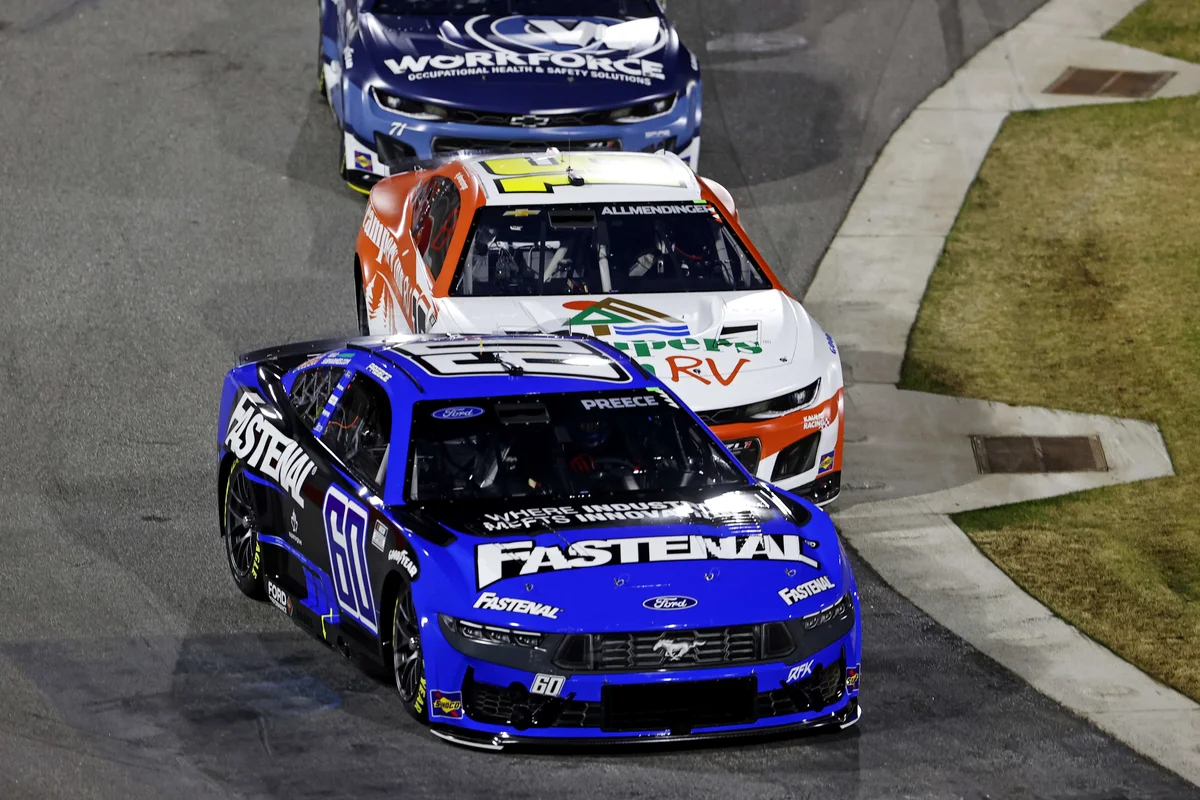
On a chaotic Wednesday night in Winston-Salem, North Carolina, Ryan Preece secured his first-ever NASCAR Cup Series win during the intense Clash at Bowman Gray Stadium. The race, marked by extreme weather and repeated crashes, left everyone unsure how to respond to the unpredictable and often hazardous conditions that unfolded.
The event featured 17 cautions and a grueling average speed of just 21.39 mph, slowed further by sleet that forced many drivers to switch to wet-weather tires. The 50-mile race extended over two hours, putting every participant and crew to the test on the historic short track.
Unpredictable Conditions Fuel a Contentious Race
Throughout the event, tensions ran high as drivers pushed aggressively, often forcing one another off the track, exchanging hostile gestures, and airing their frustrations on the radio. Ryan Preece stood out not only for winning but also for his candid, sometimes fiery communication during the race.
His crew chief, Derrick Finley, openly voiced his disbelief at the decision to race under such adverse weather. Finley said,
“The fact that we are even out here driving around, I’ve lost all faith in NASCAR.”
Preece echoed these sentiments, adding,
“There are a lot of drivers out here who feel the same way,”
and humorously suggested tracking down the race official responsible for the decision to race in sleet and removing their windshield wipers.
Preece later reflected on his radio comments, admitting,
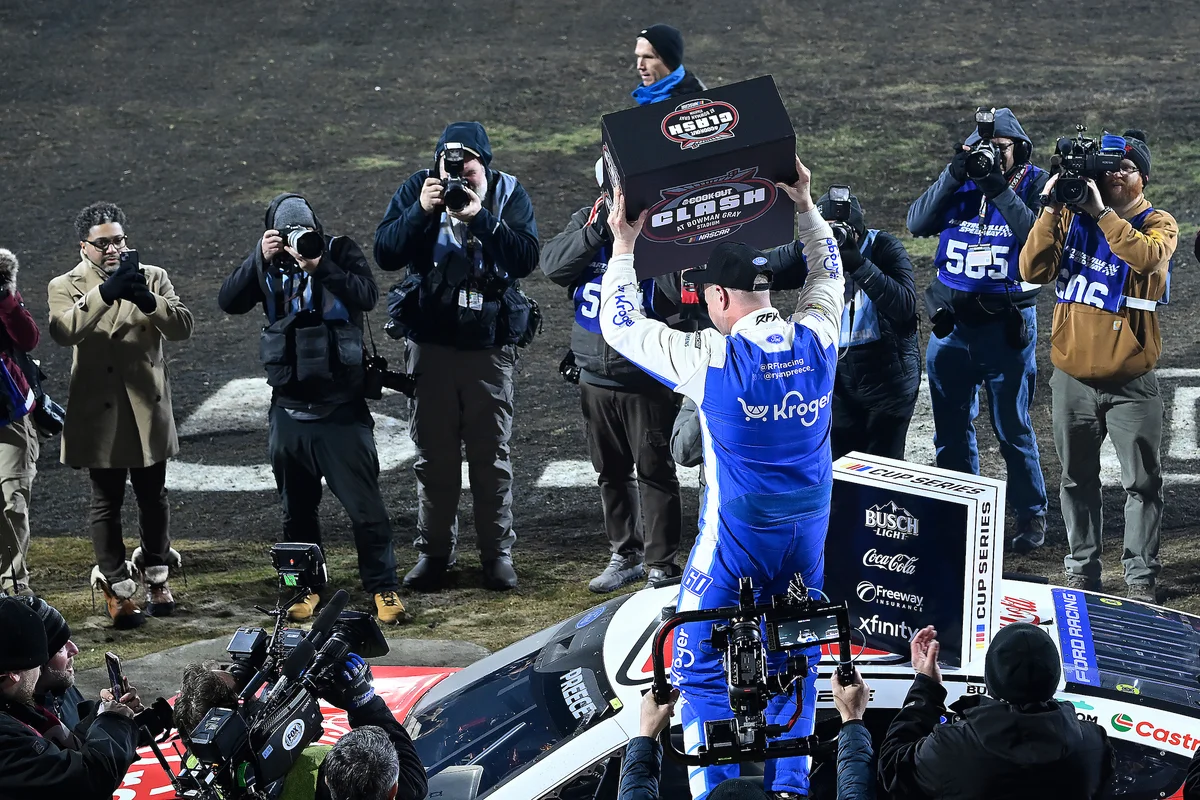
“I mean, everybody probably enjoyed my radio chatter tonight,”
and specifically referencing his outspoken reaction to the weather conditions. He described the challenges of driving through mist and dirt on the windshield, battling the track and the conditions simultaneously, and acknowledged feeling fortunate to be standing with his trophy after a race that tested everyone’s limits.
Disarray Among Drivers Highlights the Night’s Challenges
Not every competitor enjoyed such a triumphant outcome. Shane van Gisbergen, who led multiple segments, was caught in a late wreck that dropped him to 20th place. Both Kyle Larson and Chase Elliott experienced fuel shortages, with Elliott also involved in a collision sparked when Denny Hamlin was hit from behind and sent airborne into Elliott.
Several other drivers, including Bubba Wallace, Daniel Suarez, and Josh Berry, faced difficulties throughout the night, with numerous incidents caused by the sleet-covered track. The slick surface caused drivers to lose control, slide into walls, or veer off into the grass following contact with other cars. Austin Dillon, despite struggling with tire issues in the first half, noted that the wet weather provided some advantages for making moves but also led to clashes, particularly with Ryan Blaney.
Perspectives from the Pits Reveal Mixed Reactions
From garages and radio exchanges to post-race statements, a prevailing mood of confusion and frustration was palpable. Ryan Blaney, who finished third in a damaged No. 12 Ford Mustang, called the experience “a pretty wild day,” while rookie Connor Zilisch described the event as “very chaotic.” Carson Hocevar expressed uncertainty about how to categorize the race, noting that the Clash at Bowman Gray felt drastically different from its origins as a brief, 12-lap event at Daytona.
William Byron referred to the event as “just a marathon race,” commending NASCAR for handling rain conditions but wishing for a practice session in the wet to better understand the track’s unique challenges. Byron observed that drivers seemed to wear each other down as the race progressed, but once conditions began to improve late in the race, the competition became more enjoyable.
A Turning Point for a Short Track Racer on a Big Stage
The 2026 Clash at Bowman Gray presented a collision of extremes—weather, frustration, and unrelenting racing—that culminated in Ryan Preece’s breakthrough first Cup Series victory. His dramatic win amid such adversity has injected fresh energy into the short track racing scene and reignited discussions about safety and race management under severe conditions.
Though controversial, the event showcased the resilience and determination of drivers who had to adapt quickly to unpredictable circumstances. The mixed reactions and incidents are likely to influence NASCAR’s decisions on race protocols, especially regarding weather and driver safety moving forward.
"34 degrees. We are 2 degrees away from freezing," Derrick Finley says.
"Yeah, this makes no f*cking sense," Ryan Preece says.
"It's complaining… but I'm hoping someone with common sense is listening outside of this team."— John Newby (@JohnNewby_) February 5, 2026
"The fact that we are even out here driving around, I've lost all faith in NASCAR," crew chief Derrick Finley says.
"There are a lot of drivers out here who feel the same way," Ryan Preece responds. "So whoever it is, we should probably go find their car, take the windshield…— John Newby (@JohnNewby_) February 5, 2026
#NASCAR – Austin Dillon had numerous issues with his tires during the first half of the race. He said that the wet weather and the sleet actually helped him make moves.
He just had some run-ins with other drivers in the second half, specifically, Ryan Blaney. pic.twitter.com/Lc11SL2h9r— John Newby (@JohnNewby_) February 5, 2026
