
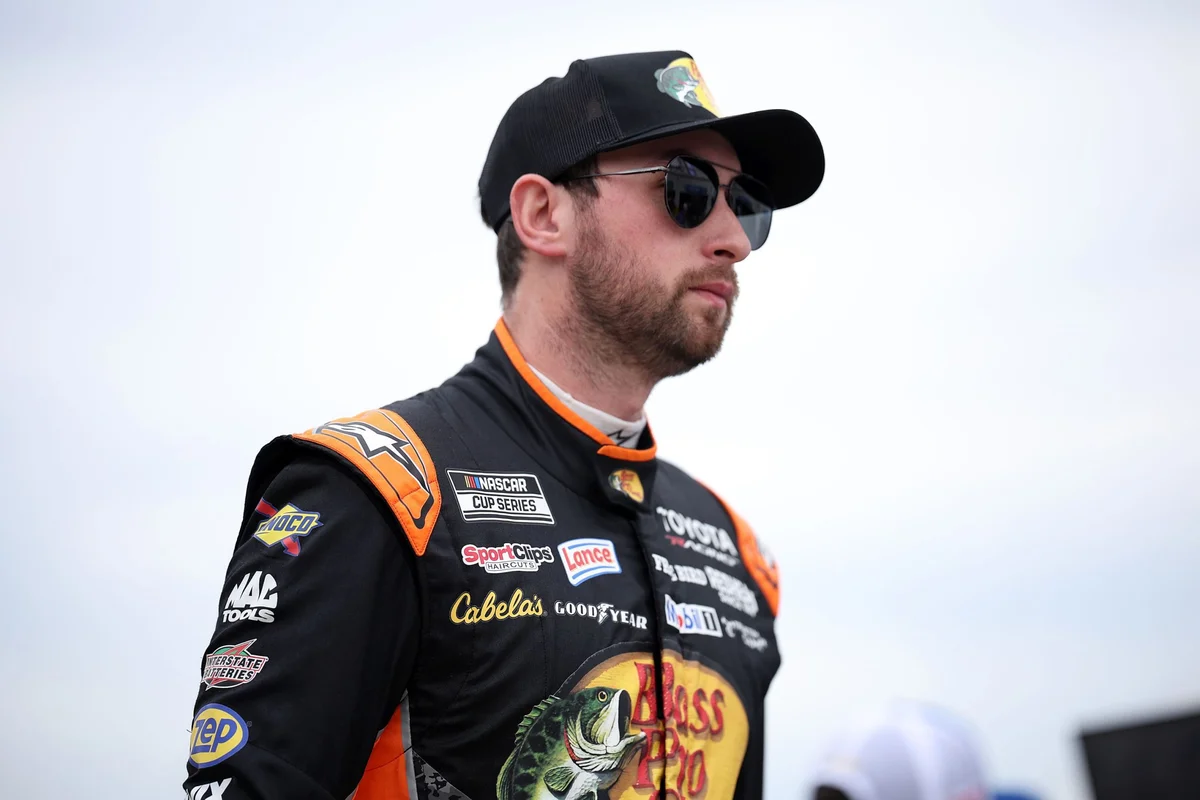
Joe Gibbs Racing driver Chase Briscoe spoke with the media on Wednesday ahead of the Daytona 500, reflecting on the heightened intensity of this year’s race at Daytona International Speedway. With changes to the NASCAR postseason format, the pressure on drivers like Briscoe to perform at the season-opening event has increased dramatically, reshaping how the race is perceived and approached.
Briscoe, driving the No. 19 Bass Pro Shops Toyota Camry XSE, emphasized that the revised playoff rules have magnified the importance of winning the Daytona 500, as the new system no longer guarantees a playoff spot to race winners alone.
“Yeah, I think that in the years past, like, if you were confident that you were going to win a race, yeah, you wanted to win the Daytona 500, but if you crashed out or whatever, you just kind of go on, because you felt like you were still going to make the Playoffs. Where now that defeat is going be even greater than ever before, just knowing that, you didn’t get those points. I think it’ll change some stuff. I think this race is still just as prestigious as it was before. If anything, I think it makes it more prestigious. In the past, so-and-so won the Daytona 500, and they’re locked in the Playoffs. Now, it’s just the Daytona 500.”
Impact of the Updated Playoff System on Racing Strategy
Briscoe provided insight into how the new playoff format influences decision-making on the track, especially during high-stakes moments. He recalled situations like the 2022 Bristol dirt race, where previously a driver with a secured win could race aggressively without consequence, but under the new rules, risk management has become crucial.
“The only time I ever see this format changing how guys race is a situation like me at the Bristol dirt race (2022) with (Tyler) Reddick where I had a win in the bank. If I run second, it literally does nothing for me. If I run 28th, it’s the same. So, you just make this super high-risk move, knowing that a win is all that’s going to change your season. Where now, under this format, I know that the risk of the move is very, very high. And the reward, odds are, I’m probably putting myself in a really bad spot. You’re just smarter about that because the difference in 2nd and 28th now is extreme. Where in the past, (if) you had a win, it really didn’t matter. You would just make the move, and if it worked out great, if not, you just go on to the next one. I think that’s the only situation where you’re going to see guys being just a little more conscious of the situation. If it’s an extremely high-risk move at the end of the race, you’re probably just going be a little bit smarter about it.”
Briscoe’s Outlook on Building Momentum This Season
Reflecting on how his team’s approach has evolved, Briscoe expressed determination to build on his previous accomplishments and improve consistency throughout the season’s segments.
“Uh, I just want to keep it going and continue to build on that. Hopefully, (I) have an even better year than last year. I think that’s the exciting thing for us on the No. 19 team is, if you break the season up into thirds, the first 12 (races), middle 12, and last 12, like, we were three totally separate teams last year. And our results just continue to go up, right? And I think we tied the most ever, top-fives or whatever for a season, but we feel like we left so much on the table, especially that first half of the season. If we can just continue to do what we did last year, we should be in a really, really good spot. Just a matter of trying to back it up.”
Qualifying Prospects and Vehicle Readiness
Addressing questions about his chances to secure the pole position again, Briscoe remained cautiously optimistic.
“I don’t know. I didn’t think I was going to be on pole like I was last year. Hopefully, I get a big tailwind down the back (straightaway) and down the front somehow, and yeah, we’ll see what we got.”
Briscoe additionally discussed recent changes such as restrictions on hand movements out of the window net, viewing them as positive safety adjustments.
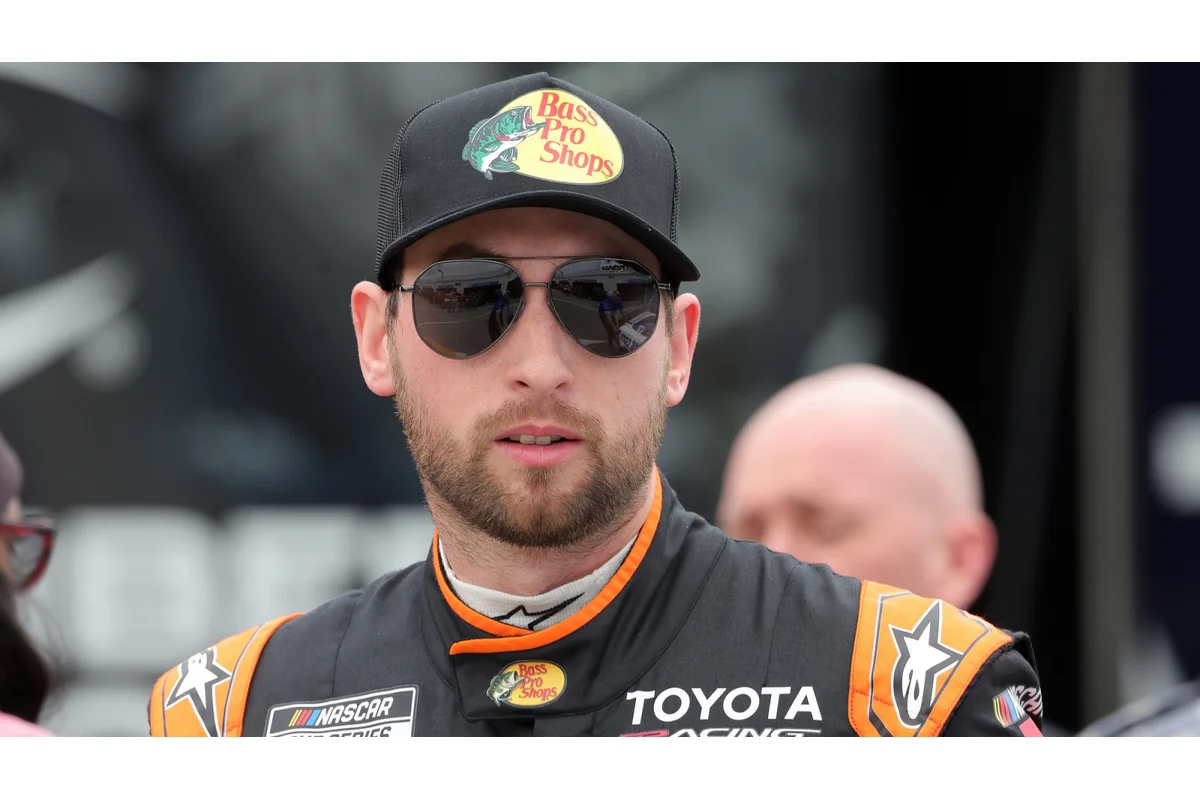
“I didn’t think it really made a difference before, but they swore up and down that it made a difference. It doesn’t hurt my feelings at all. The problem is, now we’re going to be trying to figure out if you can get the knee up there, your elbow up there, or whatever it may be. But yeah, I’m all for it. I was one of the few guys that would put both hands on the wheel in the corner because I didn’t feel confident enough to do it right with one hand. So yeah, I was glad they made the change.”
Views on Road Courses and Variety in the Playoffs
When commenting on the absence of a road course race in this year’s playoff schedule, Briscoe shared mixed feelings. While he acknowledged enjoying road racing, especially on traditional circuits like Watkins Glen, he criticized the ROVAL’s impact on race dynamics due to stage points affecting overall strategy.
“I’m not against not having a road course. I enjoyed having a road course in there, I would have loved it not to be the ROVAL. I could go either way on it. You know, the road courses are still extremely hard. With the stage breaks, because of how the race plays out, Like, you have to sacrifice your finish a lot of the time, unless you’re SVG (Shane Van Gisbergen) and you’re 47 seconds ahead. You sacrifice your finish a lot of times from the stage points. With this points format, is makes it really tricky to run road course races, truthfully, that just made it not a lot of fun. Personally, I think we need to have a road course in there, for the same reason I feel like we need to have a dirt race. It’s a discipline that we run, and we should do that in a Cup Series. And I think if we have five or six of them, then we probably do need one in the postseason. I would rather be at a Watkins Glen or something like that instead of the ROVAL.”
Preparations for New Venues and Competition Level
Discussing upcoming challenges such as the San Diego race, Briscoe noted that while other competitors like Shane Van Gisbergen are actively preparing through simulator sessions, Toyota’s camp has yet to finalize specific preparations.
“Well, I’m glad that he’s (Van Gisbergen) getting the laps in (via simulator). He needs them (laughs). Yeah, we haven’t done anything, truthfully. Maybe Toyota is behind the scenes, but I haven’t done anything myself. It’ll be interesting to go there, and everybody be on an equal playing field, right? But yeah, he’ll still be the guy for sure.”
Maintaining Physical Fitness and Nutritional Discipline
Briscoe revealed that his crew chief James Small continues to closely monitor his diet and regimen, despite the challenges of strict adherence throughout the season.
“He’s still on me. I probably haven’t done as good of a job, and he got into me pretty good on Monday about it. I think it’ll always be a thing. I could be 45 (years-old) and James (Small) would be my crew chief, and it’d still be a thing. Yeah, it’s not going to stop.”
The High-Pressure Dynamics of Final Pit Stops at Daytona
One of the most intense moments Briscoe described is the final sequence of green-flag pit stops during the Daytona 500, where strategy, timing, and split-second decision-making converge.
“The intensity that we experience all year long, I feel like there’s nothing like it after the final green flag (pit)stop. Before that, everybody’s kind of just riding around, saving as much fuel as possible, and it’s like a chess match, and who can save the most, and say we’re running 54-second lap times, and we get within like two or three laps of pitting, or that first group peels off. Now, all of a sudden, we’re running 49-second lap times. It is just that five-lap window of when guys are about to pit, or when the first one peels off. From there, to the next five laps, is the most intense thing we do all year long, because guys know that that is their only opportunity to make passes. Once we kind of get double-filed out, you’re kind of stuck there, for the most part. So, you were just making these huge blocks. Guys are having runs because they’re coming on pit road, and that’s where typically we’ve seen the chaos just happen. You go from kind of riding around, you’re just cruising around there, really slow compared to what you normally do. And all of a sudden, you’re just on the edge of destruction. That feeling, to me, is unlike anything else we do all season long. And you still have it at Talladega and stuff, but the Daytona 500 is so intense because guys are willing to do whatever to try to win the race. Somehow, we could bottle up that feeling and give it to every fan or every person who’s ever watched the sport, they would be hooked up.”
Recognizing Patterns During Critical Race Phases
Briscoe described how drivers anticipate changes on the racetrack during these critical moments and the strategic chaos that follows.
“A little bit. You can kind of see stuff coming, especially as guys start kind of merging back onto the racetrack. You know from a speed standpoint where you’re going to catch them, so, you can kind of start materializing some things. If you’re the 10th car back, everybody’s kind of now the same speed, and you know that you’ve missed your opportunity to probably win the race. But at the same point, like, when you’re leading the pack and you’re catching those slow guys, you’re weaving in and out of cars. Some guys are way more aggressive at throwing the block, even if they’re 25, 30 mph slower, so you kind of know that going into it. It’s just chaos.”
Strategic Value of Securing the Pole Position
Briscoe highlighted the advantages and unique challenges that come with winning the pole at Daytona.
“Pit stall (selection) for Sunday is big. Depending on kind of where you end up, if you’re first or second, that pit stall number one is a huge advantage for yellow flag stops, but it’s a little bit of a disadvantage for green flag stops. So that’s the biggest thing. You’re really able to focus on the rest of the week knowing that you’re going to start up front. Not that it really means a whole lot, but it just makes your Duel less stressful. You can kind of just cruise around.”
Further explaining the difficulties of the first pit stall during green flag conditions, Briscoe said,
“The guys that are running 60 mph are already at pit road speed, and when they hit that yellow line, they’re going faster, so it just takes you longer to get caught up. Under yellow, it’s a massive advantage because you’re coming a shorter distance at that speed. But under green, it definitely makes it where you just can’t pull out in front of guys because they’re running 60 mph and you’re coming from the stop. It’s just hard to blend in because you’re maybe only going 40 mph and they’re going 60 mph already. So, it just puts you a little bit behind when they’re green.”
Watching Tony Stewart’s Return to the Truck Series
Briscoe expressed excitement about Tony Stewart competing in the Truck Series race this weekend, acknowledging the challenges Stewart faces and the strong nature of the competition.
“Yeah, I’m excited. I was trying to find a shirt that I had that would fit me, but I don’t have any anymore. I’m fired up as a fan to watch him. He told me before the announcement came out that’s he’s going to come do it. Just to see how excited he really was for it. He’s hardly run any truck races as it is. He’s asking me all these questions, and I think he’s more nervous than he’s letting off. Just because he’s like, ‘man, I’m not going to get a practice in the draft. I’m doing single car runs all the time. I have to qualify in.’ It’ll be interesting to see what he thinks. And that field is like stacked. It’s probably the toughest Truck Series field we’ve had in Daytona in a long time. So, it’ll be fun to see kind of where he picks up.”
Regarding advising Stewart, Briscoe reflected,
“It was a little. I gave him a little bit, but in the back of my mind, I’m thinking like, ‘why are you asking me? Like, you’re in the Hall of Fame, not me.’ But no, it was cool. I mean, everybody knows he’s my hero, right? Just the fact that, he was even asking, just questions of what the trucks drive like and things. It was neat.”
Will Race Tactics Shift This Year at Daytona?
Despite the new stakes in the Daytona 500, Briscoe believes the aggressive style of racing will continue, describing the disorder and intensity as an essential element of this signature event.
“I don’t think so. I mean, Bowman Gray (the Clash) last week didn’t really mean anything, and we were all beating and banging, and destroying each other. I don’t think it’ll change anything. It’s still the Daytona 500. You know, all of us are pretty stupid in the grand scheme of things. We can’t see (the) big picture, all we see is that carrot thing in front of us, and we just start throwing crazy blocks and making crazy moves. It’ll sting a lot more whenever you leave here, knowing that you can’t win your way in now, but I don’t think it’ll be any different.”
A Defining Word for the Daytona 500
When asked to encapsulate the race in a single word, Briscoe simply said, “Chaos.”
Reflections on the First Daytona 500 Experience
Looking back on his debut at the Daytona 500 during a time still affected by the COVID-19 pandemic, Briscoe recalled the surreal experience of competing in front of a vast television audience and fan base despite limited in-person attendance.
“Uh, it was still coming off COVID-19, so it wasn’t sold out. But I remember just realizing how many people were watching on TV, and I was like, ‘man, I’ve never raced in front of this many people’ And it just feels like a big deal. Not that the other weeks don’t. But, as a kid, you watch the Daytona 500, you watch the Duels. Then, you’re like, ‘holy, smokes, I’m racing in the Daytona 500!’ That was my first ever Cup (Series) race, too, so that was kind of cool. I’m checking this box off, running a Cup race, but it’s at the Daytona 500, and I just remember being like, ‘what am I doing out here?’ It just didn’t feel real.”
