
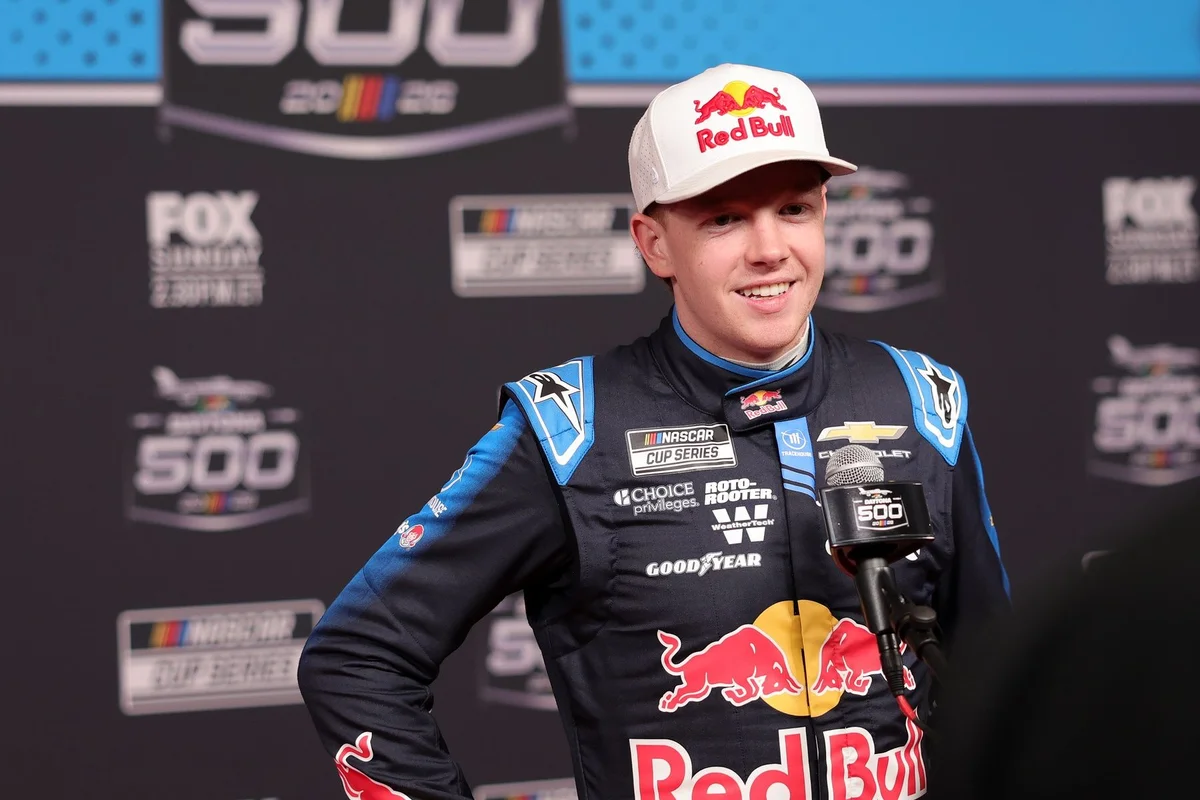
At the 2026 Daytona 500 in Daytona, Florida, NASCAR driver Noah Gragson made an unprecedented and highly unfortunate mistake that led to his disqualification under a newly enforced qualifying rule. Gragson’s infraction, which involved placing his hand outside the vehicle during qualifying, resulted in his fastest lap being invalidated and forced him to start at the rear of the pack. This incident quickly drew widespread attention from the racing community, raising questions about the rule’s impact and Gragson’s reaction.
Insights from NASCAR Analysts on Gragson’s Controversial Call
The incident was a prominent topic on Dale Earnhardt Jr.’s Dirty Mo Media podcast, “Door Bumper Clear,” where NASCAR experts Freddie Kraft, Karsyn Elledge, and Tommy Baldwin discussed Gragson’s error alongside Cup driver Connor Zilisch. They debated the circumstances surrounding the new rule, introduced just days before the Daytona 500 to prevent drivers from gaining aerodynamic advantages by exploiting equipment openings.
Connor Zilisch shared an inside look into Gragson’s initial unfamiliarity with the penalty, stating,
“Like I was with him after it [the incident], and he was walking down pit road right after qualifying, and nobody had told him that he got a penalty. And people kept walking up to him and being like, ‘Dude, your hand is out the window,’”
illustrating how unaware Gragson was of the severity of the situation.
Zilisch continued,
“He’s like, ‘Yeah, dude, don’t I have nice gloves? Like, aren’t my gloves sick?’ And they’re like no, dude, like, your hand was out the window. He’s like, ‘Yeah, I know, we always do that.’ And it took until Jamie Little walked up to him to realize that he actually got a penalty for him, and that wasn’t allowed.”
Freddie Kraft remarked on Gragson’s role in such mistakes,
“I mean, starting with qualifying out, was anybody surprised to see Noah was the one that would f*** that?”
Karsyn Elledge echoed this view, adding,
“If anybody is going to do it, it’s him,”
underscoring Gragson’s reputation for pushing boundaries on the track.
The New NASCAR Rule and Its Immediate Impact on the Race
The NASCAR ruling addresses actions designed to manipulate airflow through vehicle openings to gain speed advantages, a tactic that Gragson was caught attempting during his qualifying run. His 49.504-second lap was disqualified, forcing a last-place start. Despite this, Gragson managed to climb through the field and ultimately finished the Daytona 500 in 11th place.
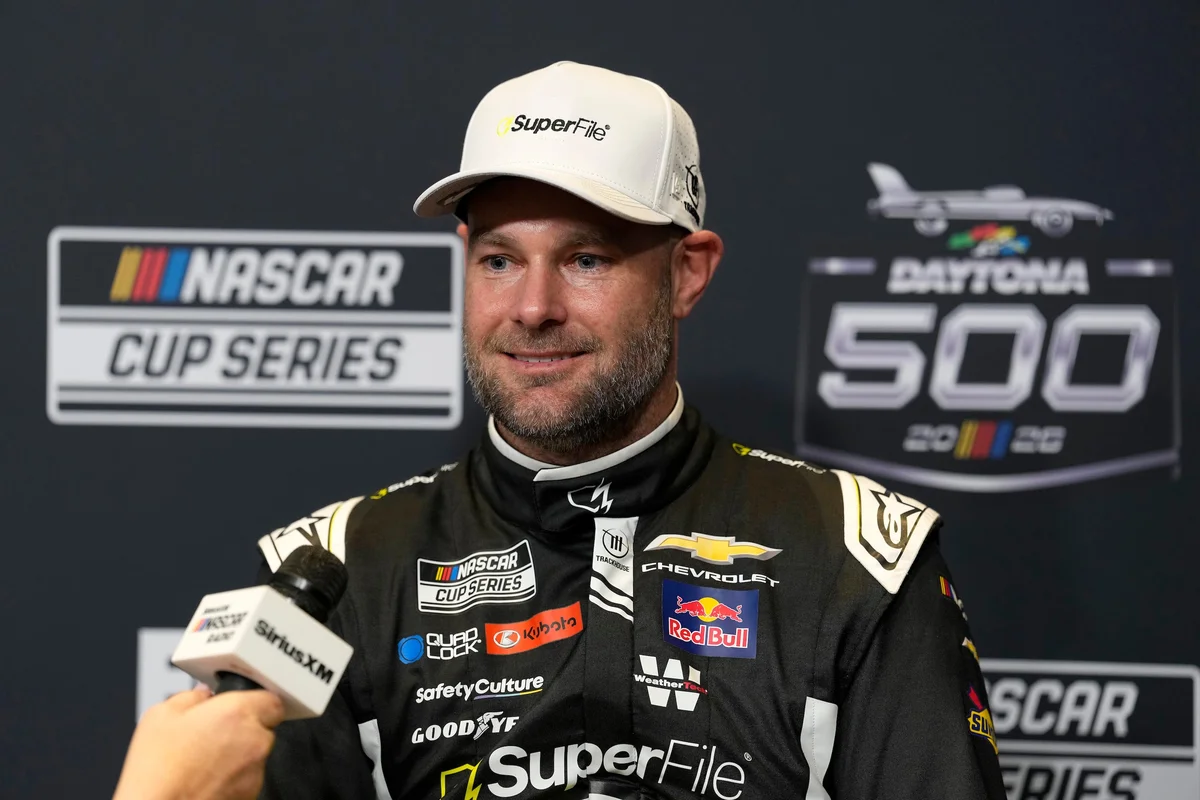
This penalty revealed the critical consequences of small missteps in NASCAR, where thousandths of a second can affect the entire race’s outcome. The newfound enforcement highlights NASCAR’s efforts to maintain safety and fairness during event qualifying.
Gragson Publicly Admits Fault Following the Incident
In the post-qualifying interview with FOX Sports 1, Noah Gragson openly accepted responsibility, expressing regret with raw candor. He stated,
“I completely forgot about that rule, so that one is on me. Luckily, we have the Duels, and I feel like the Daytona 500 is such a long race that you can kind of start wherever. It is what it is, but hey, I feel like an idiot for that. Oh well, we got a race tomorrow to do. I’m dumb for that.”
This level of accountability stood out amid the chaos around the race and the reactions it sparked across the motorsport community.
Race Outcome and Broader Implications for NASCAR
Ultimately, Tyler Reddick of 23XI Racing captured victory in a dramatic Daytona 500, navigating through a last-lap crash that eliminated contenders Carson Hocevar and Michael McDowell. Ricky Stenhouse Jr. and Joey Logano completed the podium, finishing second and third, respectively.
Gragson’s misstep serves as a stark reminder of how tightening regulations and enforcement will challenge drivers to balance aggression with compliance in pursuit of victory. Moving forward, teams and drivers will likely scrutinize rule changes more closely to avoid costly errors, especially in marquee events such as the Daytona 500.
