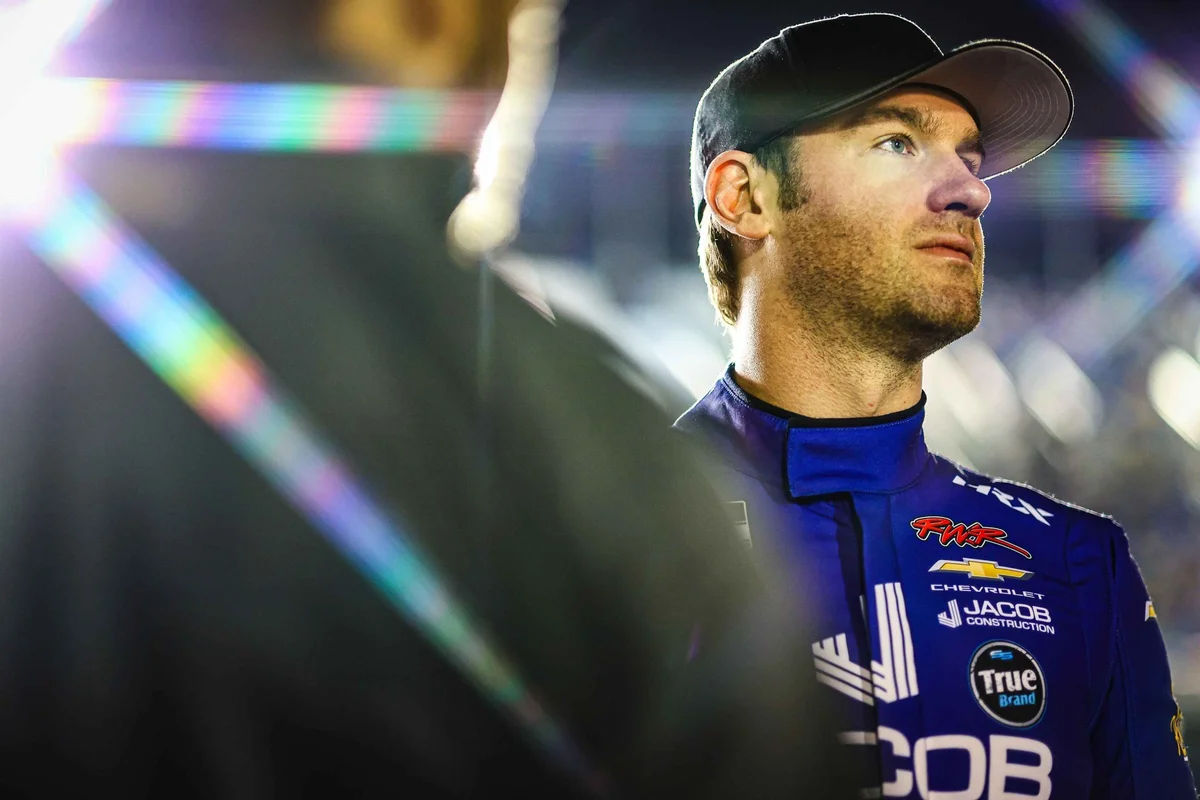
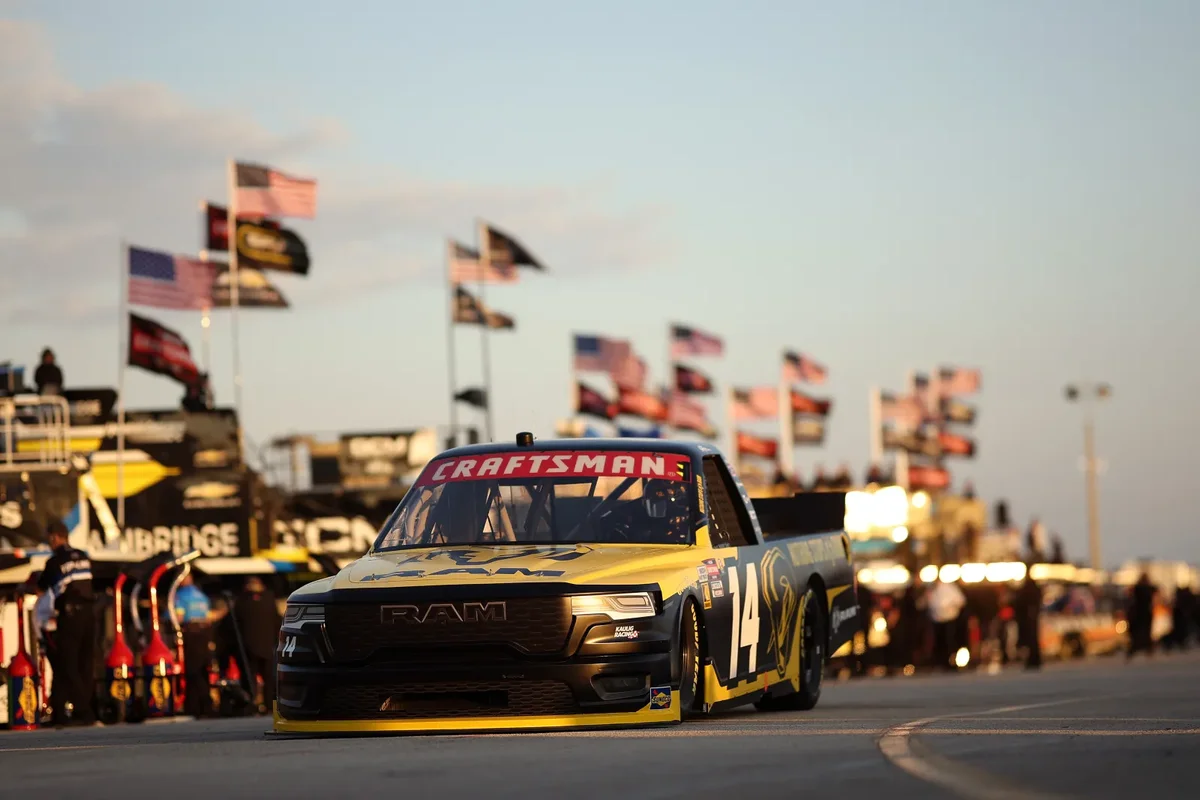
Cody Ware EchoPark Racing powers through intense Atlanta track challenges. [Image Source: SPEEDWAYDIGEST]
Cody Ware demonstrated notable speed in his No. 51 Chevrolet throughout last week’s sessions at Daytona (Fla.) International Speedway, leading for two laps during the 68th Daytona 500 before finishing 17th. With multiple multi-car crashes disrupting the race—one even involving a car moving backward—Ware anticipates confronting similarly intense conditions this Sunday at EchoPark Speedway for the Autotrader 400 event.
The Demanding Layout and Racing Dynamics at EchoPark Speedway
The EchoPark Speedway oval, situated just south of Atlanta in Hampton, Georgia, is a 1.54-mile track that is shorter than Daytona by a mile. Its corners are banked at 28 degrees and the racing surface spans a narrow 40 feet, creating a challenging environment where drivers feel the pressure of close competition. While qualifying lets drivers push wide open on the track alone, race day brings 39 cars battling simultaneously. This congestion causes continuous expansions and contractions within the pack, frequently leading drivers into precarious situations and repeated multi-car incidents reminiscent of those at Daytona.
The High-Stakes Mental Game of Superspeedway Racing
Ware described superspeedway racing as a “game of mental chess,” emphasizing the rapid decision-making and sharp reactions required. He explained,
“Superspeedway racing is always a game of mental chess. It tests your reaction times, how you process information, how well you make decisions in the heat of the moment, and it all comes with a healthy dose of stress, but the stress is amped up to a hundred at Atlanta,”
emphasizing how elevated the intensity becomes at EchoPark Speedway.
He further detailed the necessity of trusting instincts and communication, stating,
Image of: Cody Ware
“The time you have to make decisions is pretty much zero. You’re relying on instincts and your spotter. To be able to run well and have a good finish at Atlanta is a testament to your subconscious. Reaction time, judgment, decision-making – it all gets pushed to its absolute limit at Atlanta.”
Adapting to Car Handling and Aerodynamics on a Tight Track
Efficient movement is critical on the EchoPark Speedway surface, where drivers commonly use a handling package designed to free their racecars. While this setup increases speed, it also demands precise control because aerodynamic factors such as drafting and dirty air can destabilize the vehicle. Ware explained,
“You’re always freer than you really want to be at Atlanta, but you really have to be with the way the aero works,”
before adding,
“Between the draft and the dirty air and drag that comes with it, you’ve got to have a free racecar to keep going wide open, or almost wide open. It puts you on a knife’s edge, but you make a lot of speed that way. You find a way of getting comfortable being uncomfortable at Atlanta.”
The Unique Visual and Physical Demands of EchoPark Speedway
Although the EchoPark oval is larger than the typical half-mile short tracks, the high speeds of nearly 180 mph increase approach speeds and diminish drivers’ sightlines through turns. Ware contrasted this with Daytona, saying,
“At Daytona when we’re in the middle of the corner, the whole track is wide, and when you’re in the banking, you can see a good bit through the corner,”
and even when in close drafting battles, visibility remains more manageable.
At EchoPark, he noted,
“the tight radius of the corners means you can only see three or four car-lengths ahead,”
highlighting the heavy reliance on the spotter to relay crucial information ahead. Ware emphasized this relationship by explaining,
“You’ve got to have a good, close relationship with your spotter. Brent Wentz, my spotter, knows what I need to hear and he delivers what I need to know quickly and efficiently. It’s important, because I need to digest what he’s telling me and make judgements based off something I may not even see yet. That does happen to an extent at Daytona, but nothing like what it is at Atlanta.”
Managing Physical Strain and Mental Focus on Race Day
Competing at EchoPark Speedway demands intense physical endurance and mental clarity. Ware described the experience, saying,
“One of the biggest things is, honestly, just remembering to breathe,”
detailing the sensation of feeling every lap like a qualifying run with the intense G-forces pressing him into the seat. He added that the increased downforce makes steering heavier, causing arm fatigue.
He also highlighted the importance of basic but critical self-care, stating,
“Keeping yourself loose, remembering to hydrate, staying calm – all basic things – but at Atlanta, they’re massively important. When you keep your mind fresh, you keep your body fresh, all the way through to the finish.”
Preparation and Broadcast Information for the Autotrader 400
Cody Ware’s race weekend will start with qualifying on Saturday at 11 a.m. EST to determine the starting grid for the Autotrader 400, which begins Sunday at 3 p.m. This event will be broadcast live on FOX and SiriusXM NASCAR Radio, offering fans comprehensive coverage of the challenging high-speed race.