
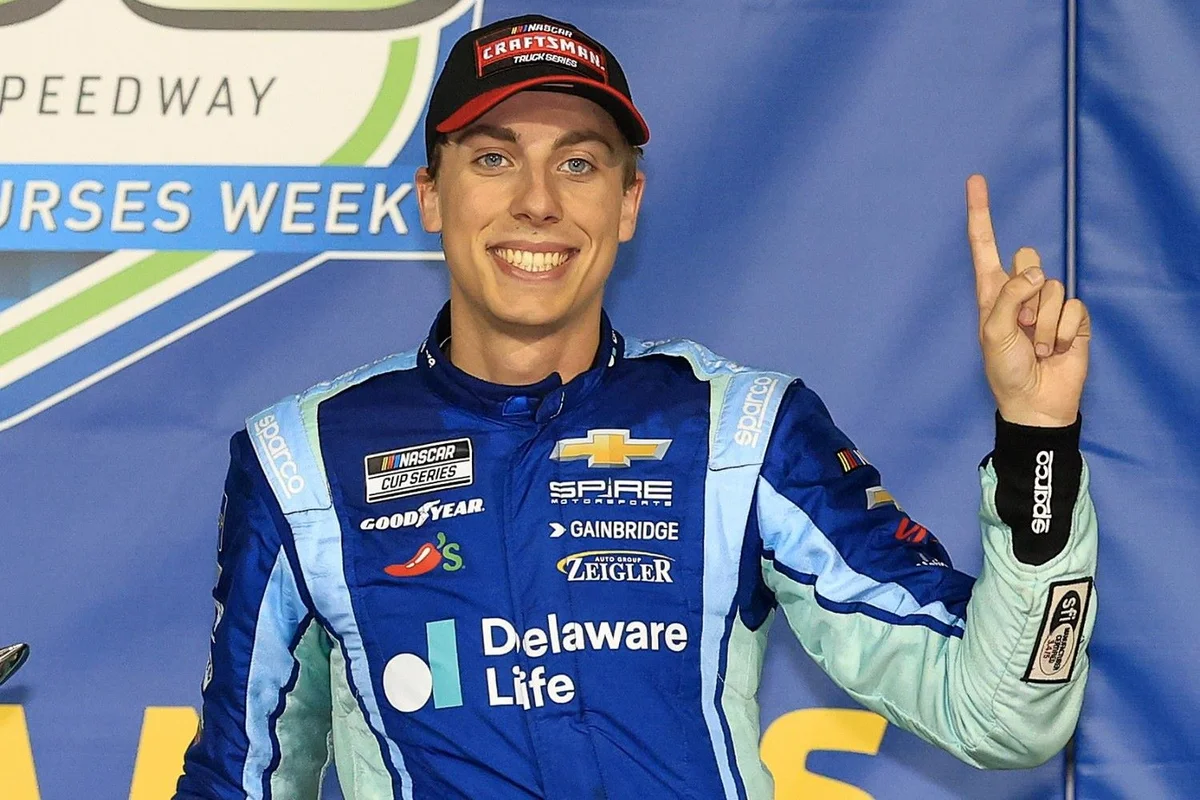
Carson Hocevar, driver of the No. 77 Spire Motorsports Chevrolet, is focused on the upcoming NASCAR Cup Series points race at Circuit of The Americas (COTA) this weekend. As one of the most competitive drivers in the 2026 Cup Series, Hocevar aims to leverage his experience and strategic mindset to tackle the challenging road course, all while seeking to maximize points to stay competitive in the season standings.
Adapting to New Track Limit Rules and Barriers
The NASCAR event at COTA presents fresh challenges, including updated enforcement of track limits, with new tire barriers being added around the circuit. Hocevar discussed how the presence of tangible barriers changes drivers’ approach on the track, especially in risky sections where runners need to find the optimal balance between aggression and caution.
“Yeah, I think it helps a little bit for the driver’s standpoint… now you have something to obviously hit, which is more risky. But the biggest thing is sometimes it’s hard to really 100% gauge because you want to be on the limit of the track limit, so it’s really difficult to judge at times. So as long as we’re not hitting a tire barrier, you know you’re pretty safe. And you know you’re probably not losing time to others that are really, really good at maximizing it all, whereas if you’re trying to be a little bit more conservative with it. Yeah, I think it helps a lot of us just kind of know exactly how far we’re on the limit. You can kind of tell how close you are to that barrier, versus it’s such a different perspective when you’re looking up and you’re giving up two feet. Yeah, it’s hard to judge 100% when you know the penalty is pretty steep that you’ve got to do a stop and go.”
Hocevar’s Approach to Road Course Racing Mindset
Discussing his mentality on road course events like COTA, Hocevar emphasized a disciplined, mistake-free approach aimed at consistent point accumulation. Understanding the inherent chaos that can happen, especially in restarts and crucial turns, he stressed the importance of maintaining position rather than taking excessive risks.
I would like to stay on the tarmac… that’s a big one. You know, just not make any mistakes; know the track limits, don’t hit the tire barrier and hurt my toe, right? Just start with there and race the racetrack. Really, just not trying to get too much. I know this isn’t a place for us to go out and stack a huge points day. But, you know, just maximize whatever it is… whether it’s single digits, whether it’s teens. Just get as many points as possible for us to help us towards next week for the metric. That’s the biggest thing. If I can break even on points, I think that’s a win. If I gain points, that’s really, really above expectations. But the goal is just not to lose any points on the gap to the cut.
– Carson Hocevar, NASCAR Driver
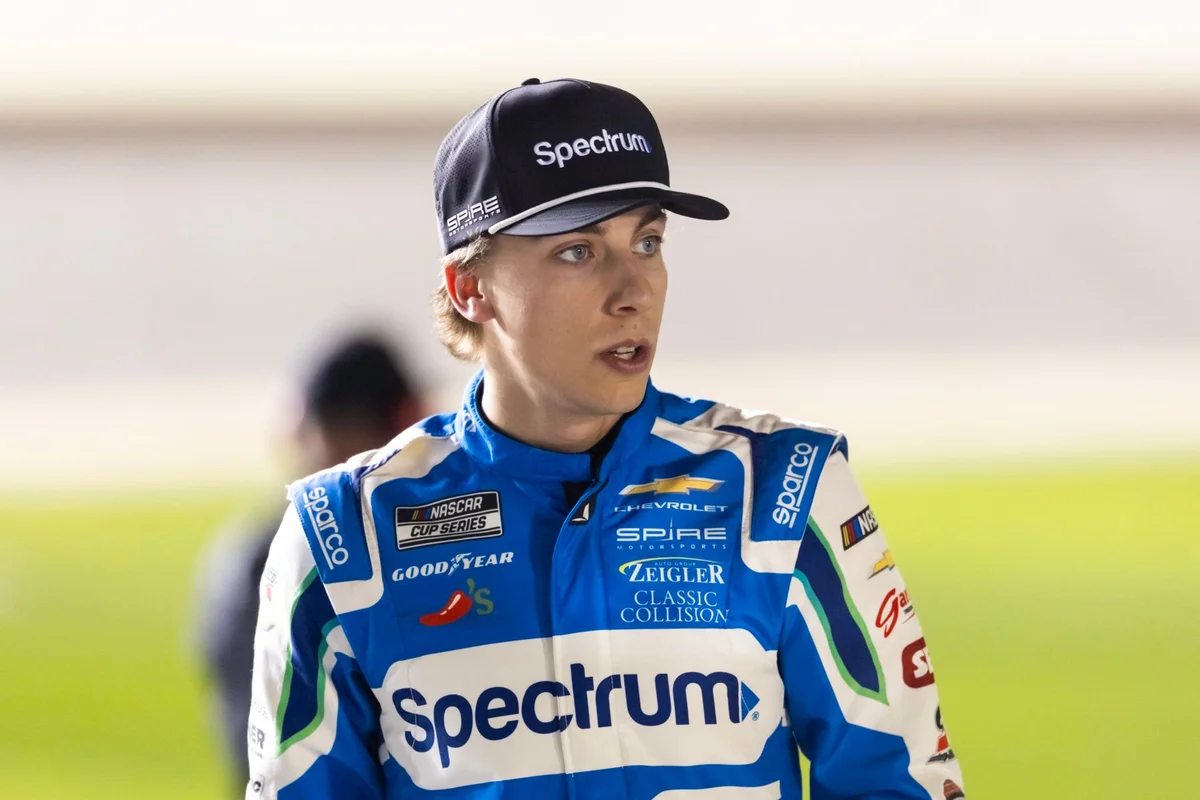
Balancing Speed and Points Strategy at COTA
Hocevar reflected on last year’s pace at COTA and shared his goal of focusing on steady point gain, rather than purely pursuing a race win. He highlighted stage points as a valuable target, especially in the unpredictable environment typical of restart-heavy NASCAR road course races.
“Yeah, I mean, for me, if there’s stage points available, I’d love to get it. Even if it’s like just two points, I just think it’s super important. And, you know, knowing how chaotic turn one restarts can get, it seems like you can always kind of get track position late. Yeah, obviously not to win the race or be super far from it, but I feel like you can kind of get back to where you were in stage three more likely to have even more restarts. So, yeah, for us, I just think just continuing to build our points is just the biggest thing. If I could leave plus-29 points heading into Phoenix — whether I’m still fourth or seventh or whatever, if I’m still plus-29 points, I’d be really happy.”
Reflections on Comparisons to NASCAR Legends
Hocevar acknowledged the comparisons fans and analysts have made between him and iconic drivers like Dale Earnhardt, recognizing the honor while maintaining grounded expectations for his own career trajectory. He spoke on how watching documentaries of racing legends has influenced his understanding of the sport but emphasized carving his own path.
“Yeah, I’ve watched every documentary of every driver. I’ve watched the Dale documentaries, the Tim Richmond specials, Davey Allison, Alan Kulwicki. You know, I’ve watched it all, even as a kid. Yeah, I don’t know. I mean, everybody’s open to their own interpretation. I feel like you’re always just going to be compared to somebody, whether they’re good or bad. You know, if I was really, really slow, there’s probably comparisons of guys that were really, really slow back in the day, too. I just go out and race and I enjoy it. I take it as a massive compliment, you know, from Richard Petty, Kyle Petty, Dale Jr., all of them making comparisons. I’m appreciative of that. I would like to just have half the success any of those guys did. But I think we’re getting ready to get our cars in a really good spot to be able to be in position. I think we’ve been in position to win three of these races. I don’t know if this week we’ll show that, but I think we have really good tracks coming up that we can do that. But for me, I’m just going in the merch hauler and signing 77 diecasts. You know, that’s me. Maybe in 20-30 years, somebody’s hopefully making comparisons of myself to the next kid that was doing it and running good. So, yeah, I just think it was a compliment, but you know, I’m not hanging up No. 3 posters on my wall and trying to pretend to be anything I’m not.”
Adopting Diverse Driving Styles for Success
When asked about emulating the style of any particular legendary driver, Hocevar emphasized the need for versatility. He explained that adapting to different race situations and competitors requires a mix of traits rather than mimicking one individual, which helps him respond effectively to the varying challenges faced on the track.
“Well, no, not really. I think if you’re building a perfect race car driver, I think you want to be able to emulate a bit of this guy, a bit of this guy, a bit of this guy. You know, you don’t want to just emulate one whole driver. I think you just want to be successful or be versatile in all areas. So, yeah, there’s not like a direct style. I just want the style of whatever it takes to succeed, whether it’s being aggressive in this spot or letting somebody else be aggressive for me and taking that spot. It’s just all circumstantial. You’re racing at different corners at different times. You’re playing different people, right? You know, it’s not like any other sport where you’re just playing the same guy over and over and over. You have one restart and you have totally different guys than you’ve been racing around all day. You’re going to have to be able to change with them.”
National-Level Competition and Team Growth
Hocevar reflected on the growth of Spire Motorsports and the increasingly competitive nature of the NASCAR Cup Series. He highlighted the challenges of keeping pace with the top teams, noting that improvements require continuous effort as others respond with their own advancements.
“You know, I feel like going into my rookie year, that was 33rd in owners points when I got into it, right? So, I think from Spires Motorsports’ steps, I think every team that’s not the big three teams that are basically dominating, they’re all trying to emulate Spires’ progression. You saw 23XI, they’re super successful. Trackhouse Racing is super successful. But now, we’re on that. It’s a lot easier to say it and say you have a five-year plan, but it’s really hard to actually pull it off because when we get faster, the big teams see it and they want to get faster. So it’s like, did you actually get faster or did everybody else just get faster with you? So if everybody else got faster, did you actually get faster? The field just keeps getting tighter. The floors are raising higher than the ceiling right now. We continue to keep adding people, parts and pieces and processes that — I think it was known to all of us after the second year that it was expected to have won already, just because I think if we weren’t so fast, people would still think Spire is this little team. But there’s been a lot of times we’ve been in contention and we’ve changed that narrative ourselves. So, yeah, I’m excited about it. I think we’re still really early here a little bit. I think we can do it. There were times where I felt like we were in impossible positions and there were things I couldn’t do from behind the seat that took us out of contention. I think the track record so far this year of being up front in every race is holding a lot of weight for us and our confidence.”
Impact of Increased Horsepower on Road Course Racing
This season introduces a new 750 horsepower limit for the cars competing on road courses like COTA. Hocevar expects that this will affect handling dynamics and tire wear, which will be critical factors in passing opportunities and race strategies.
I feel like tire wear is probably going to be a little bit more of an issue, or at least higher heat, which could have more comers and goers and probably reward the guys that can create speed without upsetting the tires. Just being able to make speed while keeping it under control and being on the limit there. So, yeah, I think there could be opportunities for more passing if guys really burn up their stuff early.
– Carson Hocevar, NASCAR Driver
Broader Context: NASCAR and General Motors’ Role
Carson Hocevar’s Chevrolet ride is supported by General Motors, a company heavily invested in motorsports as a proving ground for advanced technologies. GM fields vehicles across various racing disciplines, such as NASCAR and IMSA, and emphasizes innovation in performance, safety, and electrification through its programs including Cadillac Racing and GM Motorsports.
Through its partnerships with multiple NASCAR teams and drivers, GM continues to influence the sport at the highest level while driving toward a future of smarter and cleaner transportation solutions.
Looking Ahead: The Significance of COTA Performance for Hocevar
This race at Circuit of The Americas represents a critical opportunity for Carson Hocevar to consolidate his points standing as the NASCAR Cup Series progresses. With a well-calibrated focus on consistency, track awareness, and utilizing the updated rules and car capabilities, Hocevar aims to maintain momentum toward playoff eligibility and future wins. The evolving competition landscape in NASCAR, fueled by technological advancements and rising team standards, makes every race at this stage of the season pivotal.
As Hocevar and Spire Motorsports prepare to navigate COTA’s demanding track limits and complex racing dynamics, the team’s performance could signal their readiness to challenge the top contenders and elevate their status in the championship battle.
