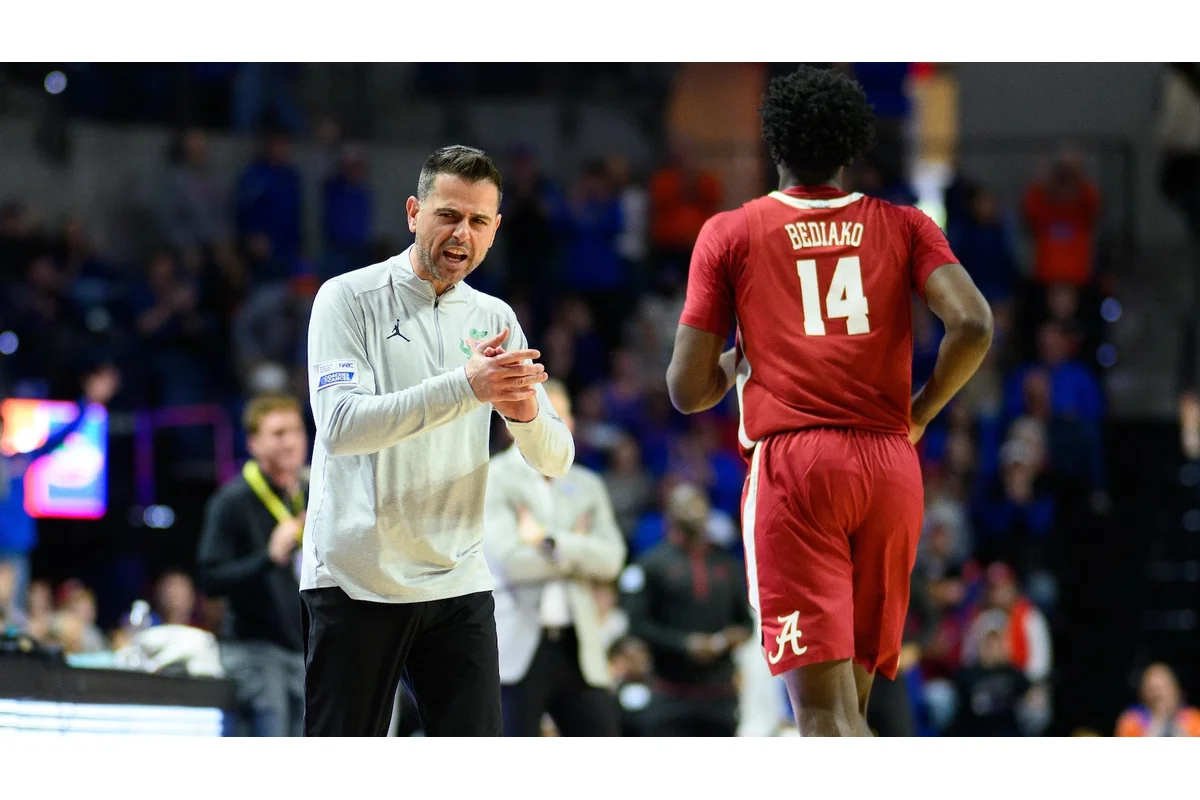
Judge denies Charles Bediako Alabama eligibility to play basketball. [Image Source: ABCNEWSFE]
Tuscaloosa circuit court judge Daniel Pruet has rejected Charles Bediako’s request for a preliminary injunction that would have allowed him to remain eligible to play basketball for the University of Alabama, according to recent court records obtained by AL.com. The earlier temporary restraining order that had permitted Bediako’s participation this season has also been revoked.
Background and Legal Proceedings Surrounding Bediako’s Eligibility
In January, Charles Bediako filed a lawsuit against the NCAA after they denied his petition to return to college basketball. Bediako spent three seasons playing in the NBA’s G League after going undrafted in the 2023 NBA draft and had not competed in college basketball since 2023. Initially, Tuscaloosa judge James H. Roberts granted Bediako a temporary restraining order providing immediate eligibility, allowing him to join Alabama’s team again. However, Judge Roberts has since recused himself from the case.
Bediako’s On-Court Impact With the Crimson Tide
Returning to the court on January 24 in a game against Tennessee, Bediako has since participated in five games this season. Alabama has won three of those contests, including a recent road victory against Auburn. Over these games, Bediako has averaged 10 points, 4.6 rebounds, and 1.4 blocks in approximately 21.6 minutes per game.
NCAA Reaction to Court Ruling and Broader Implications
NCAA President Charlie Baker issued a statement Monday, reflecting on the ruling:
Image of: Charles Bediako
“Common sense won a round today,”
Charlie Baker said.
“The court saw this for what it is: an attempt by professionals to pivot back to college and crowd out the next generation of students. College sports are for students, not for people who already walked away to go pro and now want to hit the ‘undo’ button at the expense of a teenager’s dream. While we’re glad the court upheld the rules our members actually want, one win doesn’t fix the national mess of state laws. It’s time for Congress to stop watching from the sidelines and help us provide some actual stability.”
Contentions Presented During the Hearings
During a hearing last Friday in Tuscaloosa, both Bediako’s and the NCAA’s attorneys presented their arguments. Bediako’s legal team claimed that the NCAA applies its regulations inconsistently, while the NCAA stressed that Bediako’s case is distinct from other former professional players who later joined college teams. Judge Pruet sided with the NCAA’s position in his ruling.
Judge Pruet’s Justification for Upholding NCAA’s Decision
Judge Pruet stated,
“(Bediako) has failed to establish that he would suffer irreparable harm absent the issuance of the injunction,”
and added,
“Second, (the NCAA) acted with adequate justification in enforcing the rules promulgated by its membership. The rules do not permit a student-athlete to participate in collegiate basketball, leave for the NBA, and return to the collegiate arena. All the evidence in the record indicates that (the NCAA) has consistently applied this specific rule.”
Complexities of Bediako’s Professional Background
Although Charles Bediako did not appear in any NBA games before returning to college basketball at the University of Alabama—where he is currently enrolled—he did sign an NBA contract. The NCAA policy has allowed eligibility for some former professionals but excludes those who have signed NBA contracts. Bediako is the first player to have signed an NBA contract, played in the G League, and later returned to college basketball.
Support from Alabama Coach Amidst Eligibility Fight
In January, Alabama coach Nate Oats expressed support for Bediako’s eligibility, affirming his belief that Bediako complied within the rules.
“Everywhere I’ve been going back to my high school days, I’m going to do right by my players in every single situation, as long as they didn’t do anything wrong,”
Oats said.
“Charles has done nothing wrong. Charles and his agent and his attorneys have seen what’s going on in the landscape of college basketball and all the former pros that are playing. Just about everybody we play’s got one. And they’ve seen who the NCAA has allowed to be eligible and they didn’t see any reason why Charles wouldn’t be eligible, and I agree with them.”
Next Steps and The Broader Impact on College Basketball
The denial of Bediako’s motion marks a significant setback for players seeking to return to college sports after engaging with professional opportunities. This ruling reinforces the NCAA’s stance on eligibility restrictions concerning former professionals. As debates intensify regarding the intersection between college sports and professional careers, the NCAA’s call for congressional action highlights ongoing challenges in providing consistent and clear policies. The outcome leaves Charles Bediako unable to continue competing for Alabama this season and raises questions about how future cases will be handled as college basketball navigates these complex eligibility issues.