
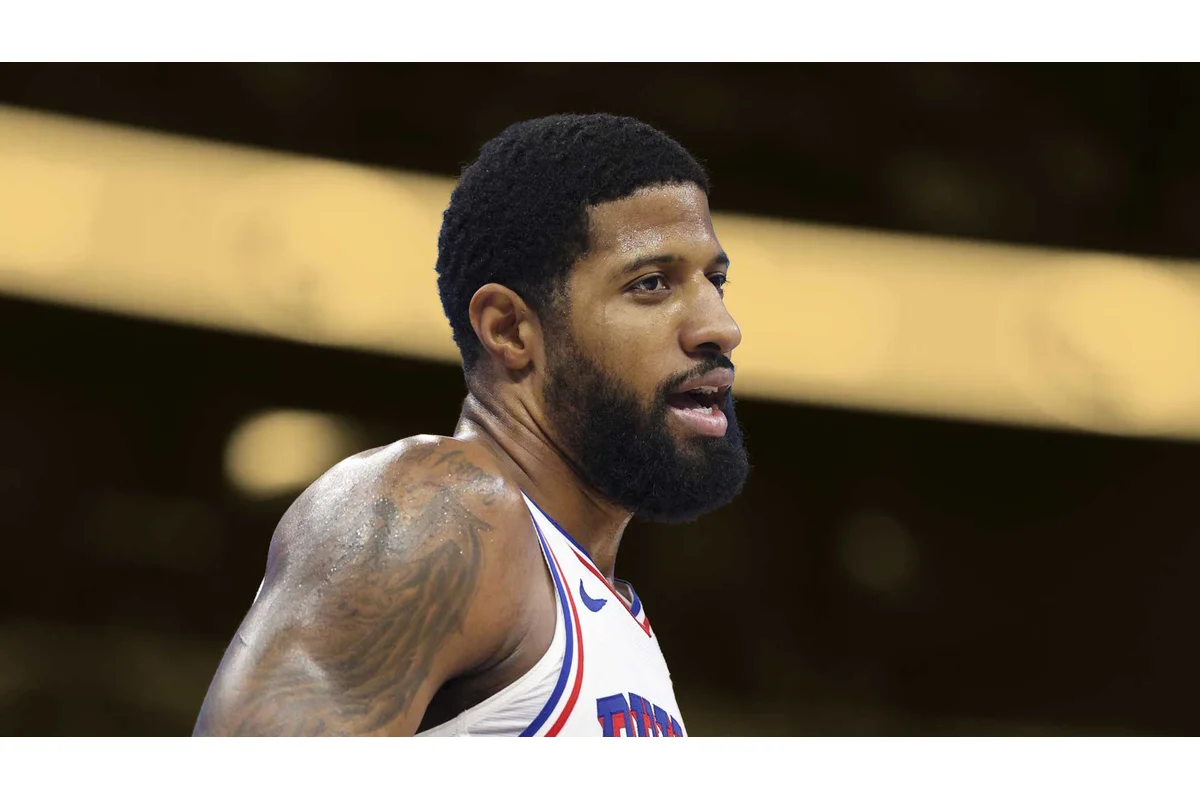
Philadelphia 76ers star Paul George’s 25-game suspension, announced in early 2026, has stirred intense controversy and criticism, particularly regarding his explanation that the suspension stemmed from improper medication to manage mental health. The NBA’s decision sidelines George until late in the season, striking a blow to both the player and the 76ers as the fallout continues to dominate sports conversations nationwide.
The suspension follows revelations that George violated the league’s anti-drug policies, resulting in significant financial penalties and losing nearly $12 million from his $51.7 million contract. While George has expressed accountability and sought understanding by citing mental health reasons, many figures within and beyond basketball have openly questioned his narrative, fueling a heated debate across professional sports.
Michael Irvin Criticizes George’s Mental Health Excuse amid Past Controversy
Among the most pointed voices is Michael Irvin, a three-time Super Bowl champion and NFL legend who faced his own drug-related legal issues in the 1990s. Speaking on the “It Is What It Is” podcast, Irvin challenged the broad use of mental health as a justification for drug violations, noting the ambiguity and potential misuse of the term.
“When you put it up under mental health, what do you say to it, when somebody’s saying they’re doing it for mental health?”
Irvin said on the It Is What It Is podcast.
“That’s just such a broad scope of things. When you put it under mental health, you drew that cover that nobody can really say anything about.”
Irvin also reflected with dark humor on his own 1996 arrest in a Texas hotel for cocaine possession alongside former Cowboys teammate Alfredo Roberts and two women, an incident that put his career at risk. He considered how invoking mental health struggles might have altered public perception during that time.
“I should’ve tried that when I was in the hotel room. ’I was dealing with something, mental health-wise, and that’s why I was doing them lines.’”
“I hope he gets the help he needs.”
Despite joking about his past, Irvin’s experience was serious. He pleaded no contest to felony cocaine possession, resulting in deferred probation, a fine, and a suspension for the first five games of the NFL season. His reflections underscore the tension between past and present attitudes on drug use and mental health in sports.
Financial and Sporting Impact of George’s Suspension on the 76ers
Paul George’s lengthy suspension has immediate repercussions for the Philadelphia 76ers’ performance and finances. With 25 games out, George will miss nearly half the regular season, weakening the team’s chances in a highly competitive NBA Eastern Conference. The $12 million salary forfeited represents a substantial personal and organizational loss amid an already challenging season.
The 76ers’ head coach and team members have expressed support for George throughout the ordeal, emphasizing the importance of player welfare and understanding. However, this support has not silenced skeptics, who remain wary of the suspension’s underlying reasons and question the adequacy of the league’s response to such infractions.
NBA Veterans Express Doubts Over Paul George’s Explanation
Some former NBA stars have voiced skepticism regarding George’s claim that his suspension stems from mental health-related medication issues. Notably, Shaquille O’Neal, a Hall of Famer and analyst, responded on “Inside the NBA” with a straightforward critique focused on league rules and substance use.
“I just want to say that they give us a booklet on what to do and what not to do… They also give you, inside the booklet, how long it takes you to get rid of something. So, I don’t want to elaborate on what he was doing, but stuff like this should not happen.”
O’Neal’s comments reflect his own experience managing pain with medication throughout his 19-year NBA career without violating league policies or receiving suspensions. His perspective highlights concerns over adherence to anti-drug standards despite personal health challenges.
Similarly, Charles Barkley questioned the circumstances surrounding the suspension, emphasizing his respect for mental health issues but doubting the legitimacy of the explanation as it relates to NBA regulations.
“There’s something fishy going on here. I don’t joke around about mental health, but if you’re taking something for mental health that’s got to be out of line for the NBA, like, that doesn’t make sense to me.”
Barkley also criticized the use of performance-enhancing drugs while leaving room for uncertainty regarding medications prescribed for mental health, underscoring the ambiguity in the current case where no specific medication names have been released.
Former Players and Analysts Critique George’s Public Narrative
Beyond the Hall of Famers, other sports figures have expressed frustration with George’s public narrative. Eleven-year NBA veteran Charlie Villanueva mocked the sequence of nicknames George has earned through his career, pointing out the shift from praise to suspicion.
“He [Paul George] went from playoff P, to pandemic P, to podcaster P, to prescription drug P.”
Villanueva’s remark, made on the “To the Baha” podcast, refers to George’s evolving reputation—from his early playoff heroics against LeBron James’s Miami Heat to his inconsistent performances during the COVID-19 pandemic bubble, then to questions over his focus as a media personality, culminating in doubts related to his suspension and medication use.
Many in the basketball community remain anxious and upset, feeling that George’s explanation raises more questions than it answers amid mounting pressure on sports leagues to balance player health with strict anti-drug enforcement.
Broader Implications for Mental Health Discussions in Sports Discipline
The controversy surrounding Paul George’s suspension has ignited broader debates about how mental health is addressed in professional sports, particularly when related to drug policy violations. The tension between supporting athletes’ mental well-being and enforcing league rules has proven difficult to reconcile, with varied opinions from current players, analysts, and former champions alike.
Michael Irvin’s remarks reveal how mental health justifications can be perceived as a shield in disciplinary matters, complicating transparency and accountability. Meanwhile, the combined skepticism from Shaquille O’Neal, Charles Barkley, and others reflects unease about potential loopholes in enforcement that could undermine the integrity of sport.
As leagues face growing public scrutiny on these matters, the Paul George case may serve as a pivotal moment to reassess policies and communication strategies around substance use and mental health. The NBA and other sports organizations will likely need to clarify guidelines further and educate stakeholders to maintain trust and fairness.
For the Philadelphia 76ers, the impact is immediate and tangible: key player availability is reduced during crucial fixtures, and team morale must adapt to the ongoing controversy. Fans and commentators alike will watch closely how this situation evolves, especially as new information may emerge and the league’s stance on such complex cases continues to develop.
Michael Irvin says he wish he used the Mental health angle like Paul George after getting caught with c*****e in 96 via @iiwiitalk pic.twitter.com/CW7Xtb8TLz
— 2Cool2Blog (@2Cool2Blog) February 2, 2026
