
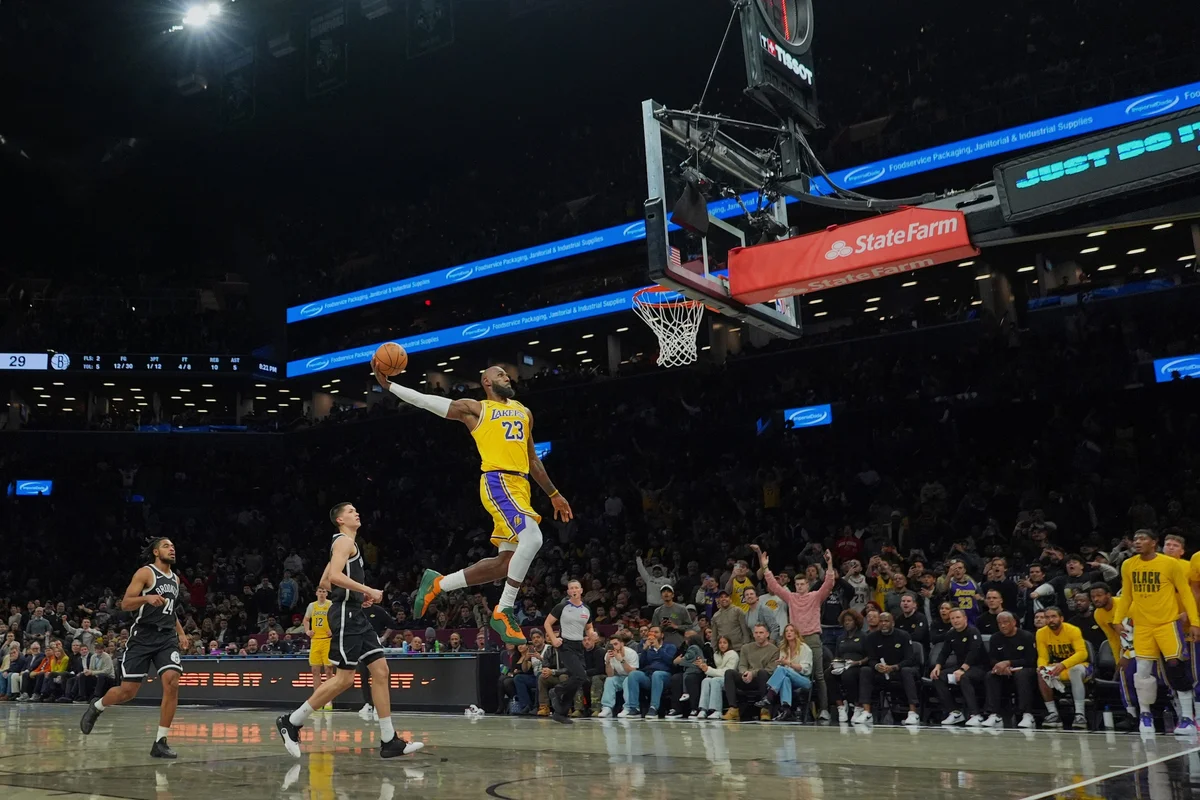
Austin Reaves made his much-anticipated return from a calf injury on Tuesday night in the Los Angeles Lakers’ game against the Brooklyn Nets, immediately showing his value on the court. Lakers assistant coach JJ Redick carefully balanced Reaves’ minutes to ensure a safe comeback without rushing the guard back too quickly.
Despite the limitation placed on Reaves’ playing time, the Lakers dominated the contest, winning convincingly with a score of 125-109. The decisive victory highlighted the strength of the Lakers beyond the final numbers, underscoring Reaves’ positive influence as he reintegrated into the lineup.
Limited Minutes Highlight the Team’s Precautionary Approach
Reaves entered the game off the bench and was limited to 21 minutes in total, falling within the expected 20-25 minute range to safeguard his recovery. During that time, he contributed 15 points, grabbed four rebounds, and recorded two steals, finishing with a +10 plus-minus rating. His scoring was not entirely efficient, reflecting the adjustment period after a serious injury.
Watching his performance made it clear that Reaves still needs time to regain full form, but the Lakers have wisely decided to regulate his minutes to promote long-term health rather than short-term gains.
Repeated Calf Injuries Require Extra Vigilance
This season, Reaves has suffered two calf injuries, with the first already significant, and the recurrence demanding heightened caution. The unusual frequency of such injuries has raised concerns among players and staff alike.
LeBron James, Reaves’ teammate, emphasized the prevalence of calf injuries in today’s pace-and-space style of play, describing it as “the new high ankle sprain.” This shift in injury patterns highlights the physical toll modern NBA athletes face, particularly on their lower legs.
The stakes are notably serious: calf injuries are often precursors to Achilles tendon tears. NBA stars like Kevin Durant, Jayson Tatum, and Tyrese Haliburton have endured this misfortune, intensifying worries about Reaves’ health trajectory.
“No one wants Reaves, or any NBA player quite frankly, to end up in that boat,”
the Lakers guard’s situation calls for preventative care measures at every opportunity without overprotecting him to the point of inactivity.
Reaves’ Role Solidifies as Vital to Lakers’ Success
Austin Reaves has become a key contributor for the Lakers, and his absence was deeply felt as the team struggled to maintain its usual performance level. Given this, preserving his physical condition is not only a matter of player welfare but also a strategic necessity for Los Angeles.
Keeping a 27-year-old guard like Reaves healthy will be a central priority as the Lakers navigate the remainder of the season, aiming to avoid setbacks and maximize his contribution on the court.
