

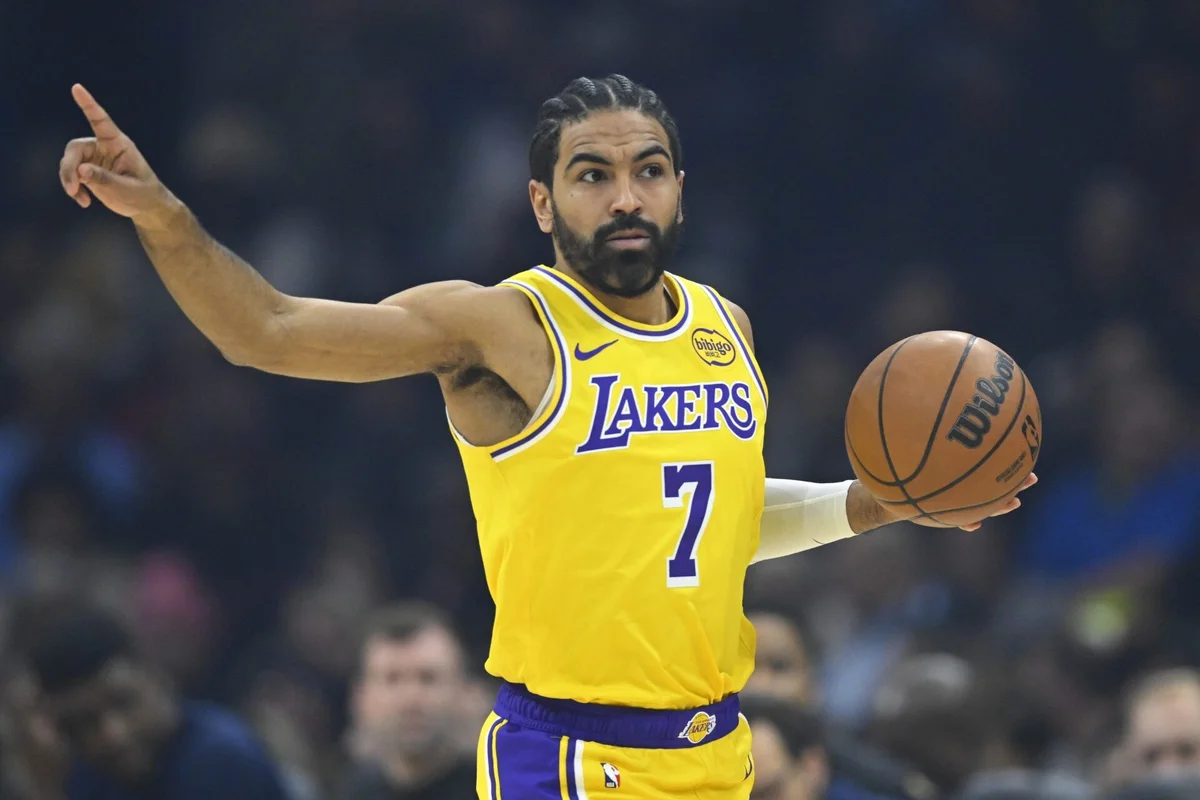
In 2023, the Los Angeles Lakers signed Gabe Vincent following his standout playoff performance where he scored over 20 points in five games and played a crucial role in leading the Miami Heat, an eighth seed, all the way to the NBA Finals. This move was intended to add valuable scoring and defense to a team that had just reached the Conference Finals. However, the outcome revealed that player fit and contract terms are just as important as ability when building a championship contender.
The Lakers agreed to a three-year, $33 million contract for Vincent, a figure that seemed reasonable for a proven scorer and defender joining a prominent team. Yet, Vincent’s inconsistent shooting from beyond the arc and limited scoring output made him a questionable fit, especially given Los Angeles’ ongoing instability at the point guard position.
Challenges in Combining Vincent and Austin Reaves in the Backcourt
Austin Reaves has shown star potential, but even assuming Vincent hadn’t missed most of the 2023-24 season due to injury, the tandem posed risks. Both players faced immense pressure to exceed their previous best seasons, with Reaves having a career-high average of 13.0 points per game and Vincent topping out at 9.4 points. Their weaknesses were clear: Reaves struggled defensively, and Vincent’s three-point shooting hovered around 33.9 percent. The result was predictably disappointing as Vincent failed to deliver the offensive boost needed by the Lakers while Reaves faltered on defense.
Why the Lakers Must Avoid Lengthy Contracts for Questionable Fits
While some defended the decision to sign Vincent—highlighting his defensive grit and valuable playoff experience as assets to a team aiming for a title—the Lakers have little room for similar risks in future free agency periods. Giving Vincent a fully guaranteed three-year contract proved problematic, especially as the team was already burdened with several maximum-level salaries that reduced financial flexibility.
Looking ahead to 2026, the Lakers face an even tighter salary cap situation with Luka Doncic’s $49.8 million salary set for the 2026-27 season, Reaves on track for a large contract, and LeBron James’ unrestricted free agency looming. Instead of locking in players for three or more years, as they still are financially tied to Jarred Vanderbilt’s deal, the Lakers’ front office led by Rob Pelinka must prioritize shorter, more flexible contracts. This strategy would help the team manage financial pressure and facilitate trades if roster moves become necessary.
Lessons Learned from Vincent’s Tenure for the Future of the Lakers
Vincent often faced harsh criticism during his time with the Lakers, but his tenure underscores a critical lesson: financial prudence is vital for sustaining success, especially in the emerging Doncic era. Overcommitting to imperfect roster fits through long-term deals reduces the team’s ability to adapt and recover from mistakes. Going forward, Los Angeles must emphasize contract structures that provide options rather than constraints, allowing the franchise to maintain competitiveness amid evolving challenges.
