

The Brooklyn Nets surprised analysts and fans alike by waiving Cam Thomas on Thursday, parting ways with their leading scorer from recent seasons. The move came after the team had struggled to secure a trade, ultimately leading to the decision to release the guard. This development marked the end of Thomas’ five-year journey with the Nets, a decision fueled by a combination of factors related to team dynamics and performance.
Explaining the reasoning behind Thomas’ release
When asked on Saturday about the rationale for moving on from Thomas, Nets coach Jordi Fernandez deferred to the front office, stating that such decisions fall under management’s purview.
“That’s probably a question for management, because my job is to coach the team on the floor,”
Fernandez said. He added,
“Obviously, there’s communication between management and the coaching staff, and we’re on the same page, but I’m not going to speak for Sean [Marks]. When Cam was here, he was part of us, he wore our jersey, he played hard, and competed. The only thing I can say is thanks for all the time he spent with us… I’ve already told you guys what type of player I thought that I wanted to see. He always worked and tried and was a teammate here. Now it’s exciting for him to start somewhere else. We just wish him luck and say thanks for wearing our jersey.”
Assessing Thomas’ performance and challenges
Throughout his tenure with the Nets, Thomas showcased undeniable scoring ability, often delivering impressive offensive bursts. However, his defensive weaknesses and limited playmaking skills curtailed his overall contribution to the team’s success. Statistical analysis revealed Brooklyn frequently performed better with Thomas off the court across most of his five seasons, emphasizing the impact of his defensive liabilities despite his scoring prowess.
Contract decisions and season struggles preceding the waiver
Thomas’ exit appeared to be anticipated since the offseason, as the Nets refrained from offering him a long-term contract extension. Brooklyn proposed two options: a two-year deal worth $30 million with a team option, and a one-year $9.5 million contract conditioned on Thomas surrendering his no-trade clause. Opting for neither, Thomas instead accepted his $6 million qualifying offer, a choice now regarded as a strategic misstep. The Nets’ start to the season proved difficult, opening with an 0-7 record while heavily relying on Thomas’s scoring.
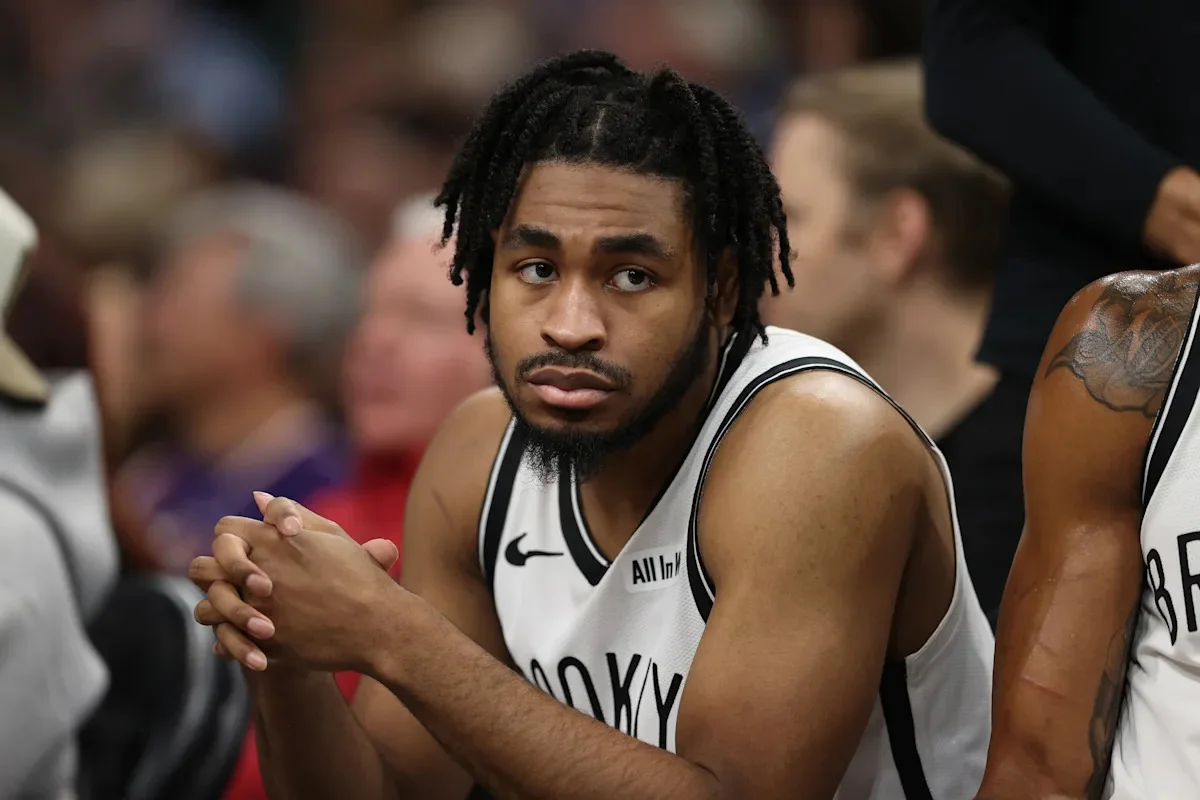
Compounding the situation, Thomas suffered his fourth left hamstring injury in a year during the eighth game, sidelining him while the team’s performance markedly improved in his absence. Upon returning, his role diminished significantly, transitioning to a bench player in his final 13 outings. Despite averaging 12.8 points, 2.0 rebounds, and 3.3 assists, his shooting percentages dipped to 39.8% overall and 30.6% from three-point range.
Next steps for Cam Thomas and the Nets’ roster changes
With no trade offers meeting the Nets’ demands before the deadline, the organization waived Thomas, freeing up valuable playing time for its quartet of promising rookie guards. As the 24-year-old prepares to explore new opportunities through free agency, he expressed determination and optimism about his future. Thomas told ESPN Andscape’s Marc Spears,
“Super excited ready to actually help and contribute to another team,”
adding,
“My next team is getting elite scoring, good playmaking and a good combo guard.”
The Nets’ decision to part ways with their once-promising scorer reflects a broader strategy focused on restructuring the backcourt and prioritizing team balance over individual talent. How Thomas capitalizes on this fresh start remains to be seen, but his scoring skills and willingness to improve could attract interest from contenders seeking offensive firepower alongside versatile guard play.
