
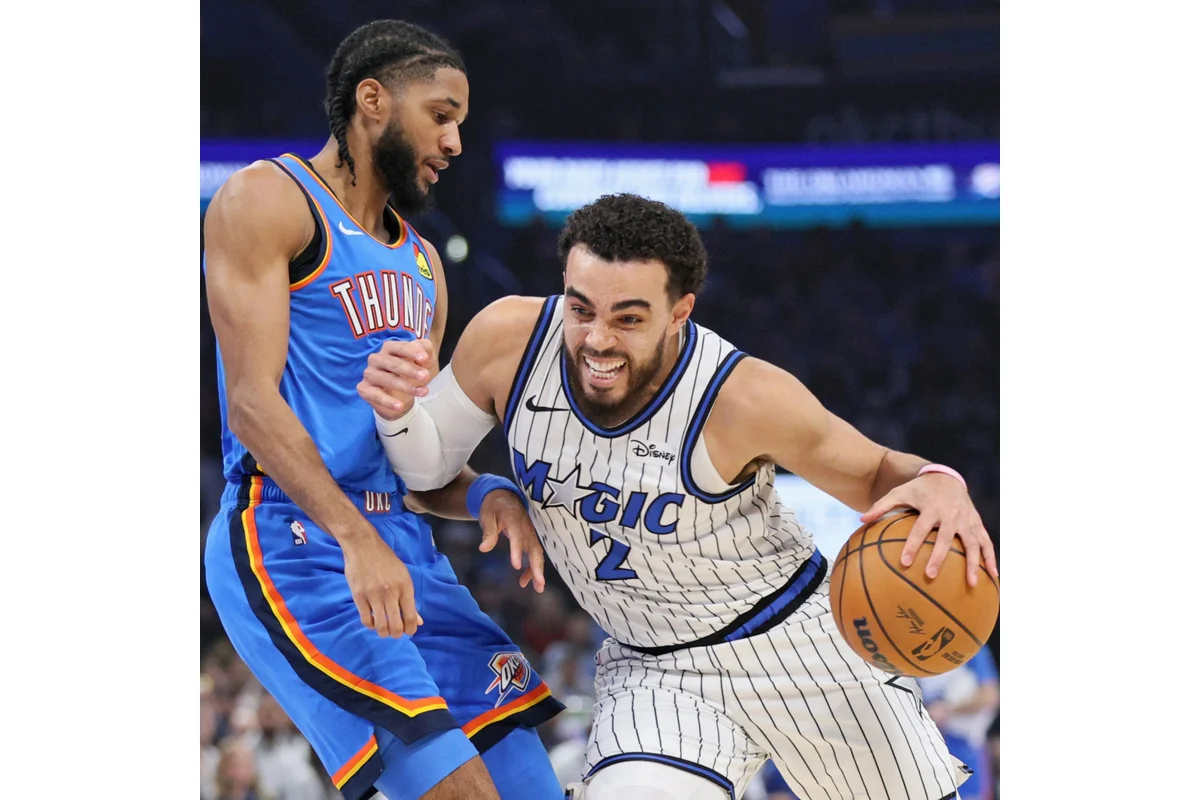
The Orlando Magic’s decision to move Tyus Jones at the trade deadline was driven primarily by financial pressures rather than on-court performance. Struggling through a difficult season, the team faced an urgent need to reduce their payroll and avoid the NBA’s repeater tax, which led them to trade Jones along with two second-round picks to the Charlotte Hornets for cash considerations. This move freed up $5.6 million in cap space, allowing the Magic to stay under the tax threshold for the season.
The Magic’s motivation was clear: save on luxury tax payments and retain some flexibility to fill roster spots. Given Jones’ $7 million one-year contract and his recent decline in production, sacrificing him seemed like the most straightforward path. Yet, while cap space was gained, the Magic struggled to extract any meaningful player or assets in return, leaving fans and analysts disappointed.
How the Trade Chain Reacted and Resulted in a Loss for Orlando
While Orlando aimed simply to manage their salary cap, the subsequent sequence of transactions revealed just how poorly the Magic executed their move. The Hornets, after acquiring Jones, quickly flipped him to the Dallas Mavericks in exchange for Malakhi Branham and two second-round picks. Branham himself had arrived in a prior deal involving the Washington Wizards and Anthony Davis.
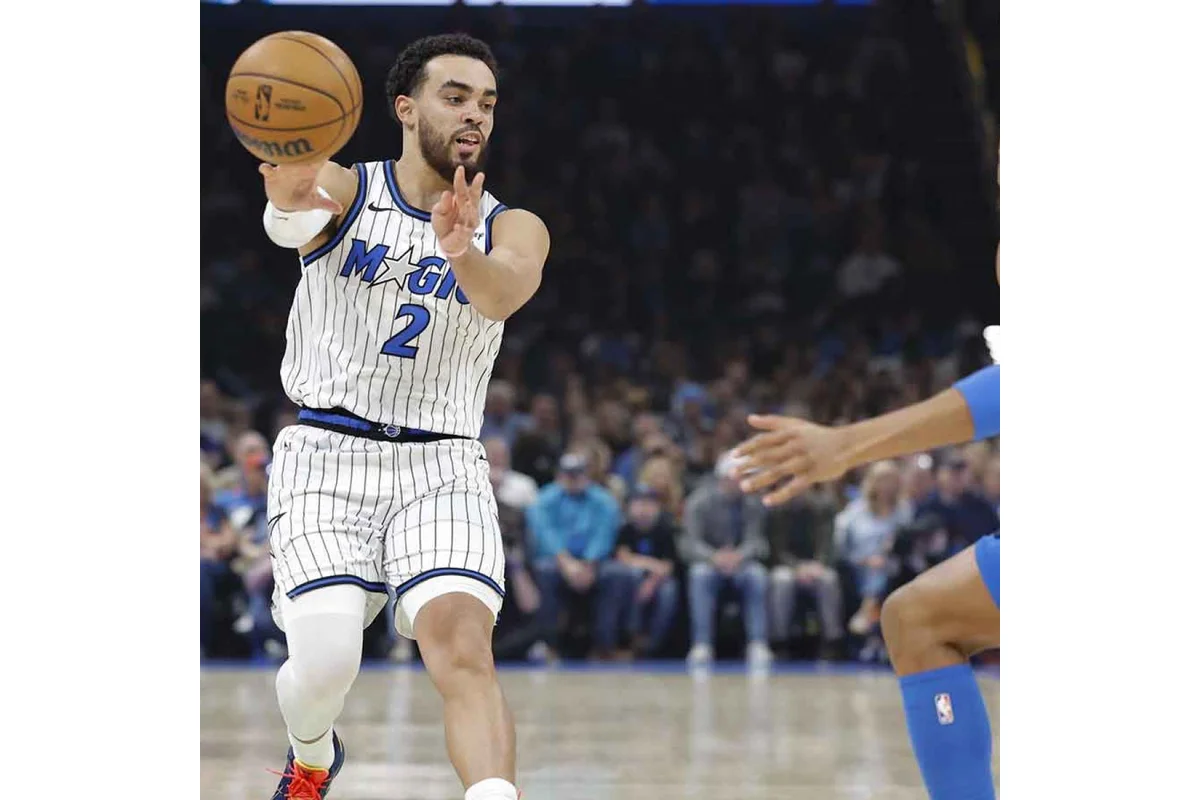
Jake Fischer reported that the Mavericks had been interested in Jones during the offseason, but the Magic’s earlier offer had been financially too large. Dallas finally landed Jones post-trade deadline, a player they clearly valued. Meanwhile, Charlotte ended up enhancing their assets with a player and draft picks, highlighting a missed opportunity for Orlando, who appeared content to simply shed salary without improving their roster.
The Magic’s disinterest in Branham was expected, as their priority was solely to clear tax space. Still, the overall outcome left a bitter impression for a team that has often remained inactive during trade deadlines, despite juggling a roster struggling to meet its season goals.
Why Tyus Jones Failed to Meet Expectations in Orlando
One of the more puzzling issues for the Magic was why Tyus Jones, expected to stabilize the backup point guard position, did not deliver. Jones had been a highly sought-after addition by fans and management alike, suggested by both his skill set and fit within the team’s needs. Even Jeff Weltman, Orlando’s president of basketball operations, recognized Jones’s defensive deficiencies but believed the Magic’s strong team defense could compensate.
However, that theory unraveled quickly as injuries plagued the team and defensive performance suffered. Simultaneously, Jones’ shooting ability—previously a key asset—declined sharply. Over the season with Orlando, he averaged only 3.0 points per game with a three-point shooting percentage of 29.4%, contributing a mere 2.4 assists per game. His playing time steadily declined as a result.
“It’s sports. It didn’t work,” Weltman said after the trade deadline.
“I really don’t know why. And he is a great guy and I think he is going to land in Dallas, and we wish him the best, and I think he is going to be great there.”
Despite his on-court struggles, Jones was well-liked in the locker room, and teammates acknowledged that the atmosphere at practice changed noticeably after his departure. Questions remain about whether Orlando’s injuries and inconsistent lineups hindered Jones’s performance or if age was a factor. Nevertheless, the Magic felt compelled to move forward.
Jones’s debut with the Mavericks was solid, scoring four points and assisting seven times without a turnover in 16.5 minutes. Dallas maintained a +18 differential during his time on the floor, even in a loss to San Antonio where they trailed most of the game. This performance further highlighted the sense that Orlando left value unclaimed.
Orlando’s Quiet Deadline and Its Consequences
Beyond the Jones trade, the Magic’s activity at the deadline was minimal, intensifying fan frustration. Watching the Charlotte Hornets collect multiple draft picks and a useful player in exchange for Jones underscored the contrast between a team utilizing its cap space strategically and the Magic’s apparent reluctance to move aggressively.
Historically, Jeff Weltman’s trades have focused on clearing cap space or securing young talent—such as the Nikola Vucevic trade that began a rebuild or the acquisitions of Markelle Fultz and Bol Bol with second-round picks—rather than adding impactful veterans midseason. This strategy made sense when Orlando was rebuilding, but as the team inches closer to playoff aspirations and championship contention, a more assertive approach on the trade market seems necessary.
Many Eastern Conference rivals acted dynamically at the deadline, capitalizing on a weaker landscape. While Weltman explained a desire to avoid disrupting the core roster amid injury issues, other franchises managed to improve their benches and accumulate assets. Even Charlotte’s moves to leverage cap space to bolster the roster illustrate a level of market engagement the Magic appear to lack.
Weltman demonstrated last summer that Orlando can be aggressive, exemplified by his push to acquire Desmond Bane. However, this deadline felt like another opportunity missed. The Magic’s primary objective was to avoid tax penalties rather than strengthen a roster in need of immediate upgrades to compete deeper into the playoffs this year.
Tyus Jones, sources say, was who Dallas actually targeted above D'Angelo Russell this summer, before Jones found a richer deal with Orlando than the Mavericks could afford.
— Jake Fischer (@JakeLFischer) February 5, 2026
