
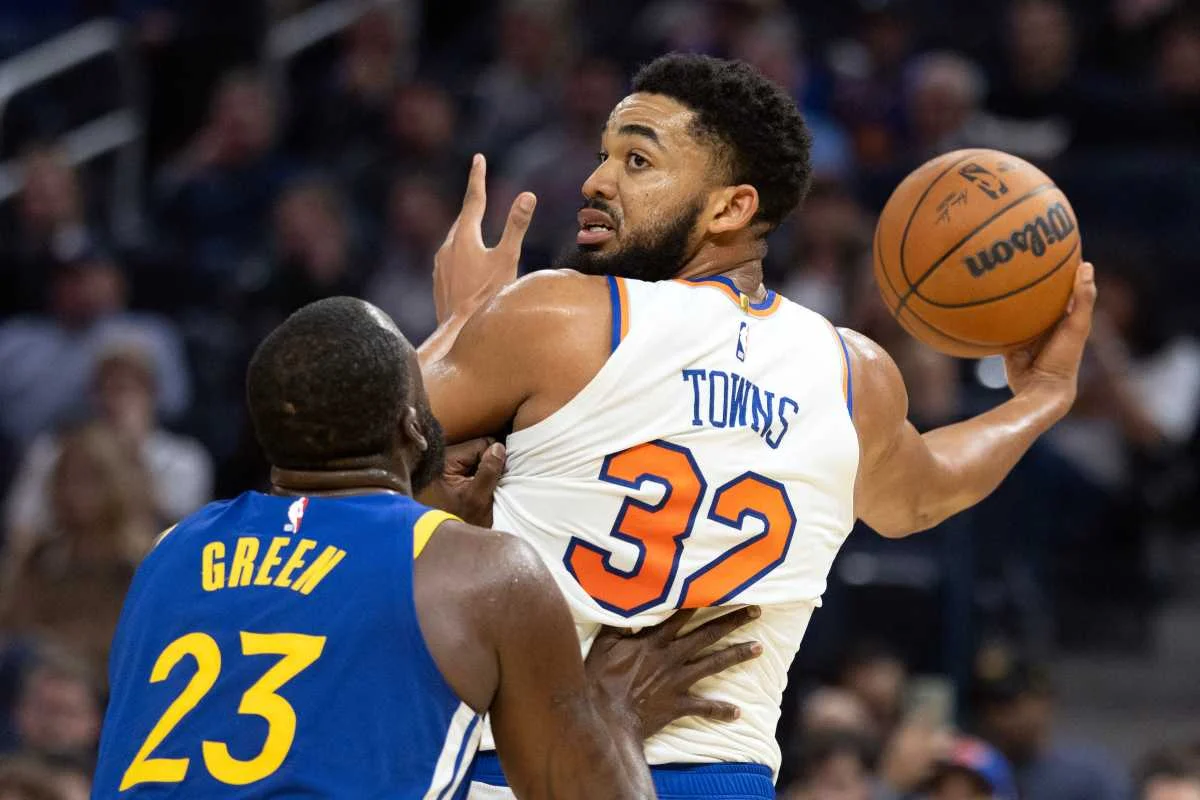
Karl-Anthony Towns fouling issues resurfaced prominently during the New York Knicks’ 137-134 overtime defeat to the Indiana Pacers on Tuesday, a game shaped significantly by Towns fouling out. All-Star point guard Jalen Brunson shared part of the responsibility, recognizing that a miscommunication during an attempted screen contributed to Towns’ critical sixth foul late in the extra period.
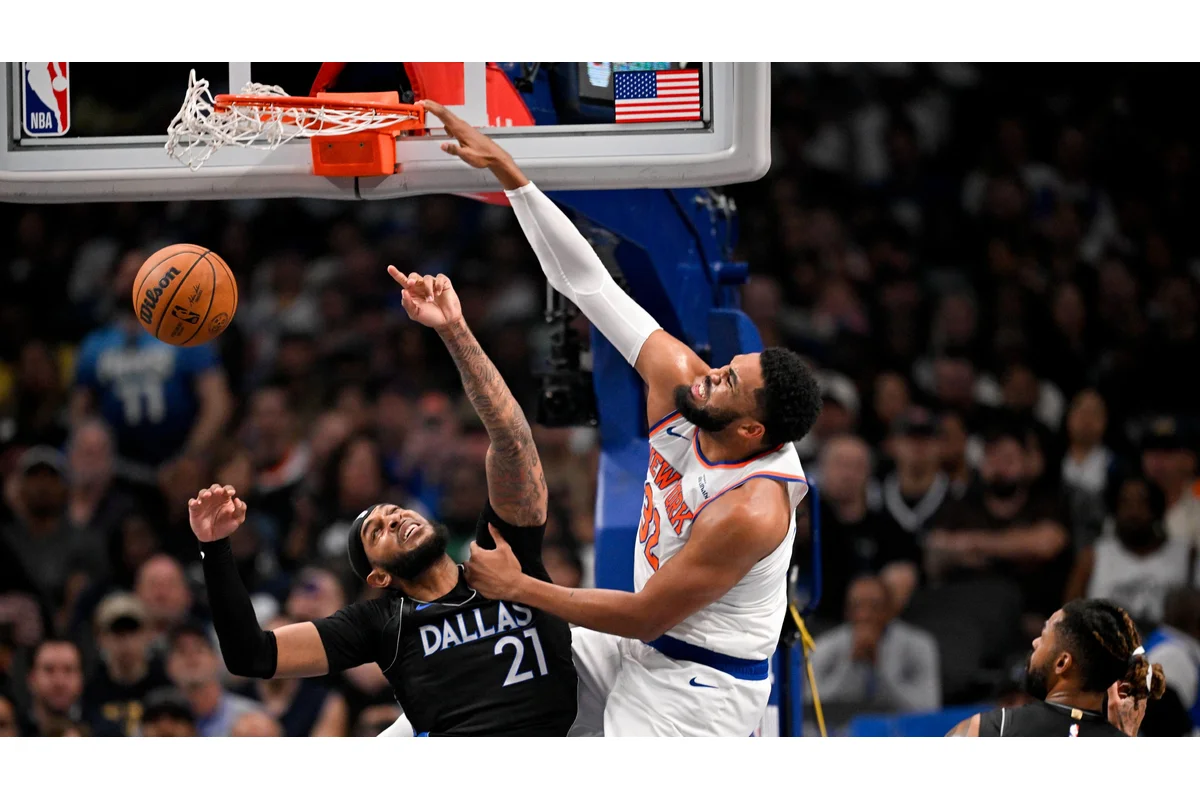
With just over two minutes remaining in overtime, as Brunson tried to use Towns’ screen against Pacers defender Aaron Nesmith, an unfortunate sequence unfolded: Nesmith fell after the contact, prompting an official’s whistle, while Towns contested the call but ultimately fouled out, marking the second time in three games he has hit the foul limit and had to leave the court during crucial moments.
Details Behind the Controversial Foul Call and Coaching Decisions
Knicks head coach Mike Brown revealed that his assistant coach, Jordan Brink, advised against challenging the foul call during overtime. Brown explained that it appeared Towns may have inadvertently tripped Nesmith by placing his foot outside his shoulder, making it difficult to contest the ruling effectively.
“It looked like he might have had his foot out and the guy just tripped over his foot. That’s a hard one to challenge because it was inadvertent,”
Mike Brown said.
“His foot looked like it was outside of his shoulder when he tried to stop. The guy just got his feet tangled up. It wasn’t anything we were going to fight.”
This incident robbed Towns of the chance to influence the endgame after showcasing strong performance throughout the match. Brunson missed three consecutive potential go-ahead shots late in regulation, followed by Landry Shamet’s unsuccessful game-winning three-pointer attempt. Towns then stepped up, sinking two free throws with just 0.2 seconds remaining, tying the game and forcing overtime.
Towns’s On-Court Performance and Reduced Minutes
Despite his disqualification, Towns contributed 22 points on 8-of-17 shooting, pulled down 14 rebounds, and provided three assists across 32 minutes, fewer than Brunson, Josh Hart, and Mikal Bridges, who each logged over 40 minutes. Coach Brown emphasized the importance of avoiding “cheap” fouls to sustain player availability in critical moments such as overtime.
“Throughout the course of the game, we hope that you don’t pick up any cheap ones,”
Brown said.
“So if there is a game that goes into overtime or anything like that, we can afford to stay on the floor.”
Towns’s Foul Troubles and Defensive Challenges in the NBA
Karl-Anthony Towns leads the NBA in offensive fouls this season with 48, standing 14 fouls ahead of the runner-up, Jaren Jackson Jr. He is part of a four-player tie for the most total personal fouls in the league, sharing the top spot with Jackson Jr., Jaden McDaniels, and Wendell Carter Jr., each having fouled out 177 times.
When asked whether he felt he was being unfairly targeted by referees, Towns declined to give a direct answer, dodging the question with humor.
“That’s a [league] fine question,” he said.
“I ain’t answering that. I’ll let y’all make y’all own interpretations.”
Adjusting Strategies to Limit Offensive Fouls Moving Forward
Towns expressed his intention to adapt his playing style in order to reduce penalties related to offensive fouls.
“There’s things you can do, and sometimes you just have to take parts of your game and put ‘em on a shelf for a day and utilize other parts,”
he explained.
“That’s why I work hard on every aspect of my game. So if things aren’t going right in that aspect, I can go to another bag of tricks that I’ve got.”
He acknowledged that better coordination between himself and Brunson during pick-and-roll situations is essential to limit the number of offensive fouls called on screens in the future. Towns showed awareness of how officials are officiating and the necessity to adjust accordingly.
“You understand how [the officials] are calling it, and you’ve gotta change with the game,”
Towns said.
“And I understood that the closer the screen gets, the more [the defender is] gonna fall, and it’s gonna go into the area to be a judgment call.”
“I just told [Jalen] in the game, ‘I’ve gotta get a step ‘cause they’re gonna attempt to fall and try to get a foul.’ It’ll be harder for them to garner an offensive foul when you have a step. You’ve gotta obviously adjust to how the game’s gonna be called out there, and the signs were early telling us what we had to do to be successful.”
Implications for Knicks and Towns’s Future Performances
The Knicks’ loss highlighted ongoing challenges with Towns’s foul management, a factor that has increasingly limited his availability during pivotal moments and affected the team’s overall rhythm. With Towns’s fouling issues remaining a significant concern, the Knicks must emphasize both strategic communication on the floor and technical adjustments to limit costly fouls.
Going forward, Towns’s ability to modify his approach to avoid unnecessary fouls could prove crucial in helping New York close out tight contests. Meanwhile, enhanced synchronization with teammates like Brunson will be key to reducing missteps in pick-and-roll executions.
