
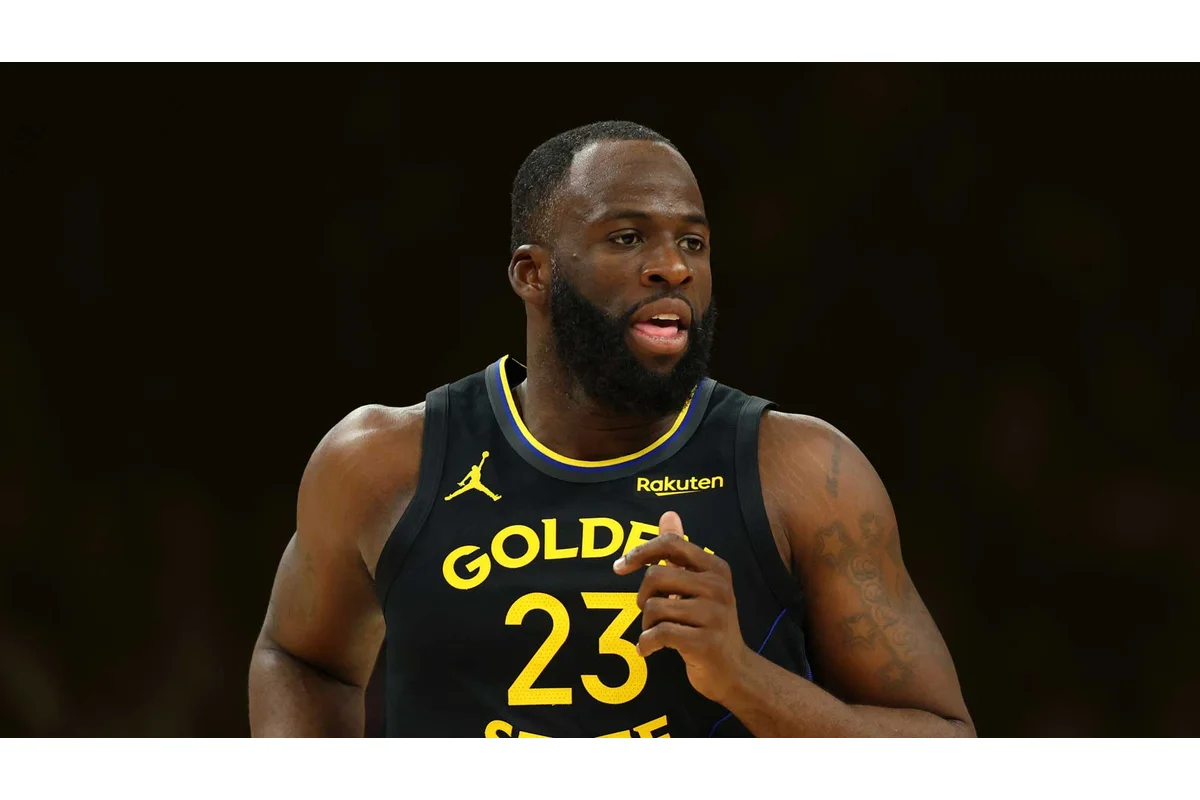
Draymond Green, known for his directness both on and off the basketball court, has publicly criticized prominent analyst Doris Burke for what he describes as biased coverage. The Golden State Warriors forward aired his grievances in a social media post, expressing frustration over Burke’s treatment of him during broadcasts, marking another tense moment in his long history of outspoken remarks.
Doris Burke holds a respected position among basketball analysts, admired for her ability to interpret and explain the complexities of the game to audiences. Nonetheless, Green perceives her commentary regarding him as unfair and skewed.
Green’s Perception of Biased Coverage
Draymond Green has developed a reputation in the NBA as a candid figure willing to confront narratives that he finds misleading or unjust. This time, his issue centers on what he considers a recurring pattern in Burke’s commentary. Green’s comments came in response to a fan highlighting an in-game moment involving Victor Wembanyama, pointing out that Green was being physically challenged by the young player.
Green did not hold back when describing Burke’s coverage, stating,
“She will always ignore things happening to me and only half-mention the good. And take shots when they are available. Been that way for a while,”
expressing his belief that her coverage selectively overlooks his positive contributions and focuses disproportionately on criticism.
The Implications of a Public Dispute
This critique from a four-time NBA champion implies a longstanding dissatisfaction rather than a reaction to a single broadcast incident, suggesting that Green has harbored these sentiments about Burke’s analysis for some time. By choosing to voice his opinions openly, Green brings into focus the complicated relationship between NBA players and media figures.
Burke, as a prominent ESPN analyst, occupies a position where responding to player criticisms could risk perceptions of partiality or undermine her professional objectivity. Meanwhile, ignoring such comments might allow the player’s narrative to dominate public discourse without challenge.
The confrontation highlights the modern dynamics in sports coverage, where athletes can use social media platforms to directly dispute coverage and influence public opinion, altering traditional boundaries between media and players.
Potential Outcomes of the Controversy
Whether Green’s accusations will lead to any formal dialogue or corrective action remains uncertain. This exchange adds to the ongoing tension between outspoken players like Draymond Green and members of the basketball media, reflecting broader challenges in maintaining balanced, respectful exchanges in the spotlight.
For now, this incident underscores the evolving communication landscape in the NBA, where media analysis and player response can quickly spiral into public disagreements, affecting both reputations and relationships within the sport.
