

Carter Bryant’s unexpected breakthrough has significantly altered the trajectory of the San Antonio Spurs this season. Once considered the team’s weakest rotation player, Bryant’s quick transformation over a few weeks has turned him into a dependable contributor, showcasing the importance of his progression for the Spurs’ makeup.
Initially viewed as a long-term project, Bryant’s development defied expectations under Coach Mitch Johnson’s guidance. His improved defensive discipline—resisting the urge to chase every pump fake or steal—has not reduced his disruptive impact, evidenced by numerous forced turnovers and impressive blocks in recent matchups.
On offense, Bryant’s shot has become remarkably efficient. He has converted 41.6% of his three-point attempts, averaging nearly five shots per game in the past five contests. This offensive output has been bolstered by his enhanced off-ball movement, where he consistently positions himself in optimal spots to maximize scoring opportunities.
If Bryant maintains his current performance on both ends of the court during his rookie year, the Spurs could look forward to a promising future driven by his continued growth.
How Bryant’s breakthrough affects key Spurs roster questions
Bryant’s rise has come at the expense of Jeremy Sochan, who had already fallen out of the rotation before the NBA trade deadline. Bryant’s emergence as a reliable “three-and-D” player limited Sochan’s chances to reclaim minutes on the floor.
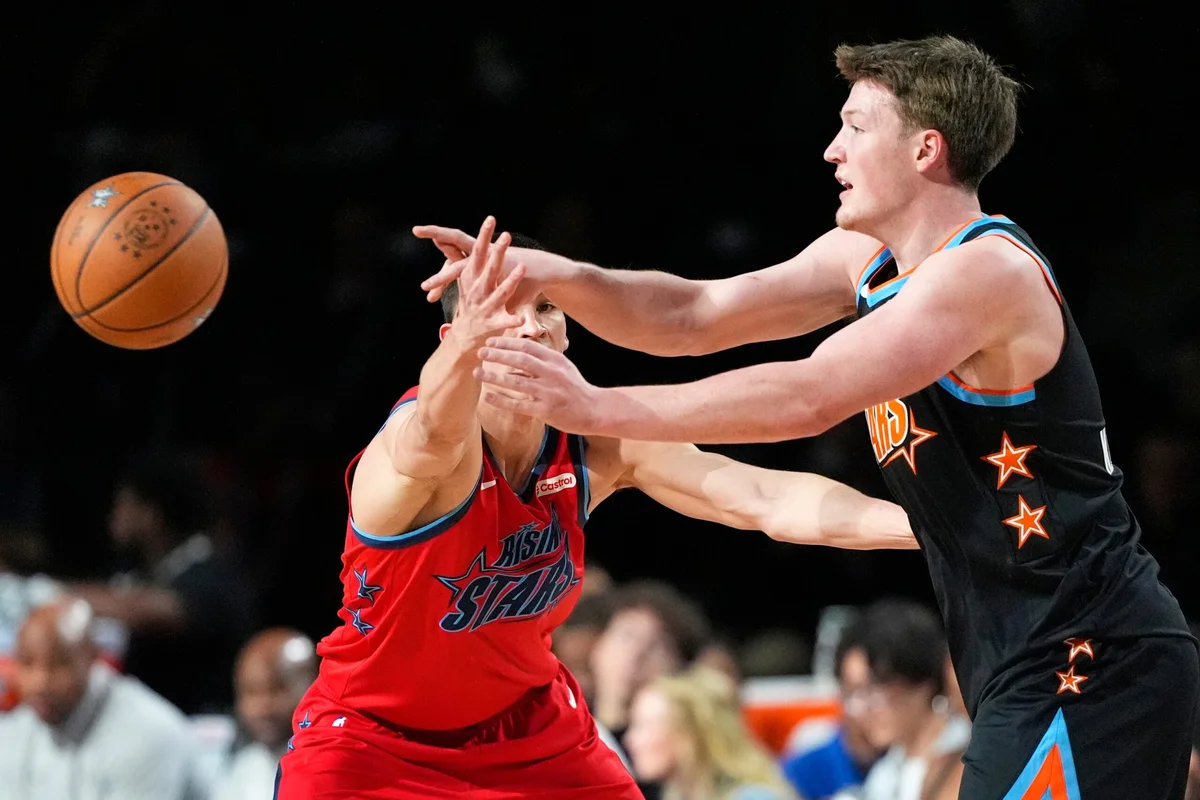
San Antonio’s uncertainty at power forward has been an ongoing concern. Harrison Barnes has provided steady veteran presence but is showing signs of decline and is now coming off the bench. This shift led to Julian Champagnie taking over the starting role, though his long-term fit remains unclear.
With Barnes potentially departing after this season and Sochan no longer in the mix, the Spurs face a pressing need to identify a long-term power forward. Should Bryant continue progressing at his current pace, he could secure a starting spot next season—a development that would provide significant relief for the team.
Bryant’s defensive versatility as a lockdown perimeter defender adds to a core anchored by Stephon Castle, who pressures opposing guards intensely, and Victor Wembanyama, who protects the rim inside. At just 20 years old, Bryant fits neatly into the Spurs’ timeline for sustained competitiveness.
Bryant’s emergence brightens the Spurs’ future outlook
Thanks to his rookie contract, Bryant represents a valuable, cost-controlled asset for the Spurs—one they can rely on without risking salary cap constraints. Alongside Dylan Harper, he provides the organization with a competitive advantage, as three of San Antonio’s top players remain on rookie-scale deals, sheltering the team from salary difficulties under the new collective bargaining agreement.
Moreover, if Bryant evolves into a reliable starter in his second season, the Spurs could enjoy a stable core for at least four years. This group would include Victor Wembanyama, Stephon Castle, Dylan Harper, Fox, and Bryant, creating a solid foundation heading into the future.
At a time when the Spurs appear to be peaking competitively, Bryant’s surge brings renewed energy and hope to the franchise as they navigate the season and beyond.
