
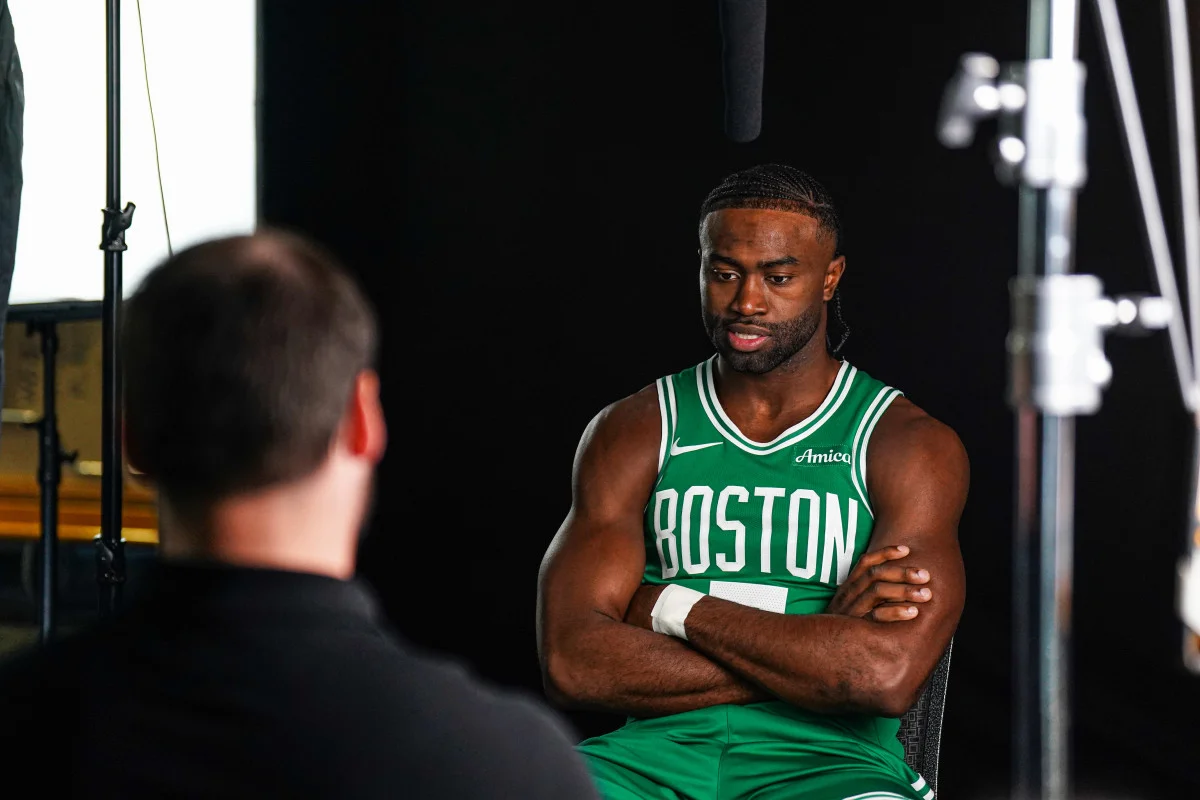
On a weekend filled with NBA All-Star activities, the Beverly Hills Police Department abruptly terminated a panel event organized by Boston Celtics star Jaylen Brown, citing permit issues. The gathering, intended to foster positive discussions on cultural advancement, took place at a mansion in the Trousdale Estates neighborhood of Beverly Hills and reportedly welcomed around 200 attendees. Brown, known for his intellectual and social activism, expressed frustration over the police action that halted the event he had heavily invested in.
The City of Beverly Hills noted that a permit had been applied for and subsequently denied due to previous violations linked to the event location. Despite this, officials said the organizers proceeded with the gathering, prompting police to intervene. Brown contested these claims publicly, disputing the narrative that the event was unauthorized.
Dispute Over Permit Validity and Event Authorization
Following the closure, Brown challenged the city’s explanation, asserting that no permit application had been submitted because it was unnecessary. The event was hosted at the residence of Jim Jannard, the founder of Oakley, who had directly allowed use of his property. Brown explained that the owner’s approval negated the need for a separate permit, contrasting with the city’s official statement. Brown also highlighted the significant financial commitment made toward preparing the venue, which was wasted due to the police shutdown.
“We didn’t need a permit because the owner of the house, that was his space. We were family friends,” Brown said. “He opened up the festivities to us so we didn’t have to. We never applied for one. … I didn’t have to pay for the house or anything. They just opened it up. I had to pay for the build out, but it was hundreds of thousands of dollars wasted for an event that was supposed to be positive.”
Incident Draws Attention Amid High Security Presence
On the evening when the event was shut down, there were at least seven police cars outside the mansion, an overwhelming law enforcement presence for what was described as a calm networking and panel session. Brown recorded and shared footage of his interaction with Beverly Hills officers, noting his surprise and disappointment with the authorities’ actions.
“I know I play for the Celtics, and I know we’re in LA. But hey, I didn’t think y’all would do me like this,” Brown told police on video.
While Brown refrained from directly accusing the police of racial motivation, he implied that the shutdown was unusual compared with the treatment of other All-Star weekend events, which seemed to proceed without issue despite occurring later in the evening and attracting large crowds.
“All I’m going to say is that everybody else that did something in activation, [there] seemed to be no issues,” Brown remarked. “It was 7 p.m. It wasn’t 10 p.m., it wasn’t 11 p.m., it wasn’t [midnight]. [It was] 7 p.m. … We’re doing a panel. We’re doing stuff that’s positive. There was nobody that was inconvenienced. [We weren’t] blocking traffic. It’s All-Star weekend, it’s Saturday night and it’s 7 p.m. What are we talking about?”
Event Location and Ownership Play Central Role in Dispute
The mansion where the event was held belongs to Jim Jannard, who is closely associated with Brown through Oakley, a brand sponsoring the athlete. Brown indicated that Jannard, described as a family friend, had hosted multiple events at the venue without prior issues or police interventions. Brown also said Jannard was considering legal action against the City of Beverly Hills in response to the police’s conduct during the shutdown.
“The owner seemed like he was pretty upset,” Brown said. “He wants to file a lawsuit because it’s his house. They’ve done multiple events there and there’s never been an issue. He’s done four or five events even that week, he said, and it was never an issue.”
Outspoken Commentary on Policing and Selective Enforcement in Beverly Hills
Media personality Jemele Hill weighed in on the controversy, suggesting the Beverly Hills Police Department has a pattern of selectively enforcing regulations, particularly in events involving predominantly Black attendees. She pointed to the expensive value of the property rented by Brown and implied that the police response was affected by the racial or social dynamics of the gathering.
I live in LA and everybody knows that Beverly Hills is on this type of time. JB rented a spot worth between $60M-$70M … trust me when I tell you they selectively “enforce” all the time.
– Jemele Hill, Media Personality
Community Reactions Highlight Debate Over Diversity in Beverly Hills
Responses to Jemele Hill’s comments sparked a heated discussion about the city’s demographic makeup. Some social media users defended Beverly Hills as a diverse community with affluent residents from many backgrounds, while others cited census data showing the city is predominantly white, with a relatively small Black population. The debate reflects underlying tensions about social inclusion and representation within affluent areas.
“You are a visitor here. BH is very diverse. Plenty of rich folks from many ethnicities. Let’s sit this one out Michigan State,”
one commenter said.
“Beverly Hills is one of the whitest and least racially diverse cities in California: 76.1% white, 2.0% Black, 8.8% Asian, and 6.8% Hispanic. This means Beverly Hills is drastically whiter and dramatically less Hispanic and Black than the state as a whole,”
another user responded.
“BH is not very diverse guy. Stop with the rhetoric. If you don’t know what you’re talking about…Don’t comment,”
added one more.
“According to the 2020 census BH is 77.9% white. You can sit this one out,”
remarked a different voice in the conversation.
Conflict Amplifies Tensions Between Prominent NBA Figures and Beverly Hills Authorities
The interruption of Jaylen Brown’s panel adds a new dimension to the ongoing rivalry between prominent NBA teams—specifically the Boston Celtics and the Los Angeles Lakers—while highlighting complications outside the basketball court. Brown, a four-time NBA All-Star and Harvard lecturer, rarely reacts angrily, making his public disappointment noteworthy. His experience underscores broader issues of access, respect, and equity encountered by Black athletes in highly visible environments.
I know I play for the Celtics, and I know we’re in LA. But hey, I didn’t think y’all would do me like this,
Brown said in a video directly addressing the police officers who shut down his event.
The incident is likely to invite further scrutiny of Beverly Hills’ event permitting practices and law enforcement conduct, especially during high-profile occasions like NBA All-Star weekend. Additionally, the potential lawsuit by Jim Jannard indicates the city may face legal challenges arising from this confrontation. For Jaylen Brown, this episode sharpens the spotlight on his advocacy for cultural empowerment and social justice, themes he continues to champion on and off the court.
For a little more context, the police came to shut down Jaylen Brown’s panel in Beverly Hills around 7 PM, claiming he didn’t file the proper permit.
“I know I play for the Celtics, and I know we’re in LA. But hey, I didn’t think y’all would do me like this.”
🎥 @FCHWPO https://t.co/FgcympP1Iy pic.twitter.com/ShY3rrk7H2
— Daniel Donabedian (@danield1214) February 15, 2026
I live in LA and everybody knows that Beverly Hills is on this type of time. JB rented a spot worth between $60M-$70M … trust me when I tell you they selectively “enforce” all the time. https://t.co/PauzhZUgrX
— Jemele Hill (@jemelehill) February 15, 2026
