
Following Evan Mobley’s All-NBA and Defensive Player of the Year achievements with the Cleveland Cavaliers, the bar for his performance was set incredibly high. Fans, coaches, media, and teammates alike spoke of the seven-foot forward as a frontrunner in MVP discussions throughout the offseason. As a result, anything less than meeting those lofty standards is now often viewed by some as a disappointment, a viewpoint that gains some fairness given the praise and Mobley’s own expressed confidence during last year’s All-Star Game.
With Darius Garland’s departure to Los Angeles, the scrutiny on Mobley has intensified, especially after losses that unfold on national television. The focus on the 24-year-old forward has sharpened considerably as Cleveland adjusts to its evolving roster.
Challenges in rebounding and defensive responsibilities
In a recent game against the Oklahoma City Thunder, Mobley delivered a catch-and-drive dunk and a jump hook but missed crucial three-point attempts in the final three minutes when the game was still within reach. Although Mobley limited Thunder power forward Chet Holmgren to an unremarkable scoring night, Holmgren dominated the glass with 15 rebounds compared to Mobley’s two. Although both players did not match up directly for all minutes played, the disparity in rebounding numbers was concerning for Cleveland.
All 13 of Oklahoma City’s Thunder offensive rebounds from Sunday. Where do you think the blame lies? pic.twitter.com/eXb19FU7GD
— RealCavsFans.com (@realcavsfans) February 23, 2026
Mobley’s low rebounding total at his size is undeniably problematic. His team’s defensive system, which relies heavily on switches, sometimes leaves him out of optimal positioning, but two rebounds in a game is unacceptable, especially when size and role dictate greater responsibility. Key fundamentals like tracking the ball, securing it firmly, and maintaining position to deter opponents were lacking.
However, while Mobley could have done better on several defensive possessions, it would be inaccurate to hold him solely accountable for the Thunder’s offensive rebound dominance. There were specific instances where he faltered, but not overwhelmingly so:
- Around 7:26 in the second quarter, Mobley stayed back on Jaylin Williams to contest a potential three-pointer, but when Jared McCain missed a floater, Mobley hesitated slightly to engage with his teammates, who ideally should have capitalized on the 3-on-2 situation themselves.
- At 9:19 in the fourth quarter, aiming to prevent a clear shot from the red-hot Cason Wallace, Mobley tried to time a contest on Holmgren driving from the center, forcing a miss. However, neither he nor Donovan Mitchell retrieved the rebound.
- Near 2:30 in the final frame, Mobley had strong positioning but was physically outmatched by Isaiah Hartenstein, which allowed Lu Dort to secure the ball and push it back up the court.
Adjusting Mobley’s offensive role amid team transitions
Shifting from defense to offense, Mobley’s responsibilities on that side of the ball have frequently changed throughout the season. Early on, he was given point-forward duties, often handling the ball to create scoring opportunities through dribble drives and isolation plays, with a focus on self-creation and kick-outs rather than off-ball movement. This experimental approach, normal during a regular season, allowed Mobley to showcase his versatility while still stretching the floor.
As the season progressed, the Cavaliers adjusted to position Mobley for higher efficiency by reducing his ball-handling burden and emphasizing roles closer to the basket through screen-and-slip actions and more direct scoring chances. He responded well in early December with four consecutive double-doubles before a left calf injury sidelined him for five games. Returning just before Christmas, Mobley steadily regained form.
January proved productive for Mobley, highlighted by his best game of the season: 29 points, 13 rebounds, seven assists, and four blocks in 35 minutes against the Sacramento Kings, with no turnovers and a 54.2% shooting rate. Unfortunately, recurrent calf soreness cut his momentum short after a strong showing in a back-to-back series with the Orlando Magic, causing him to miss significant time through the NBA All-Star break.
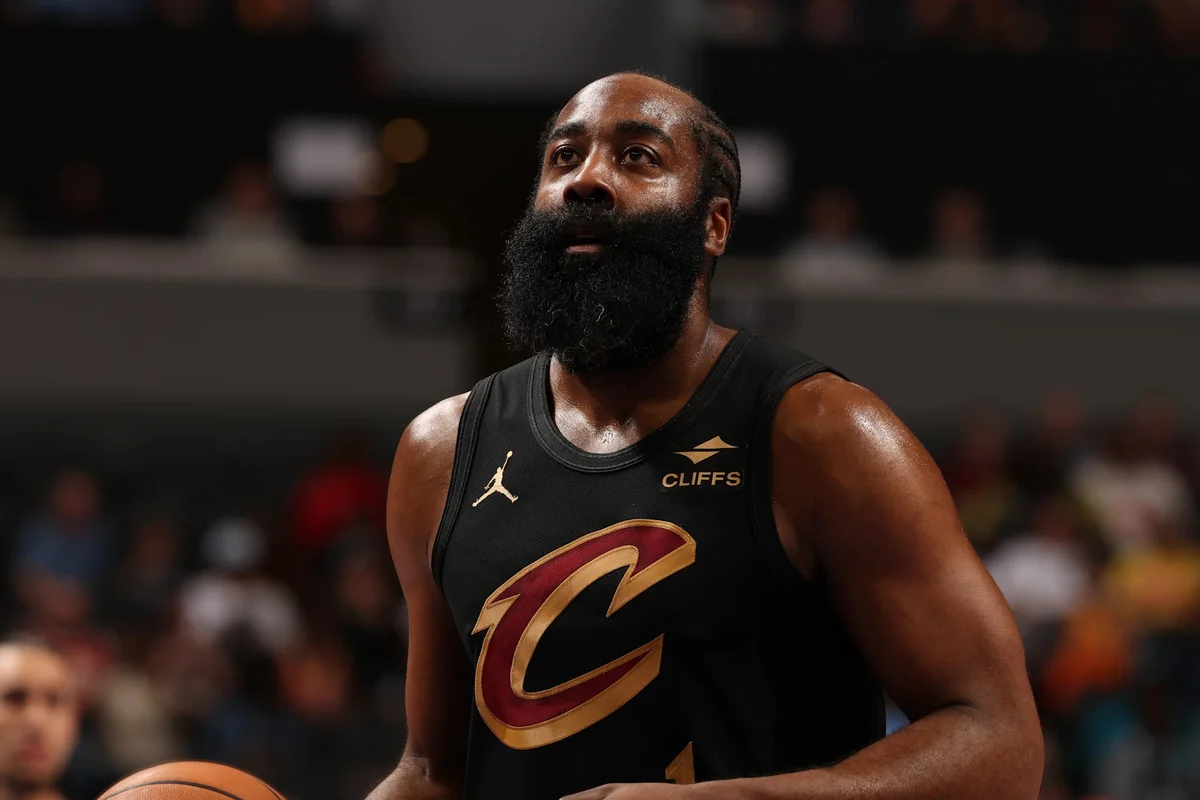
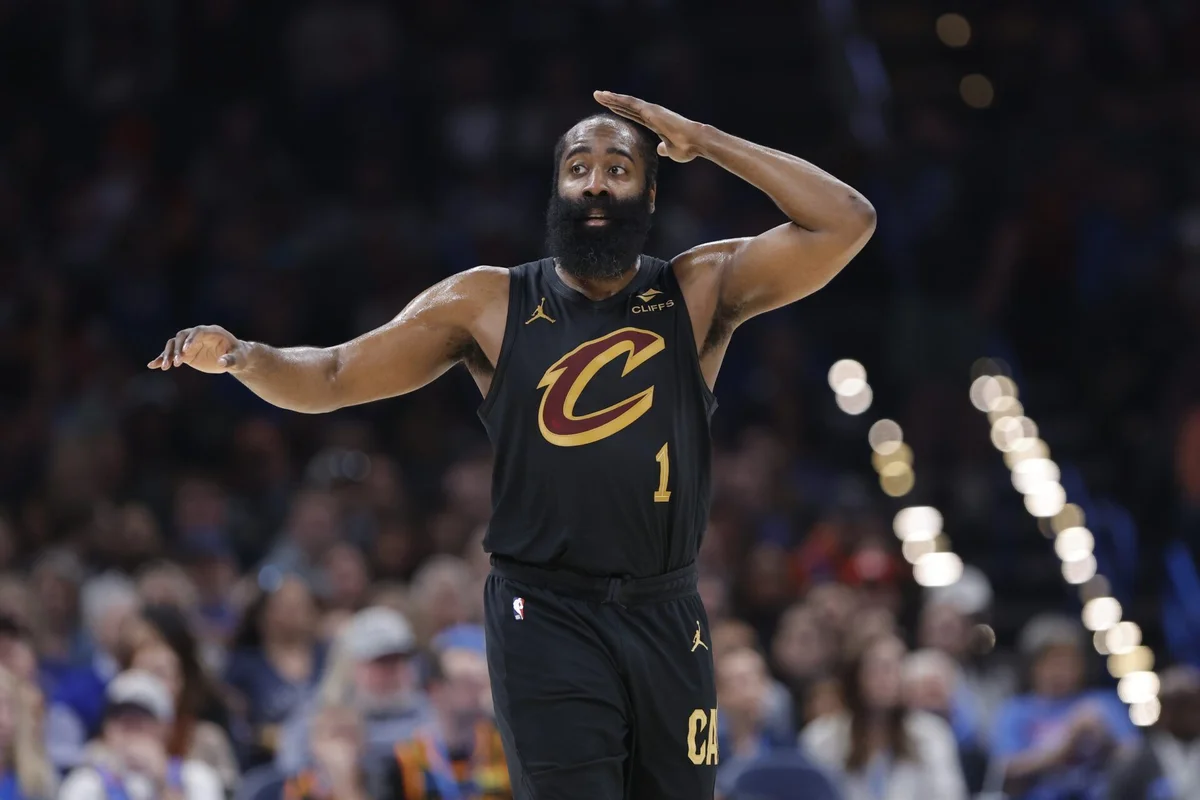
Now, with James Harden functioning as the Cavaliers’ point guard, Mobley’s role has been altered again. Harden’s arrival shifts Mobley to possibly the third scoring option, a marked change from earlier in the campaign. This adjustment demands adaptation from both players on and off the court.
Jarrett Allen has become Harden’s primary pick-and-roll partner, leaving questions about Mobley’s position in the team’s hierarchy. The Cavaliers need to deploy Mobley in the dunker spot immediately, capitalizing on the offensive gravity both Harden and Allen exert. This setup should yield frequent alley-oop opportunities for Mobley, leveraging his athleticism near the rim.
Head coach Kenny Atkinson also highlighted Mobley’s ability to pop out for mid-range shots as a strategic asset, despite his current three-point struggles, which may stem from lingering calf issues limiting his jump. Mobley remains a reliable mid-range threat and should seize open shot opportunities when presented. Moreover, Atkinson envisions Mobley exploiting mismatches against smaller forwards and guards in a double-big lineup, trusting Harden to serve as a feed source in those situations.
The coaching staff is also experimenting with staggered rotations where Mobley and Donovan Mitchell share the floor without Harden and Allen. This combination, proven successful last season, offers varying play styles and preserves the strong rapport and chemistry between the two veterans. Adding Dennis Schröder’s aggressive attacking style contributes further to offensive versatility by forcing opposing defenses to contest ball handlers effectively.
Comprehensive assessment of Mobley’s impact amid criticism
Many critics overlook Mobley’s defensive prowess, which remains a vital part of his value to the Cavaliers. He operates as a premier deterrent, effectively closing driving lanes, sprinting across the floor to contest shots in the corners, and altering scoring attempts across multiple positions — skills that rarely appear in highlight reels but are crucial to team success. Finding another player with his size who covers comparable ground, switches seamlessly, and recovers quickly is exceedingly rare in the league.
Despite his struggles on offense this season and modest statistical output, Mobley has not stalled in his development. Turning 25 in June, he remains in an important growth stage. Several factors accurately explain his uneven performance: Cleveland’s shifting offensive schemes, two bouts with calf injuries that curtailed his playing time, and adapting to a new floor general in Harden.
The Cavaliers have accelerated their timeline for contention after a dominant, undefeated run post-trade deadline last year. With Garland’s exit and the introduction of seasoned veterans, the organization prioritizes toughness and playoff readiness. The resulting environment creates intense pressure for young players like Mobley to rapidly conform to new roles and expectations.
Hopes are sky-high for this revamped Cavaliers roster, and anything less than exceptional results will provoke vocal criticism—whether warranted or a momentary reaction in the heat of competition. For Mobley, this means a critical need to adjust swiftly to his evolving role and embrace the changing demands placed upon him.
Fair or not, this is the reality for Mobley as the Cavaliers pursue their championship ambitions.
All 13 of Oklahoma City's Thunder offensive rebounds from Sunday.
Where do you think the blame lies? pic.twitter.com/eXb19FU7GD
— RealCavsFans.com (@realcavsfans) February 23, 2026
