
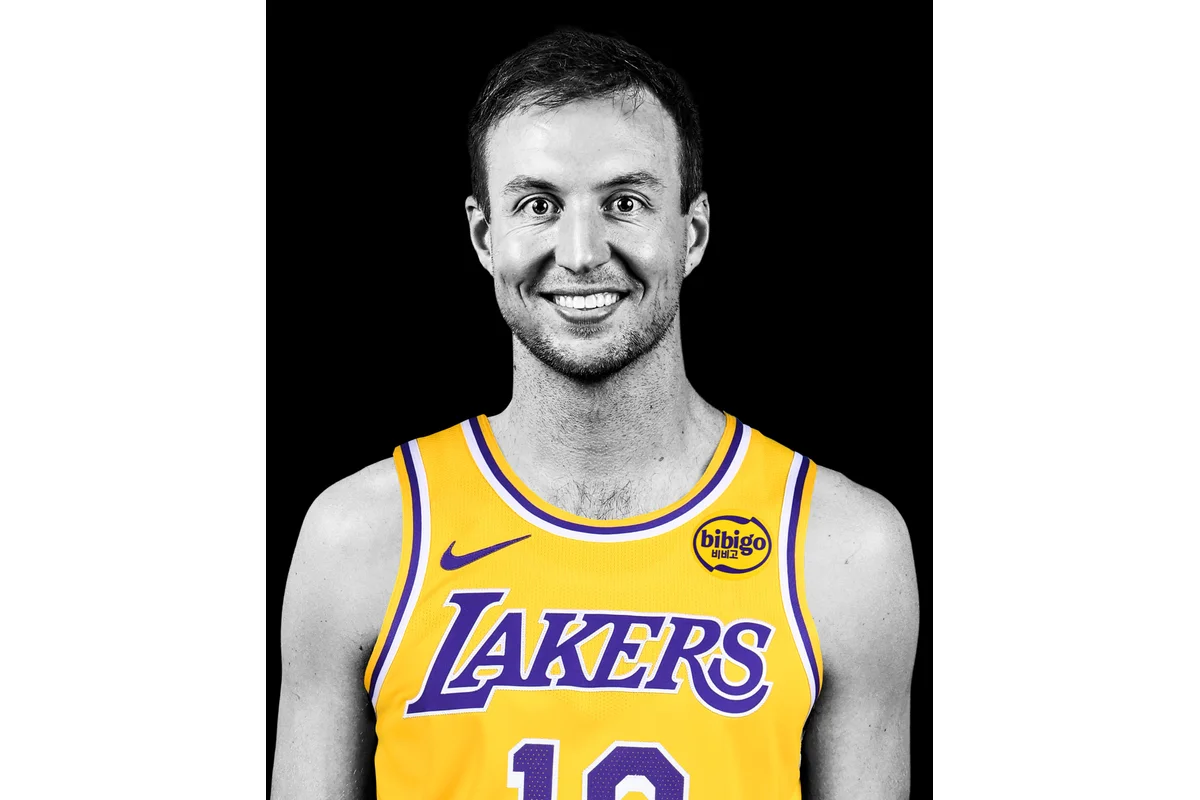
When the Los Angeles Lakers acquired Luke Kennard from the Atlanta Hawks earlier this month, expectations were high given his reputation as an exceptional three-point shooter. The main concern raised by Hawks supporters was that although Kennard boasts one of the best 3-point shooting percentages in NBA history, he rarely attempts many shots from beyond the arc. Lakers fans hoped that he would become a reliable perimeter threat, but early signs suggest a growing reluctance in his shooting frequency.
Despite playing 135 minutes for the Lakers, Kennard has taken just 16 three-point shots, and he has actually attempted more two-pointers than threes. This hesitation to let shots fly, particularly semi-open threes, appears contradictory to his known skill set. While Kennard’s shooting percentage remains strong, shooting nearly 44% from beyond the arc over six games, Lakers fans are increasingly uneasy that his low volume of attempts undermines his potential impact.
Kennard’s Limited Role and Impact on the Lakers
It was unlikely from the start that Kennard would transform the Lakers into a dominant team, especially given their current status in the league hierarchy. He has proven himself a valuable asset in previous roles, such as a productive sixth man with the Clippers, where he even earned consideration for Sixth Man of the Year honors. However, expecting him to be a key difference-maker on a team struggling to reach the upper echelon seems unrealistic.
When Kennard’s three-point volume is as low as it is, and considering his defensive limitations, his role fits more as a situational player rather than a consistent fixture in the rotation. Lakers fans hoped for sustained scoring bursts from him, but with limited shot attempts and defensive struggles, his value as a go-to player diminishes rapidly. This dynamic challenges the decision to play him nightly unless his shooting frequency increases.
Reasons Behind Kennard’s Reluctance and What It Means
Kennard’s career trajectory of moving between teams partly stems from his hesitance to shoot the volume expected of a modern NBA shooter. While fans and analysts might accept a modest decline in shooting precision if he shot more frequently—perhaps even at 39% from three—this seems unlikely given past patterns. The underlying reasons for his shot aversion remain unclear, but it significantly affects his standing with the Lakers and their supporters.
For the Lakers, Kennard’s situation highlights a larger challenge: incorporating a skilled but hesitant shooter into a roster needing consistent offensive contributions. Unless Kennard adapts and increases his shooting attempts, his role may stay limited, and the team may miss out on the offensive boost they had hoped to gain.
