
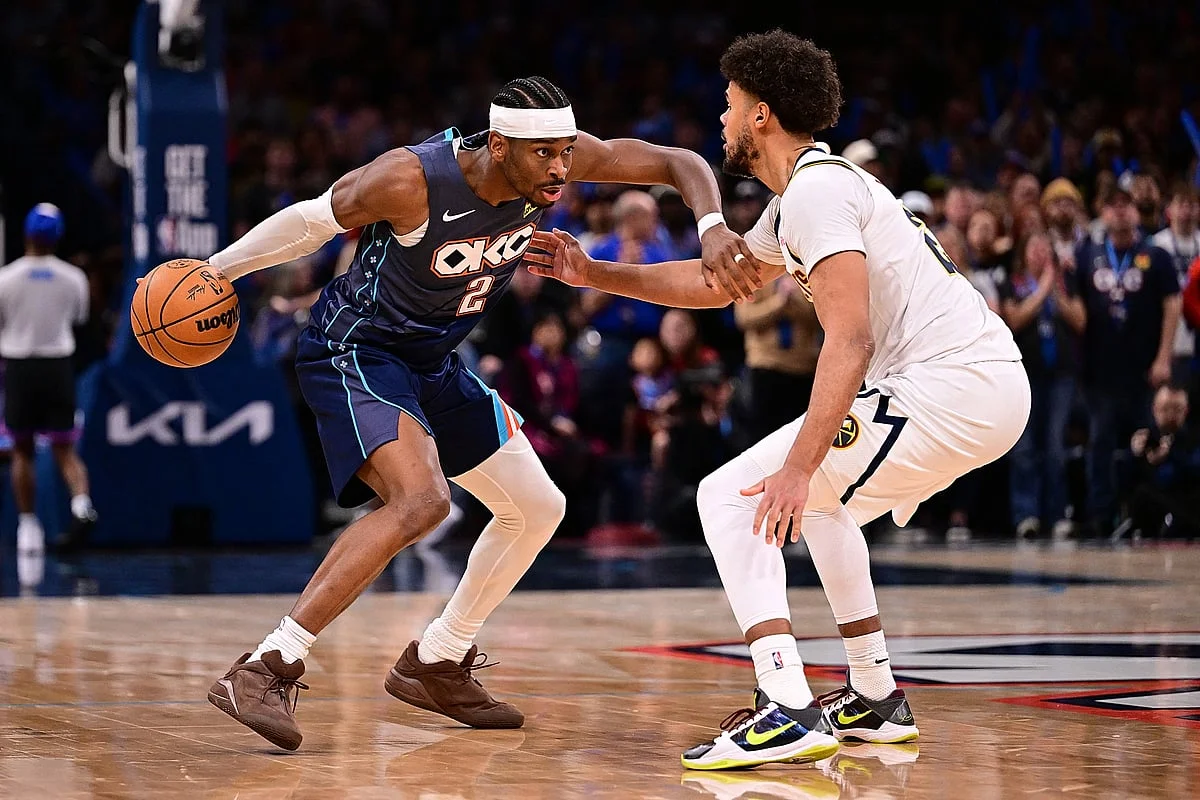
Oklahoma City Thunder star and reigning MVP Shai Gilgeous-Alexander recently addressed the NBA‘s rule requiring players to participate in at least 65 games to qualify for major awards, including MVP honors. Speaking amid a season marked by injuries and intense competition, Gilgeous-Alexander reflected on how this guideline affects players’ approach to health and eligibility.
Gilgeous-Alexander, who led the Thunder to their first championship in Oklahoma City during the 2024-2025 season, came into this year as a favorite to repeat as MVP. However, with several high-profile players like Nikola Jokić and Giannis Antetokounmpo sidelined due to injuries, the race for the award has taken an unpredictable turn.
The Background and Intent of the NBA’s 65-Game Rule
The NBA introduced the 65-game minimum rule before the 2023-2024 season, aiming to discourage resting star players primarily for rest or “load management.” The league’s intent was to ensure top players appear more frequently in key matchups, enhancing the fan experience throughout the regular season. Despite these intentions, some critics argue the rule may limit the chances of elite athletes who miss games due to legitimate injuries.
During a recent game between the Thunder and the Denver Nuggets, Gilgeous-Alexander faced off against Jokić in a hard-fought 127-121 victory for Oklahoma City. In that contest, Gilgeous-Alexander showcased his dominance with 36 points, nine assists, three rebounds, two steals, and two blocks, underlining his crucial role on the court.
Prioritizing Health Over Awards
When asked about his stance on the 65-game rule, Gilgeous-Alexander emphasized the importance of personal health over award eligibility, signaling that he would not jeopardize his well-being to meet the game threshold.
I mean, health is first and foremost. So if I couldn’t go tonight, I wouldn’t force it,
Gilgeous-Alexander said.
If I couldn’t go in these next six, I wouldn’t force it for the requirement, because my health is first and foremost over awards and things like that.
This perspective highlights the challenge many players face between maintaining physical readiness and competing for prestigious accolades.
Gilgeous-Alexander Finds the Rule Fair and Understandable
Despite some dissent from other players and analysts, Gilgeous-Alexander expressed support for the 65-game rule, viewing it as a reasonable standard consistent with historical MVP winners.
Now I don’t mind the rule, just because in history, the guys that have won awards have played most of the season. So it’s like whether there’s a hard line or not, you have to play most of the games. Most of the time it’s 65% of them or 65 out of the 82 to win an award. So, I think it’s reasonable. I don’t think it’s a far stretch. I don’t see nothing wrong with it.
While the threshold sets a clear bar for participation, the broader debate remains on how many games players should be permitted to miss without disqualifying their award chances, given that 17 games represent less than a quarter of the season.
Current Season Performance and Remaining Eligibility
Gilgeous-Alexander has taken advantage of this flexibility, playing in 50 of Oklahoma City’s 61 games so far. His season statistics remain impressive, with averages of 31.9 points, 6.5 assists, and 4.4 rebounds per game. His shooting efficiency is notable, boasting a 55.0% field goal percentage and 38.5% from beyond the arc.
These numbers keep him securely in the conversation for MVP consideration as the regular season progresses. His ability to maintain this level of performance while managing his health will likely influence his eligibility under the 65-game rule, as well as his potential to secure another MVP title.
Broader Implications for the NBA and Its Players
The 65-game rule sends a clear message about the value the NBA places on player availability and consistency in determining award winners. For players like Gilgeous-Alexander, it raises the stakes on balancing durability with performance quality. With the league’s interest in showcasing its stars to fans, the rule aims to preserve the integrity and excitement of the competition.
As the season unfolds, discussions will continue regarding whether the 65-game criterion strikes the right balance between fairness and flexibility, especially with many teams relying heavily on load management strategies. Gilgeous-Alexander’s measured acceptance of the rule may influence other players to adopt a similar viewpoint, underscoring health as the fundamental priority.
SGA on the 65-game rule for awards: “I think it’s reasonable.” pic.twitter.com/JxEXqQ1eu2
— Clemente Almanza (@CAlmanza1007) February 28, 2026
SGA on the 65-game rule for awards: “I think it’s reasonable.” pic.twitter.com/JxEXqQ1eu2
— Clemente Almanza (@CAlmanza1007) February 28, 2026
