
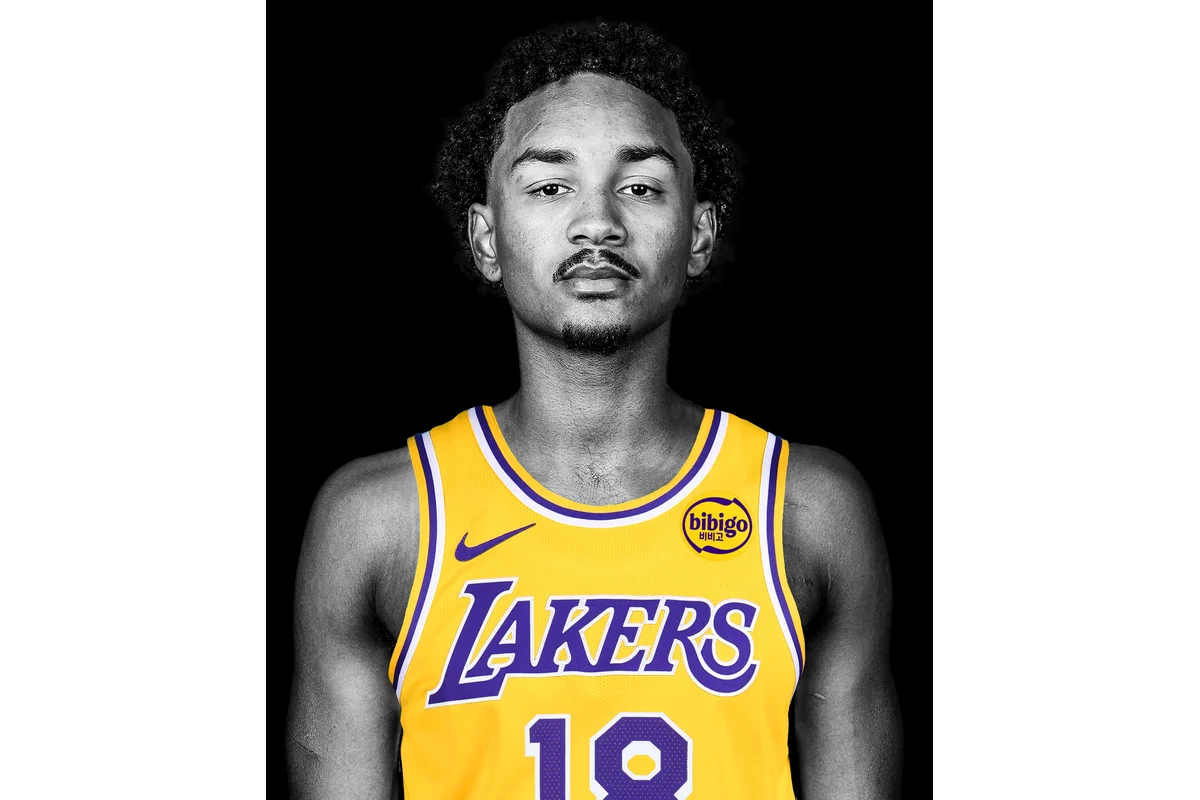
Almost a month ago, the Los Angeles Lakers secured Kobe Bufkin with a two-year contract that filled the 15th roster spot, effectively steering clear of the buyout market. This move has raised questions about the Lakers’ strategy, especially as the March 1 deadline for playoff eligibility approached, often a time when teams make last-minute roster adjustments. The focus keyword here is the Kobe Bufkin Lakers signing, which highlights the team’s commitment to developing homegrown talent rather than pursuing veteran buyouts.
Despite opportunities to acquire established players, the Lakers chose not to engage in what many viewed as a lackluster buyout market this season. According to JJ Redick, the decision was intentional and focused on future potential rather than immediate gains.
“The buyout market very rarely produces a player that impacts a team’s playoff chances. … Kobe has certainly earned a spot in the NBA with the way he’s played this year for us at South Bay. There’s also the factor of, are we gonna lose him?”
?JJ Redick, Analyst and Former NBA Player
Performance and Potential of Kobe Bufkin in South Bay
Kobe Bufkin was excelling with the South Bay Lakers before his promotion to the main roster. His statistics demonstrated strong all-around play, averaging 27.7 points, 4.0 rebounds, 4.7 assists, 1.5 steals, and 1.2 blocks per game. His shooting efficiency stood out, with a 52.2 percent field goal rate and 43.1 percent from beyond the arc, marking him as a vital asset with room to develop further.
Lessons from Past Roster Risks Prompted the Lakers’ Approach
The Lakers’ hesitation to risk losing Bufkin mirrors past experiences where promising talent was waived and subsequently signed by rival teams. Notably, Scottie Pippen Jr. shined with South Bay before the Memphis Grizzlies claimed him, where he became a reliable backup guard. Similarly, Jay Huff, another former South Bay player, started 37 games with the Indiana Pacers in the 2025-26 season, contributing valuable frontcourt versatility with shot-blocking and floor spacing—qualities desirable for the Lakers as well.
Gary Payton II is another example of a successful NBA player whose path included a stint with South Bay, demonstrating the G League’s role as a stepping stone. These precedents underscore the significance of retaining promising players within the organization to avoid losing out on future contributors.
Securing the Future Beyond Immediate Playoff Impact
While the 15th roster spot typically holds minimal influence in playoff performance, the Lakers understand the long-term benefits of locking in emerging talent like Bufkin. By holding his contract, they maintain control over his development path and potential integration into the rotation in upcoming seasons. The franchise’s strategy indicates a focus on nurturing players who might evolve into key rotational pieces rather than chasing short-term solutions through the buyout market.
This calculated decision could shape the Lakers’ future depth and flexibility, proving to be a pivotal move if Bufkin fulfills his promise as a significant contributor.
JJ Redick on the Lakers' decision to sign Kobe Bufkin to their final roster spot instead of a buyout player:
"The buyout market very rarely produces a player that impacts a team's playoff chances… Kobe has certainly earned a spot in the NBA with the way he's played this year…
— Daniel Starkand (@DStarkand) February 10, 2026
