
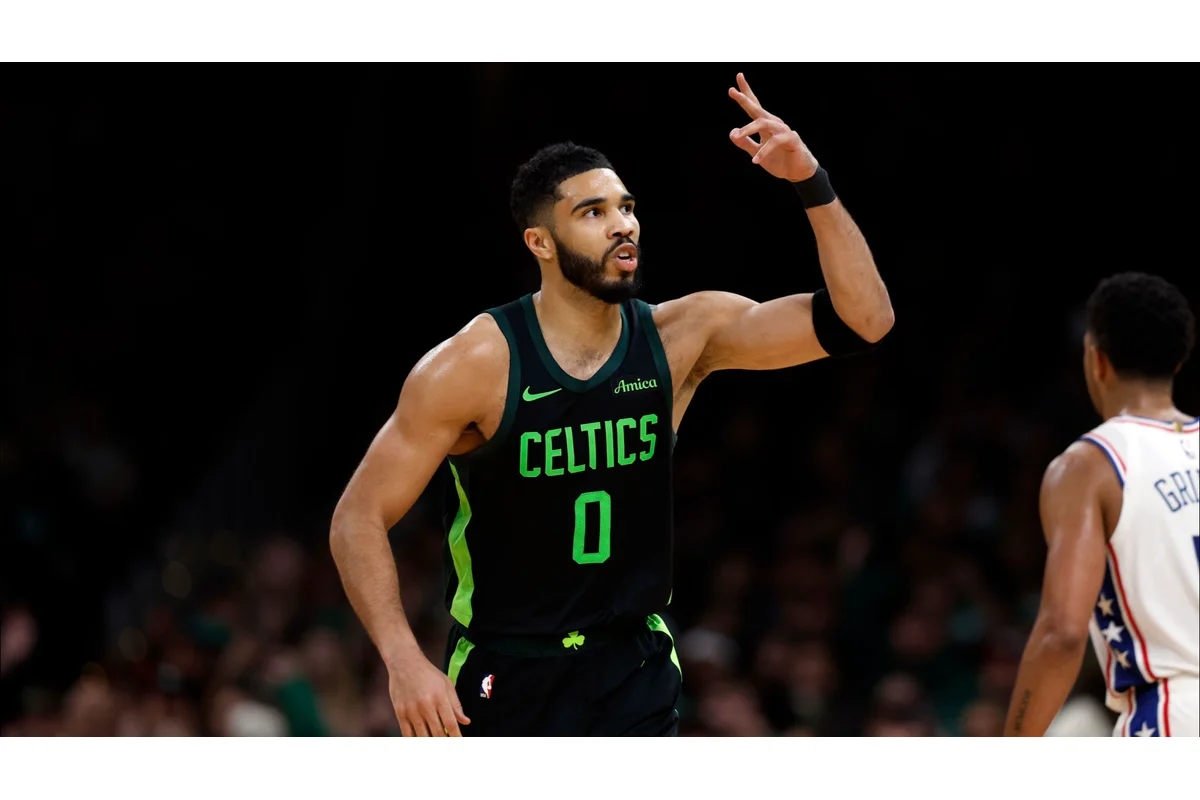
Recently, discussions among former NBA players have highlighted contrasting views on Jayson Tatum’s status in the league, with some arguing he should be the NBA’s marquee face, while others claim he hasn’t even been the top player alongside Jaylen Brown on the Celtics. These conflicting narratives underscore a broader uncertainty about how to properly assess Tatum’s place in basketball’s present and future. This ongoing debate reveals a challenge in appreciating the nuances of Jayson Tatum’s career comeback and overall contribution to the sport.
Tatum’s Versatility Sets Him Apart in the League
From a basketball standpoint, Tatum is remarkable because he has no glaring weaknesses, making him an incredibly adaptable player. Whether the Celtics need him to carry the scoring load by dropping 45 points in a critical game or to guard big men and support teammates, he can perform effectively. Unlike stars whose teams are built around their unique playing style—such as Nikola Jokić for the Nuggets or Stephen Curry for the Warriors—Boston‘s identity does not revolve solely around Tatum. Instead, the Celtics benefit from his flexibility, allowing the team to shape tactics without being constrained by a singular style.
Boston’s Advantage Lies in Tatum’s Multifaceted Role
The Celtics’ strength comes not from being a Jayson Tatum-centric team but from having a player who can assume multiple roles. In a league that increasingly favors versatility and adaptability, especially during the postseason where weaknesses are often exploited, Tatum’s all-around game provides priceless value. The Nuggets must be a Nikola Jokić team to succeed, but the Celtics can operate with more freedom because Tatum can fill various roles. This dynamic benefits Boston strategically, even if it does not translate into a conventional star-driven identity.
The Challenge of Engaging More Casual NBA Fans
Despite his undeniable value to the Celtics, Tatum’s style and demeanor have not captivated the casual basketball audience as much as some other stars. He maintains a steady, controversy-free presence and rarely dominates headlines beyond his on-court performance. Though he is a lifelong Kobe Bryant admirer and a devoted family man, his lack of off-court drama and a limited public persona make him less intriguing to fans who seek compelling narratives and larger-than-life characters in sports. This contrast between on-court excellence and broader fan appeal has shaped much of the discourse around Tatum’s career.
Why Jayson Tatum Has Struggled to Inspire a Broader Narrative
Tatum’s professional journey has lacked the dramatic story arcs or unique qualities that often define other NBA stars. Unlike LeBron James or Kobe Bryant, he hasn’t been widely regarded as the next Michael Jordan, nor has he transformed how basketball is played like Stephen Curry. He also lacks a flamboyant personality or a provocative social media presence comparable to Kevin Durant. Unlike figures such as Tim Duncan, Nikola Jokić, or Kawhi Leonard who possess distinct traits that generate intrigue, Tatum comes across as polished but somewhat reserved and conventional in his public image.
Efforts to Emulate Legends Have Not Fully Resonated
At times, Tatum appears influenced by his basketball idols, engaging in behaviors that echo legends like Kevin Garnett and Kobe Bryant. After winning the 2024 championship, he mirrored Garnett’s stature and publicly expressed ambition modeled after Kobe. However, this reverence sometimes gives the impression that he is overly concerned with external perceptions rather than projecting an authentic, self-defined identity.
“The truth is, I envision myself as one of those guys—the LeBron, Steph, KDs,”
Tatum stated during a recent media session.
“I want the next generation to view me as that.”
Tatum added, reflecting his desire to stand alongside the league’s greatest.
Why Tatum Trails Others in “Face of the League” Conversations
This preoccupation with image partly explains why players with less proven success, like Anthony Edwards or Victor Wembanyama, often overshadow Tatum in debates about the NBA’s next superstar. Edwards captivates through his charismatic personality, while Wembanyama’s extraordinary physical gifts and willingness to challenge rivals help shape his narrative. Even though Tatum defeated Luka Dončić in the Finals, Dončić’s dramatic trade to the Lakers, layered with his complex fan perception as both hero and villain, provides easy storylines that attract fans and analysts alike.
Distinct Qualities Make Other Players More Talkable
Players like Edwards, Wembanyama, and Dončić offer straightforward angles for fans to discuss, whether critiquing defense, shot selection, or playing style. Tatum lacks these accessible narratives, with few aspects of his game inviting widespread criticism. His occasional questionable shot choices are minor compared to common areas of debate surrounding his peers. Without clear points of contention or colorful backstories, conversations about Tatum often fall into generic questions about his standing relative to teammates or general appreciation for his consistent contributions.
The Possibility for a Renewed Narrative Through Recovery
Tatum’s recovery from a torn Achilles tendon now presents an opportunity for renewed attention and reassessment. While the injury was a setback that dimmed Boston’s immediate championship prospects last spring, his imminent return to action—expected Friday against the Mavericks—introduces a compelling storyline. The uncertainty about the long-term impact of this severe injury creates anticipation and intrigue, offering a fresh chapter in Tatum’s ongoing career journey.
How Tatum’s Comeback Adds Drama to Boston’s Season
The Celtics, already contenders this season, face the complex task of reintegrating a star who has been sidelined by one of the most devastating injuries in professional basketball. This rare scenario—where a superstar returns midseason to a strong championship contender—is unprecedented. Even Michael Jordan did not succeed in such a return during his 1995 comeback. Tatum must not only regain his full form but also restore or enhance the team chemistry that Boston’s players have developed in his absence.
The Broader Context of Tatum’s Career Trajectory
Tatum’s path to the NBA spotlight started under favorable conditions: drafted by a storied franchise already close to championship contention and surrounded by well-managed rosters. This “born on third base” situation meant he has faced less adversity compared to other talented players, with fewer moments demanding he prove himself against the highest pressures. The injury, therefore, presents an unprecedented challenge and an opportunity to demonstrate resilience and leadership in a way that could significantly redefine public and professional perceptions of his legacy.
The Stakes and Uncertainty Surrounding Tatum’s Return
There is no guarantee that Tatum’s comeback will result in immediate success. Factors such as recovering physical capability, potential disruptions to team dynamics, and facing top competition all contribute to an unpredictable road ahead. His return might take multiple seasons before culminating in another Finals appearance, and he may never fully recapture peak form. Nevertheless, fans and analysts will be keenly watching his attempt to climb back, as sports fans are naturally drawn to stories of perseverance and second chances.
Lessons from Kobe Bryant’s Comeback and Legacy
Tatum’s idol Kobe Bryant offers a relevant example of how comeback narratives can reshape a player’s standing. After the breakup of Bryant’s early-2000s dynasty, his later return to the top silenced critics and allowed him to redefine his legacy. Bryant’s embrace of the “Black Mamba” persona epitomized vulnerability and determination, fostering deeper connections with fans. Similarly, Tatum’s struggle to return could humanize him and broaden his appeal beyond his technical skills.
The Potential Lasting Impact of Tatum’s Career Resurgence
Ultimately, while winning remains the fundamental measure of an NBA player’s success, Tatum’s consistent excellence already places him among the league’s elite. He does not necessarily need external validation to cement his legacy, but the experience of overcoming adversity and creating a richer, more relatable story could enhance how he is regarded in basketball culture. This comeback could help fans appreciate not only Tatum’s abilities on the court but also his significance within the broader narrative of the NBA’s evolving landscape.
Jay Williams questions why Jayson Tatum isn’t considered the face of the NBA after consistently making deep playoff runs, while Anthony Edwards gets that recognition mainly because of his personality
(🎥 @FirstTake )
— NBACentral (@TheDunkCentral) May 1, 2025
https://twitter.com/TheDunkCentral/status/2029273801783906703
Jayson Tatum was asked about what fuels him by @Globe_Tara:
“The truth is, I envision myself as one of those guys — the Lebron, Steph, KDs. I want the next generation to view me as that.”
I asked him if moments like Stephon Castle are milestone in that journey:
“Yeah. Those… pic.twitter.com/kI9sJwgnNO
— Noa Dalzell 🏀 (@NoaDalzell) February 21, 2025
Victor Wembanyama on matching up against Chet Holmgren: “The MVP's on that court, he is our main focus. Anybody is hard to guard when you have to help on the MVP.”
byu/Goosedukee innba
