
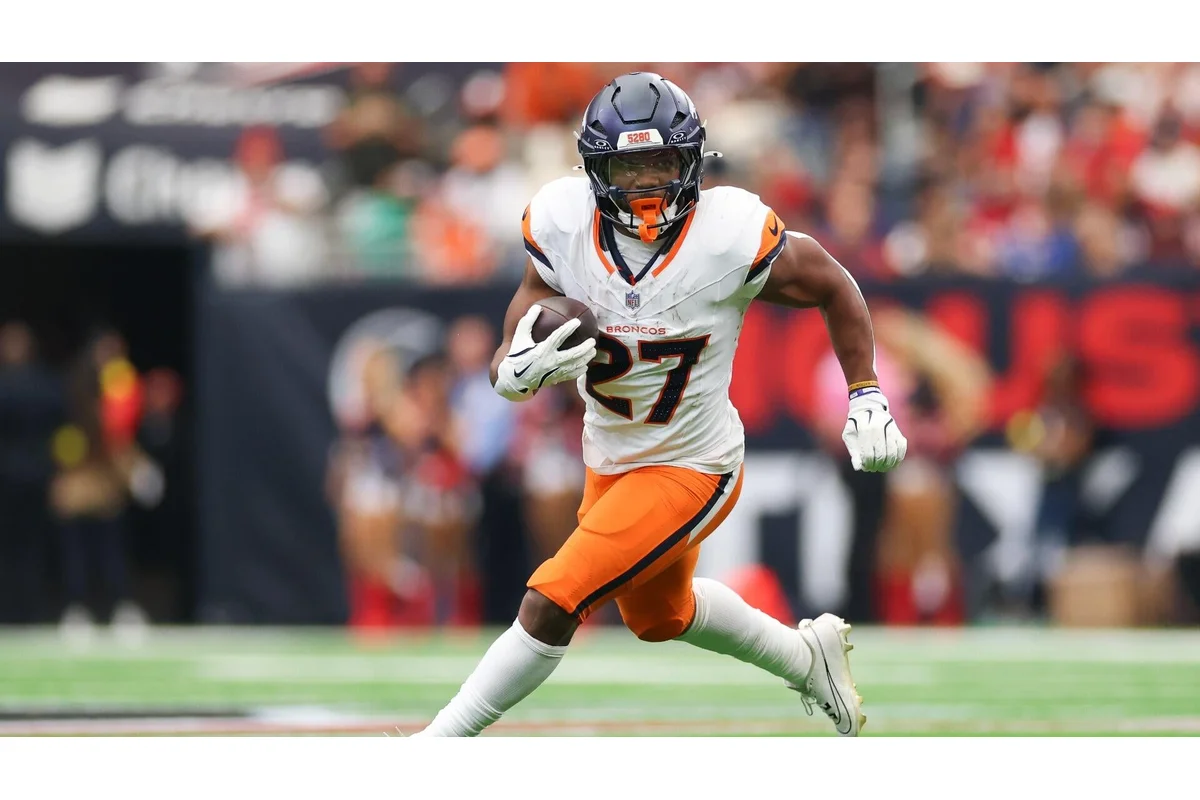
The Denver Broncos demonstrated serious promise in their running back unit when J.K. Dobbins was healthy during the 2025 season, crafting an offense that thrived on ground control. However, after Dobbins suffered a significant injury in the midway point of the year, the team struggled to maintain their rhythm, leading to questions about the long-term sustainability of relying on this backfield combination. As the Broncos head into the offseason, the critical issue looms: should they continue to rely heavily on J.K. Dobbins alongside RJ Harvey in the 2026 campaign, or seek a new formula to stabilize their rushing attack?
The Broncos’ primary running backs—J.K. Dobbins and RJ Harvey—showed contrasting skills and challenges in 2025. The questions about health, efficiency, and long-term value have elevated the discussion around how to structure Denver’s backfield moving forward, especially when considering depth pieces like Tyler Badie, Jaleel McLaughlin, Cody Schrader, and Deuce Vaughn.
The Impact of J.K. Dobbins’ Presence on Denver’s Offense
During the period he was healthy, J.K. Dobbins was the cornerstone of Denver’s rushing attack. Over the first ten weeks, his average of 5 yards per carry and 77.2 rushing yards per game ranks as the third-best season output by a Bronco, trailing only legends Clinton Portis and Terrell Davis. Dobbins’ ability to consistently gain yardage between the tackles established the foundation for Denver’s offense.
Unfortunately, a rare hip-drop tackle injury sidelined Dobbins for the remainder of the season, abruptly halting the run game’s momentum. While his availability showed slight improvement with 23 games played over the past two seasons compared to 24 games across his first four years, the ongoing injury trend remains a concern. Betting on Dobbins’ durability has been a tough proposition, with five consecutive seasons marred by missed time.
Dobbins’ skill set blends solid physical attributes with an impressive mental game. He lacks breakaway speed and bulldozer-style power, but his excellent balance, quick feet, and patient approach allow him to exploit holes expertly. Denver’s offensive line, which ranks among the NFL’s best, further enhances his chances to succeed by creating consistent running lanes that Dobbins keenly recognizes and uses.
Before his injury, Dobbins was poised for a career year, tracking toward the NFL’s top five rushers. His value to the Broncos is clear: if healthy, Denver’s running game would be among the league’s elite. Conversely, if his health remains uncertain, losing their primary offensive engine midseason threatens Denver’s postseason aspirations.
In contemplating the future, Denver faces a tough choice. They must weigh the risk of Dobbins’ injury history against the undeniable fit and production he brings. Should they move on, their replacement must possess Dobbins-like vision and decisiveness to maximize one of the NFL’s top offensive lines rather than rely on a more boom-or-bust, space-dependent runner common around the league.
RJ Harvey’s Role and Growth Potential in Denver’s Backfield
RJ Harvey, the Broncos’ 60th pick in the 2025 NFL Draft, showed notable promise as a receiving back and rotational player. When compared to 87 other running backs selected between picks 50 and 70 since 1978, Harvey placed in the top 10% for rookie production, surpassing names like J.K. Dobbins and James Cook. His 12 touchdowns contributed heavily to his effectiveness, putting him alongside prolific scorers like Clinton Portis, Maurice Jones-Drew, and Alvin Kamara.
Looking beyond touchdowns, Harvey’s 540 rushing yards ranked 26th among comparable rookies, while his receiving yards placed sixth, placing him in the 81st percentile for rookie scrimmage yards. These stats highlight a productive player worthy of the Broncos’ investment in the draft.
Harvey excelled as a receiving back with reliable hands, good speed, and the ability to create separation downfield. Yet, his route-running still needs refinement. More importantly, the Broncos hesitate to deploy him extensively in pass protection, a critical role on third downs and obvious passing situations. In 2025, Tyler Badie received significantly more snaps in these scenarios than Harvey (92 versus 38), underscoring the Broncos’ reservations about Harvey’s blocking ability.
In the Sean Payton system, running backs are versatile chess pieces, often lining in varied positions and required to absorb blitzes with effective blocking. If Harvey can develop his pass protection, he could usurp Badie’s third-down role entirely, increasing his snaps and targets. Already, Harvey ranked 8th among all NFL running backs in receptions and receiving yards in 2025, and 3rd in receiving touchdowns, cementing his baseline as a top-tier receiving option. Should he elevate his blocking skills, a spot in the top five receiving backs seems achievable over the next several years.
The major hurdle for Harvey lies between the tackles. He averaged just 3.7 yards per carry last season, below the NFL average of 4.3 yards, ranking among the worst for backs with over 60 carries. Compared to Dobbins, Harvey lagged both in pre-contact yardage and yards after contact, primarily due to less effective vision and decision-making in finding running lanes. He tended to bounce runs to the outside, which limits the potential of Denver’s dominant offensive line that routinely opens interior gaps for substantial yardage gains.
The Broncos hope Harvey will grow into a more patient runner, trusting blockers and recognizing holes on developing plays. This adjustment could boost him to league-average rushing efficiency and transform him into a dangerous dual-threat back capable of star-level impact. If running efficiency doesn’t materialize, Harvey’s value as a receiving back still makes him a highly useful weapon, akin to players like James White, Darren Sproles, or Austin Ekeler, who carve out exceptional careers without dominant rushing numbers.
Tyler Badie’s Specialized Role in the Broncos’ Backfield
Tyler Badie acted as a vital complementary piece in Denver’s running back rotation during 2025. As a 26-year-old sixth-round pick, Badie primarily filled a niche role as the third-down back, entrusted with pass protection responsibilities to relieve pressure on Bo Nix in obvious passing situations.
Badie’s offensive touches were limited—averaging roughly 1.5 targets per game—and he did not generate enough production to force increased opportunities. While he proved serviceable as a blocker and receiver, his value centers on maintaining stability in passing downs until RJ Harvey is ready to assume that role.
Looking ahead, Badie’s place in the Broncos could shrink once Harvey develops his blocking skills. He may either remain an experienced backup or seek comparable roles on other teams. Until then, Badie remains a necessary part of Denver’s third-down strategy.
Jaleel McLaughlin’s Late-Season Surge and Future Prospects
Jaleel McLaughlin burst onto the scene during the closing weeks of 2025, posting impressive numbers: 7.4 yards per carry against the Jaguars, 5.7 against the Chiefs, 6.8 against the Chargers, and 5.3 versus the Bills. Despite this strong finish, Denver did not employ McLaughlin more extensively after Dobbins’ injury, which raises concerns about the coaching staff’s confidence in his consistent contribution.
McLaughlin faces notable limitations: his small size, imperfect vision, and inadequate blocking skills restrict his utility as a three-down back. Nonetheless, his hard running style and explosive burst create potential big-play capabilities when given opportunities.
As a restricted free agent, McLaughlin may be lured away by teams willing to offer a bigger role. Given Denver’s apparent reluctance to expand his workload, it seems unlikely McLaughlin will be a major fixture in Denver’s 2026 backfield unless injuries force his hand.
Depth Options: Cody Schrader and Deuce Vaughn’s Potential Contributions
Among the Broncos’ lesser-known running backs, Cody Schrader and Deuce Vaughn represent intriguing long shots to secure roles in the upcoming season. Schrader, a second-year player signed mid-2025, has limited NFL exposure from his rookie season with the Los Angeles Rams but demonstrated impressive college performance at Missouri, breaking records and earning All-SEC honors. With traits similar to McLaughlin, Schrader offers the Broncos competition in training camp but currently projects as a practice squad candidate.
Deuce Vaughn, signed after a waiver by the Dallas Cowboys, spent 2025 on Denver’s practice squad. At 5-foot-6 and 176 pounds, Vaughn is the shortest running back ever drafted in the NFL, marking him as a unique specimen. His Big 12 career was remarkable, achieving over 3,600 rushing yards and 1,250 receiving yards, joining the company of DeMarco Murray. Vaughn’s skill set suggests potential as a receiving back, but limited tape means he primarily offers depth and developmental upside. He would likely have to replace Harvey or another back to see the field.
Looking Forward: What Will Denver’s 2026 Running Back Room Look Like?
One constant is certain: RJ Harvey will be part of the Broncos’ roster in 2026. Beyond that, the future remains uncertain. J.K. Dobbins, Tyler Badie, and Jaleel McLaughlin could all return, or the Broncos might pursue fresh talent through free agency and the draft.
If the team desires a between-the-tackles powerhouse to complement Harvey’s receiving skills, they could target free agents such as Breece Hall or Kenneth Walker. Yet, the demonstrated combination of Dobbins’ vision and production still exceeds what the open market offers, positioning him as the best bet if he can remain healthy.
The Denver front office must decide whether it is worth allocating more resources on an equivalent or slightly lesser back to reduce injury risk, weighing health concerns against financial implications. Should they retain Dobbins, bolstering the third-back role is crucial. This may involve a mid-round draft pick or signing a veteran like Tyler Allgeier, capable of absorbing carries if Dobbins becomes unavailable.
Improvement in RJ Harvey’s pass protection remains a priority; without it, Denver must maintain Tyler Badie or a similar player for third-down situations. Success in the running game could catalyze Denver’s pursuit of a deep playoff run, but without a dependable feature back, even the league’s best offensive line may struggle to carry the team further.
The pivotal question remains: will the Broncos place their faith in J.K. Dobbins once more, or pivot toward a new, more sustainable running back strategy in 2026?
