
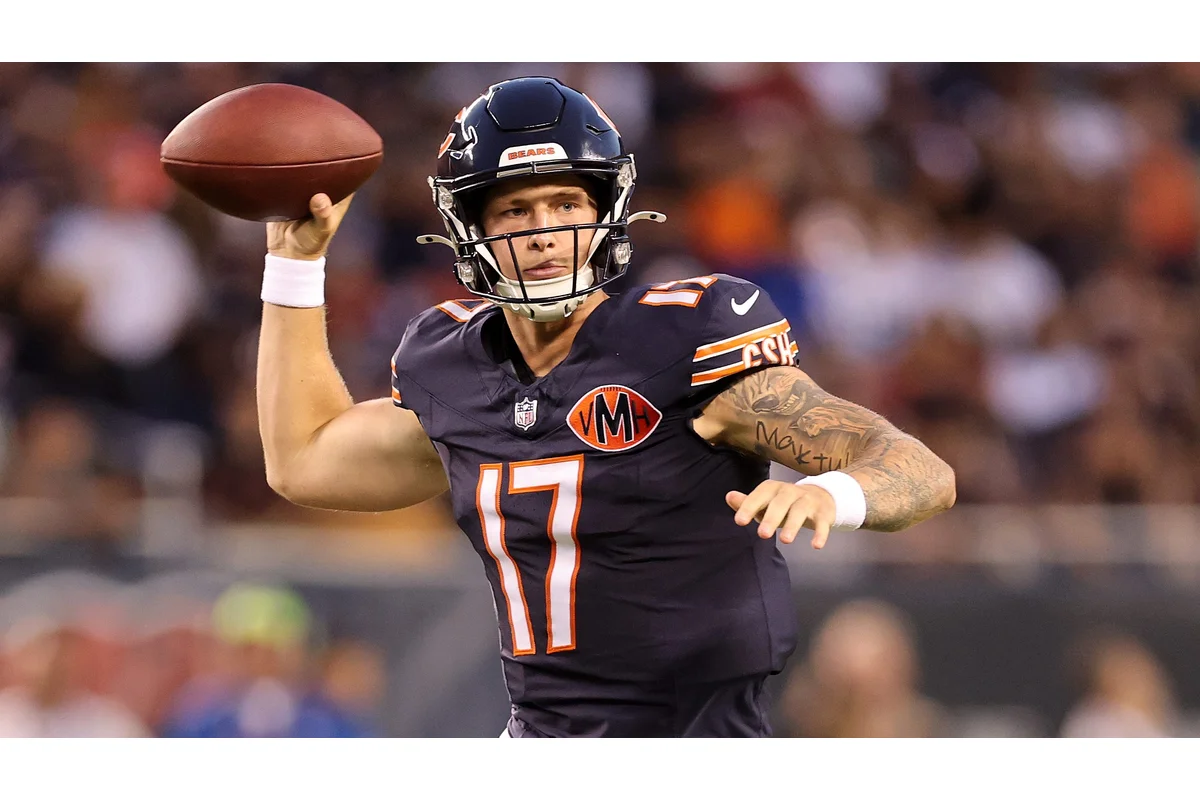
Rumors have emerged surrounding the Tyson Bagent trade potential as the Chicago Bears face an evolving quarterback situation this offseason. With starter Caleb Williams firmly entrenched, and the Arizona Cardinals reportedly interested in Bagent due to their uncertain quarterback future, Chicago may explore a trade that could reshape their roster and draft assets.
Interest in Bears Backup Quarterback Sparks Trade Speculation
An Arizona-based reporter revealed that the Cardinals have shown intrigue in Bears backup quarterback Tyson Bagent. Given Chicago’s clear quarterback setup led by Caleb Williams and Arizona’s ongoing struggles at the position following Kyler Murray’s difficulties, a trade involving Bagent could fulfill both teams’ needs. The Bears might use Bagent as leverage to acquire valuable draft picks or other assets to bolster their roster.
Considering Tyson Bagent’s recent season as a rookie starter, where he posted a 2-2 record, combined with his team-friendly contract and experience learning from Bears Head Coach Ben Johnson, he presents a compelling trade option. While not a highly touted prospect, his developmental progress and preseason film add to his value.
Reviewing Comparable Trades to Gauge Bagent’s Market Value
Identifying a direct equivalent for a Tyson Bagent trade is challenging due to his relative inexperience and modest draft profile. However, examining recent quarterback transactions offers insight into what Chicago might reasonably ask for in return.
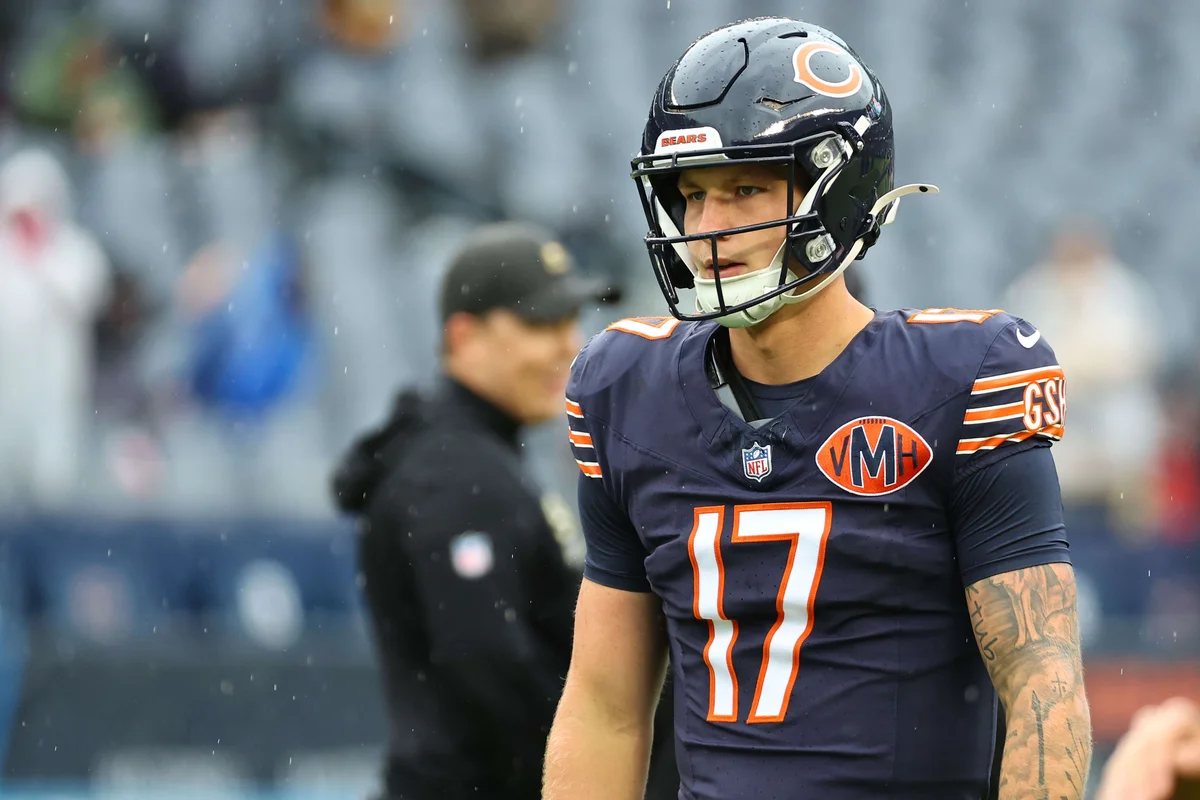
- March 2024: Mac Jones traded from Patriots to Jaguars for a conditional sixth-round pick – This move kicked off a flurry of quarterback trades that offseason. Although it lowered the perceived market for other quarterbacks like Justin Fields, it serves as a baseline for Bagent’s potential minimum return. Ideally, the Bears would seek more than a conditional sixth-round pick.
- March 2024: Commanders traded Sam Howell along with a fourth-round and sixth-round pick to Seahawks for a third- and fifth-round pick – This complex exchange involving a quarterback and multiple draft picks highlights a more ambitious trade structure. Chicago could pursue a similar package by offering Bagent along with mid-to-late round picks in exchange for higher draft selections, particularly aiming for top-80 picks to accelerate rebuilding.
- March 2024: Steelers traded Kenny Pickett and a fourth-round pick to Eagles for a third-round pick and two seventh-round picks – This deal reiterates the type of multi-pick trades involving developmental quarterbacks that could parallel a Bagent trade. If Chicago can secure multiple picks across drafts, it would enhance their roster flexibility and long-term potential.
- August 2024: Titans traded Malik Willis to Packers for a seventh-round pick – This trade illustrates a selling-low scenario on a quarterback projected as a starter but underperforming. While not an ideal outcome, it demonstrates the risk of waiting too long to trade a developing QB.
- April 2025: Seahawks traded Sam Howell and a fifth-round pick to Vikings for an upgraded fifth-round pick – A subtle yet strategic pick-swap involving a quarterback exemplifies incremental value gains that Chicago might seek to optimize draft capital through a Bagent deal.
- October 2025: Browns traded Joe Flacco and a 2026 sixth-round pick to Bengals for a fifth-round pick – This intradivisional trade for a veteran bridge quarterback shows how teams balance immediate roster needs against draft capital, a factor the Bears will consider.
Potential Benefits and Risks of Trading Tyson Bagent
Moving Tyson Bagent in the upcoming offseason carries both opportunity and risk. For the Bears, trading him early could generate valuable draft assets that help rebuild the team or shore up weak areas on the roster. By capitalizing on market interest now, Chicago can also support Bagent’s growth by allowing him to pursue a starting position elsewhere, which benefits the player’s career development.
However, trading Bagent prematurely could mean losing a potentially impactful backup or franchise quarterback candidate at a minimal cost. The Bears must carefully weigh the optimal timing and return to avoid shortchanging their future depth. Yet, with Caleb Williams established as the starter, and no immediate role for Bagent, a trade could be a mutually beneficial solution.
Context on Chicago’s Football Environment and Offseason Moves
The Bears are actively shaping their roster and front office to position for competitive success. Recent moves include releasing linebacker Amen Ogbongbemiga and hiring Jeff King as assistant general manager, replacing Ian Cunningham. Off-field issues like the uncertain stadium situation and player contract negotiations add urgency to maximizing all available assets.
Meanwhile, quarterback depth is critical, especially with Caleb Williams leading the team and backups like Tyson Bagent looking for opportunities. The Bears’ management team, led by GM Ryan Poles, must navigate these complexities amid a dynamic NFL trade and draft landscape.
Insights on Comparable Trades and Their Implications for Chicago
The quarterback trades examined convey lessons for the Bears. The Mac Jones trade illustrates the minimum floor for a developmental quarterback’s value, while the more involved Sam Howell and Kenny Pickett deals show how packaging prospects with draft picks can fetch better returns. The Malik Willis trade warns about undervaluing potential too soon, potentially leading to an underwhelming haul.
Negotiating a trade for Bagent that resembles the ambitious Howell trade or Pickett deal could help Chicago acquire higher draft picks, enhancing their rebuilding capacity. Conversely, taking a low offer risks losing leverage and future upside.
What Lies Ahead for Tyson Bagent and the Bears?
The unfolding Tyson Bagent trade buzz symbolizes a pivotal moment for the Bears’ quarterback situation and overall roster strategy. If traded, Bagent could find an expanded role elsewhere, allowing him to fully demonstrate his abilities as a starter. For Chicago, acquiring additional picks or players in return would strengthen their draft assets and align with their ongoing roster construction efforts.
Given the Bears’ firm commitment to Caleb Williams at quarterback and the reported Cardinals’ interest in Bagent, Chicago appears poised to explore trade possibilities. The next few months could bring critical developments that influence both Bagent’s career path and the Bears’ competitive outlook.
The Tyson Bagent trade potential remains a captivating storyline as the Bears navigate the complex intersection of player development, roster management, and draft strategy in a franchise poised for transformation.

