
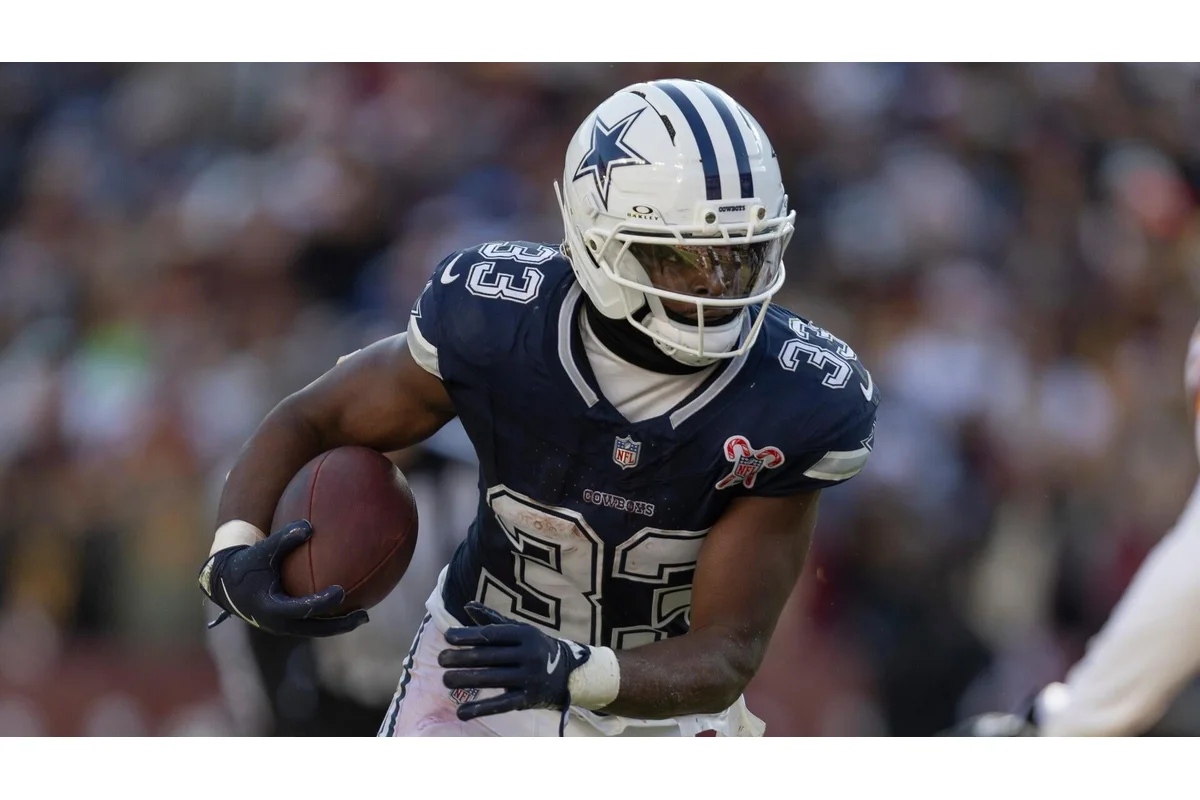
The Dallas Cowboys have removed one significant running back from the free agency pool by re-signing Javonte Williams to a three-year contract, a move confirmed by ESPN’s Adam Schefter on Saturday. This development alters the landscape of available top running backs ahead of the 2026 NFL season.
Remaining Top Running Backs Expected to Draw Strong Interest
With Williams off the market, attention now turns to Super Bowl MVP Kenneth Walker III and New York Jets’ Breece Hall as the prime free agent running backs heading into 2026. Walker has hinted at a return to the Seattle Seahawks, though sources indicate it is unlikely the Seahawks will use the franchise tag to retain him, allowing him to become a free agent.
Teams such as the Carolina Panthers, Denver Broncos, and Jacksonville Jaguars could pursue Walker, contingent on the free agency outcomes of players like Rico Dowdle, J.K. Dobbins, and Travis Etienne Jr. Additionally, the Kansas City Chiefs might seek a lead running back because both Isiah Pacheco and Kareem Hunt are also entering free agency while star quarterback Patrick Mahomes continues to recover from an ACL injury.
Jets Likely to Use Franchise Tag to Keep Breece Hall
Breece Hall appears more likely to remain with the New York Jets, as reported by Zack Rosenblatt of The Athletic, who believes the Jets will probably apply a franchise tag to secure Hall for another season. The new NFL league year begins on March 11, at which point teams can officially sign free agents free of restrictions.
Additional Teams Eyeing Running Back Reinforcements
The Houston Texans, having scored just nine rushing touchdowns last season and ranking 31st in the league in that category, may target a running back. Meanwhile, the New Orleans Saints face potential running back concerns with Alvin Kamara’s injury history and a contract set to expire after 2026, possibly prompting them to seek fresh options.
Seahawks’ Roster and Financial Constraints Influence Decisions
Adam Schefter noted the Seahawks’ hesitation to use the franchise tag on Walker is partly due to the desire to allocate funds toward re-signing multiple free agents, extending wide receiver Jaxon Smith-Njigba, and covering Super Bowl-related costs. Since 2010, Seahawks general manager John Schneider has applied the franchise tag only twice.
The Seahawks could find running back depth essential next season following Zach Charbonnet’s recent surgery to repair an ACL injury sustained in the divisional round, which may further complicate their roster decisions.
Historical Context and Financial Stakes of Running Back Franchise Tags
Only three players in NFL history have won the Super Bowl MVP and then played for a different team the subsequent season—a feat last achieved by Dexter Jackson in 2003, according to CBS Sports’ Zachary Pereles. This historical rarity adds another layer to the significance of Walker’s situation.
The career cost of tagging a running back is substantial, with the projected price for a non-exclusive franchise tag at $14.2 million and $11.4 million for a transition tag, as reported by Spotrac. Both the Jets and Seahawks have sufficient salary cap space—$79.3 million and $61.9 million projected respectively—to carry such a tag, according to Over the Cap.
Market Impact Hinges on Franchise Tag Decisions
The choices made by the Seahawks and Jets regarding franchise tags for their star running backs will be critical in shaping the 2026 free agent market. Whether these teams view the franchise tag cost as justified could influence which players become available and how aggressively other NFL franchises pursue top running back talent this offseason.
Dallas and free-agent-to-be RB Javonte Williams reached agreement on a three-year contract that includes $16 million in guaranteed money.
— Adam Schefter (@AdamSchefter) February 21, 2026
