
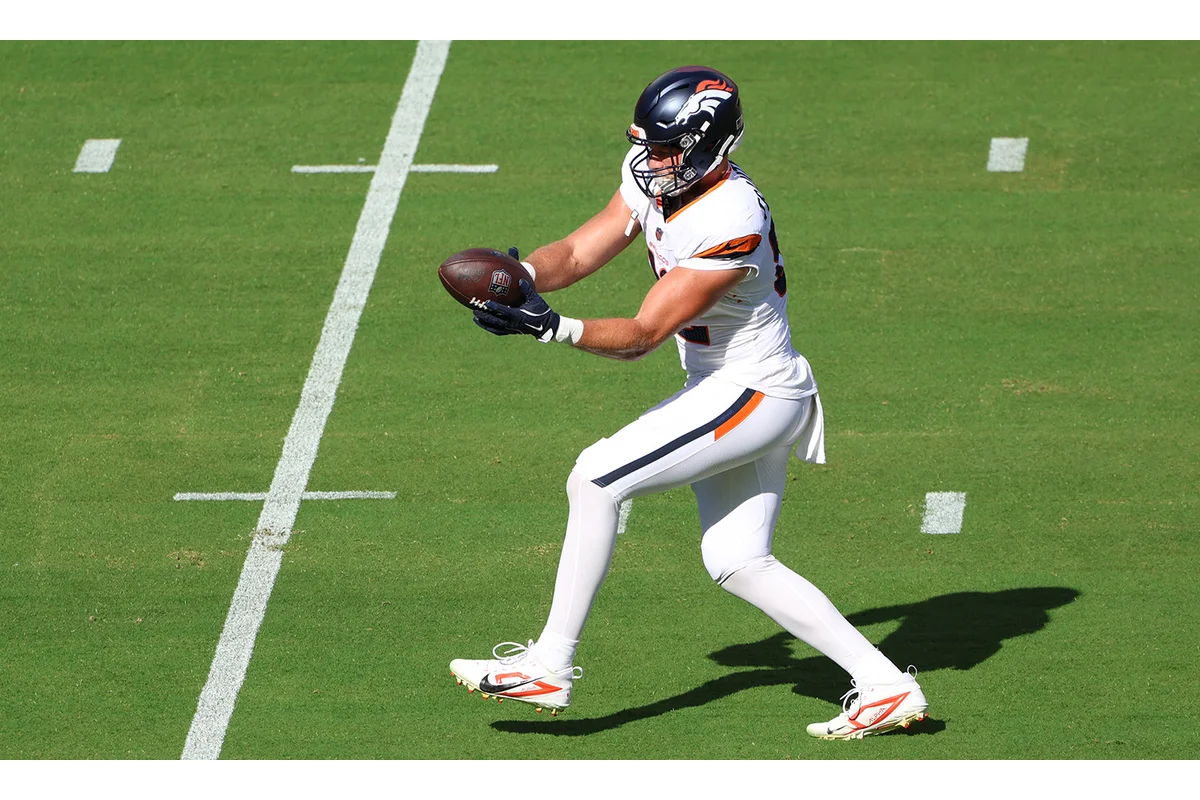
Justin Strnad exceeded expectations last season by earning a starting linebacker role for the Denver Broncos late in the year, stepping up as Dre Greenlaw recovered from a hamstring injury. Now 29 years old and entering his seventh professional season, Strnad’s recent performances raise the question of whether he should be given a larger opportunity moving forward with the Broncos. This topic grows more relevant as the team weighs roster and contract decisions during the offseason.
Strnad, who plays inside linebacker, is under a one-year contract worth $2.875 million. Having spent his entire six-season career with Denver, projections suggest he could command a salary around $3.8 million per year moving forward.
Examining Strnad’s Performance Metrics
In 2025, Strnad recorded career highs with 4.5 sacks and eight quarterback hits. Over the past two seasons, he has started 16 games, a significant increase from 2022 and 2023, when he did not record any defensive snaps. His pass coverage last year was strong, allowing a passer rating of just 63.0 when he was the closest defender. This ranked seventh among 98 linebackers with over 100 coverage snaps, according to Next Gen Stats.
Strnad also performed well as a pass rusher, ranking 11th in hit rate and 29th in pressure rate among 74 linebackers with at least 30 pass-rush snaps, according to Pro Football Focus data. These figures illustrate his versatility in coverage and pass rush, though his run defense ranks more modestly when compared to certain peers.
Factors Favoring the Broncos Retaining Strnad
The Broncos could negotiate a multi-year contract with Strnad at a cost similar to what they paid Cody Barton last year before Barton moved to the Tennessee Titans on a three-year, $21 million deal. Such a deal would be affordable and possibly more economical than previous contracts for players in comparable roles. For instance, Alex Singleton‘s average annual salary three years ago was around $6 million.
Data comparisons between Strnad and Singleton highlight some trade-offs. Strnad outperformed Singleton in coverage and pass-rush impacts during the 2025 season, while Singleton demonstrated stronger tackling reliability, with a lower missed-tackle rate and a higher run-stop rate—ranking 16th among 99 inside linebackers, whereas Strnad ranked 49th.
Reasons the Broncos Might Allow Strnad to Depart
The team could decide to bring back Alex Singleton and maintain the planned starting linebacker pairing that made six starts together last season. Additionally, the Broncos may consider a broader overhaul at the linebacker position, given a strong free-agent class featuring Devin Lloyd, Devin Bush, Nakobe Dean, Leo Chenal, and Bobby Wagner, alongside a draft class likely to produce multiple off-ball linebackers in the first two rounds.
While Singleton may serve as a transitional player, Strnad’s younger age and recent performances make him more likely to be viewed as a multi-year solution. This adds complexity to the decision and increases competition for limited roster spots.
What the Future Holds for Strnad and the Broncos’ Linebacker Group
Like last year when Barton received outside interest due to his starter experience, Strnad is expected to draw offers from teams willing to grant him a starting role. For the Broncos to re-sign Strnad before the legal tampering period begins, they likely need to guarantee him similar security about a starting position.
That commitment would likely require Denver to part ways with either Greenlaw or Singleton. Releasing or trading Greenlaw could free up approximately $6 million in salary cap space, though it would trigger $4.3 million in dead money. Post-June 1 designation increases this savings to roughly $8.2 million. Alternatively, choosing not to re-sign Singleton would clear space but might leave other roster questions.
Given these circumstances, it appears likely that Strnad will be in a starting lineup somewhere when the 2026 season begins. However, his rise during last season suggests that he may not start the season as part of Denver’s opening defensive unit.

