
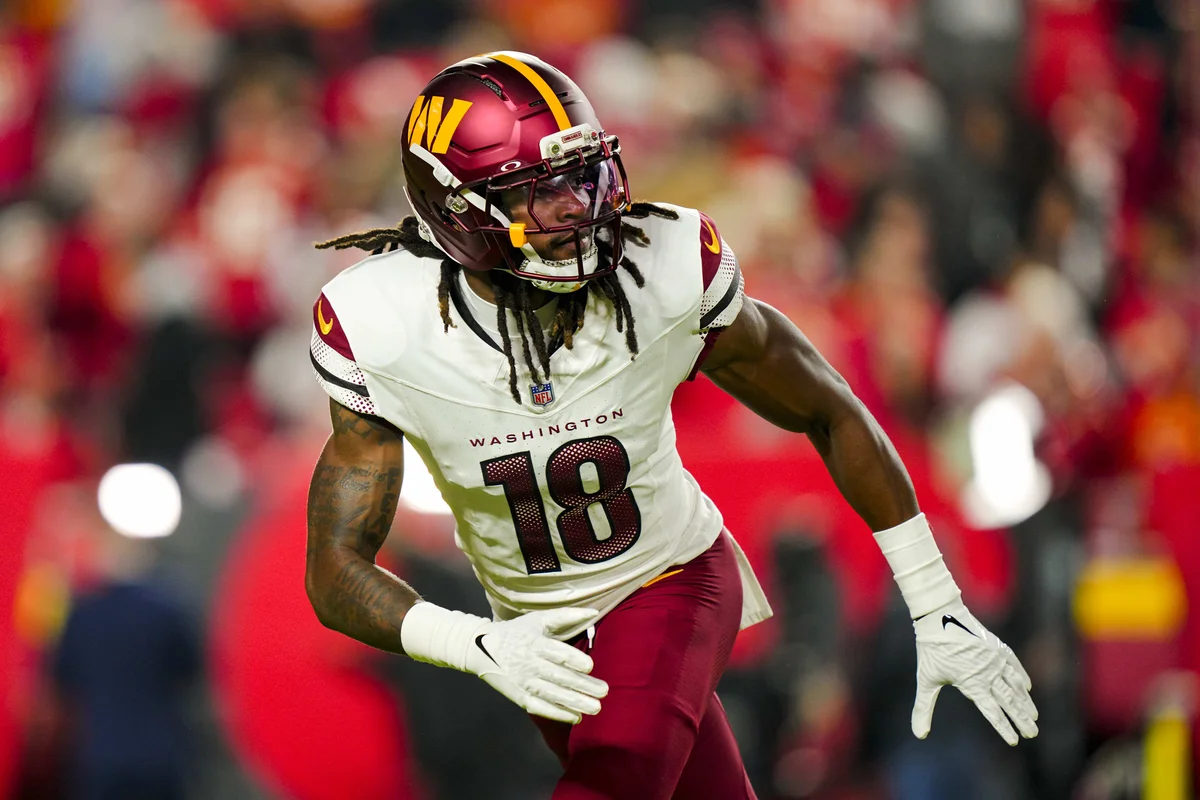
The Bleacher Report recently published its list of the 99 greatest quarterbacks in NFL history, sparking intense discussion across the football community. The Washington Commanders, a team with a long and storied quarterback history, were represented by sixteen players, a number remarkable for a single franchise. Despite this substantial presence, many of the rankings assigned to these quarterbacks appeared surprising and prompted scrutiny.
Originating in 1932 as the Boston Braves, the franchise now called the Washington Commanders has featured numerous signal-callers over the decades. The fact that sixteen quarterbacks who wore their uniform made the top 99 highlights the team’s quarterback depth, especially considering there are 32 NFL teams in total. However, simply counting entries does not fully reflect the impact these players had while wearing Washington’s colors.
Early Rankings Show Many Played Minimal Roles in Washington
Mark Rypien, the MVP of Super Bowl XXVI, ranks No. 97, marking a fair acknowledgment of his brief but successful peak. Despite his success, his relatively short tenure at a high level limits his ranking’s upward potential. Beyond Rypien, the list includes several quarterbacks whose Washington connections were fleeting. Four players—Jeff Hostetler (No. 95), Frank Ryan (No. 83), Jim Hart (No. 69), and Rich Gannon (No. 50)—each spent only a single season with the team and collectively started just seven games in Washington.
Another group of quarterbacks—Trent Green (No. 91), Doug Williams (No. 84), Alex Smith (No. 76), and Donovan McNabb (No. 42)—started fewer than 20 games in Washington. Except for Williams, whose career is indeed linked to the Commanders, the rest are more closely identified with other teams, further illustrating how half of Washington’s represented quarterbacks had only brief stints in D.C.
More Prominent Careers Often Spanned Multiple Teams
Aside from Rypien, seven other quarterbacks who spent significant time in Washington also made the rankings. Nonetheless, several of these players are better known for their achievements with other franchises. Norm Snead (No. 87) is a prime example: although he began his professional career with Washington, he spent the bulk of his seven seasons with the Philadelphia Eagles.
Brad Johnson (No. 85) posted two productive seasons with the Commanders but spent more time with the Minnesota Vikings and secured a Super Bowl win with the Tampa Bay Buccaneers. Kirk Cousins (No. 71) played 57 games for Washington but made 88 starts with the Vikings, reflecting his stronger association with Minnesota. Similarly, Mark Brunell (No. 61) had a highly successful nine-year tenure with the Jacksonville Jaguars before spending just three years in Washington.
This pattern means that thirteen of the sixteen Commanders quarterbacks on the list are primarily recognized for their work outside D.C., leaving only a few true franchise icons to rank meaningfully within this context.
Washington Legends Rate Higher but Still Not at the Top
Among the trio of quarterbacks known most fondly by Washington fans, Joe Theismann ranks No. 46. Although Theismann’s best years came under coach Joe Gibbs in the early 1980s, a late start and limited career length held him back from reaching a loftier position on the list. Sonny Jurgensen stands at No. 38. Despite limited playoff success, he led the league in passing yards five times and earned multiple first- and second-team All-Pro selections. His inclusion ahead of celebrated players like Joe Namath (No. 33) showcases considerable respect for his contributions.
However, the ranking of franchise legend Sammy Baugh at No. 26 provokes the most controversy. Known for pioneering downfield passing, Baugh played 16 seasons, took his team to the postseason five times, and won two championships. He led the league in passing four times and garnered a combined eight All-Pro honors—four first-team and four second-team selections.
Only a handful of quarterbacks in NFL history have more first- or second-team All-Pro recognitions than Baugh: Peyton Manning, Otto Graham, Johnny Unitas, and Sid Luckman. Yet, Baugh ranks lower than players with less distinguished credentials, casting doubt on the evaluation criteria.
Rankings Reveal Wide Disparities Among Panelists
The Bleacher Report’s ranking process involved staff members assigning each quarterback a position from 1 to 99, then producing a composite score. This method exposed some dramatic inconsistencies. For example, Baugh’s rankings ranged from as high as No. 7 to as low as No. 96, the largest variance among all quarterbacks on the list. This disparity suggests a lack of consensus regarding his legacy, which is perplexing given his foundational role in the sport.
Similarly, Jeff Garcia, ranked No. 74 overall, had a lowest individual ranking of No. 94, indicating at least one panelist considered him a better all-time quarterback than Baugh. Such evaluations challenge conventional wisdom and continue to fuel debate within the football community.
Ranking Outcomes Reflect Differing Perspectives on the Washington Quarterback Legacy
The Bleacher Report’s list, while comprehensive, highlights the complexity in assessing the careers of Washington Commanders quarterbacks. The sheer number of signal-callers considered great across the franchise’s history is notable, but many made only brief appearances in the nation’s capital or achieved greater success elsewhere.
Though a few legends like Baugh, Jurgensen, and Theismann remain part of Washington’s proud history, their positions suggest the franchise’s quarterback legacy is both rich and controversial. Moving forward, these rankings may influence fan and analyst conversations about how debuts, longevity, and peak performance weigh in the evaluation of quarterbacks tied to the Washington Commanders.
