

The Jacksonville Jaguars will play two home games in London during the 2026 NFL regular season, reflecting a strategic decision tied to ongoing renovations of EverBank Stadium, team President Mark Lamping announced at a February 25 news conference. This adjustment allows the Jaguars to better coordinate their stadium construction schedule while maintaining their commitment to playing international games.
Adjustment to London Game Schedule to Support Stadium Reno
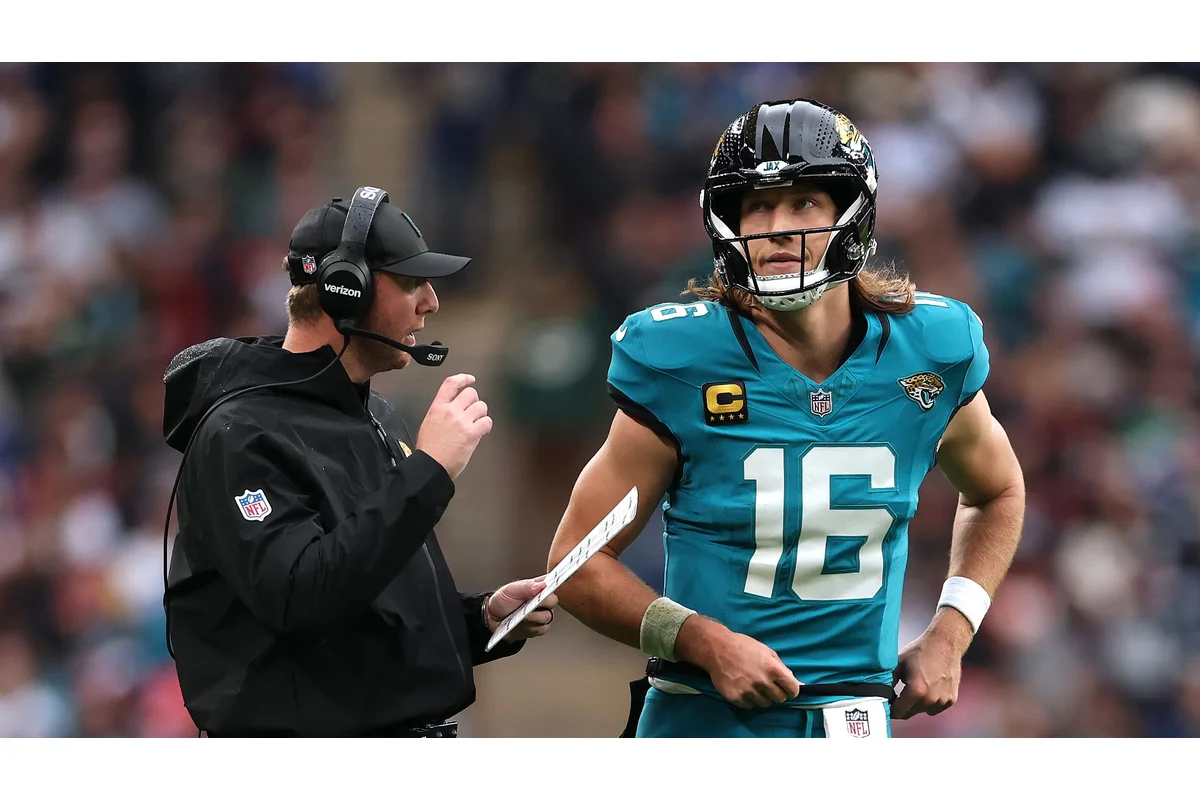
The Jaguars successfully requested that one of their London games, initially slated for 2030, be moved up to 2026, joining another London game already on that calendar year’s schedule. This shift results in two back-to-back regular season games in London, which is unusual since the Jaguars usually play a single annual game overseas. The first game serves as the team’s standard London outing, while the second fulfills an NFL mandate that all teams play at least one international game every four years.
This reshuffling reduces the number of home games at the Jacksonville stadium during the 2026 season to six regular season and two preseason games. The move is expected to provide necessary flexibility to complete or accelerate construction tasks at EverBank Stadium, which is amid a $1.4 billion renovation and will operate at limited capacity during the upcoming seasons.
Leveraging Schedule Changes to Accelerate Construction
By scheduling two away games in succession, the Jaguars aim to exploit the resulting open weeks to advance construction work that might otherwise lag. Lamping emphasized that if these London games are paired with a bye week or additional road games, the organization will gain critical time to work on stadium improvements without disrupting the team’s schedule.
The full NFL schedule for 2026-27 is anticipated to be released in mid-May.
Balancing Fan Expectations with Stadium Progress
At the press event, Mark Lamping acknowledged that many fans prefer all Jaguars games to be held in Jacksonville, stating,
“Many fans want every single game to be played here in Jacksonville. We understand that,”
Lamping said.
“But in this particular case, trading a game in a stadium under construction with reduced capacity and getting a game back in our brand new stadium, we think that makes sense for all involved.”
He highlighted the trade-off as beneficial both for fans and the team’s long-term stadium vision.
While the Jaguars have not finalized playing their traditional London game in 2027, they are already scheduled to fulfill the NFL’s international game requirement in England that year. Lamping indicated the team might even consider hosting two London games again in 2027, showing openness to evolving their London strategy as local stadium developments progress.
“There’s a lot that’s going to be changing here locally. And I think you can expect us to take a close look at what our London strategy is moving forward,”
Lamping said, adding,
“Not to suggest that, you know, we’re going to stop playing a game in London, but it is something that we will look very, very, very closely at.”
Progress and Financial Challenges in Stadium Renovation
Construction on EverBank Stadium’s renovation continues with key milestones underway. Recently, the first of four grand staircases was opened ahead of the 2025 regular season. By late February, work had progressed on the second grand staircase and a concourse extension designed to expand walking areas for fans around the stadium. This concourse extension aims to encircle the entire stadium.
Preparations for installing the stadium’s new roof are also advancing. Seventy-five steel beams anchored in underground concrete have been installed and are expected to be completed by August. Roof installation is planned to begin during the first half of 2027.
Despite construction strides, cost overruns remain a concern. Lamping noted in a December interview with the Daily Record,
“Our cost projections literally change in real time. (If) I gave you a number today, it’d be outdated a half hour from now,”
and confirmed,
“We will be over $1.4 billion.”
The city of Jacksonville is providing $775 million in public funds, while the Jaguars contribute $625 million, according to legislation approved by the City Council in June 2024.
City Chief Administrative Officer Mike Weinstein updated City Council members in December 2025, clarifying that the Jaguars are responsible for any cost overruns not caused by city delays under the funding agreement.
Ticket Availability Tight Amid Reduced Stadium Capacity
The stadium’s capacity will shrink to 42,507 seats during the renovation, a reduction of 27,637 from previous years. This limits the number of tickets available for the 2026 season, forcing the Jaguars to balance supply with strong fan interest. Lamping reported significant demand for season tickets and stressed the importance of core season ticket holders.
“Our hope is that most of our seats will be occupied by our season ticket holders,”
Lamping said.
“Those are our real core fans, and we’re going to rely on them for a long time.”
The team has already removed seating in the eastern and planned removals in the western upper decks, as well as behind the north end zone. However, the Jaguars expect to add temporary seating for marquee events like the Florida-Georgia games, which are set to return to Jacksonville in 2028 after stadium renovations conclude.
High Attendance Highlights Market Demand and Pricing Implications
Jaguars’ recent attendance figures underscore the local support and demand for Jaguars football. The team averaged 64,445 fans per regular season game in 2025, with a playoff matchup against the Buffalo Bills drawing 70,250 attendees. Lamping reflected on this success, saying,
“I don’t think anything showed what this market is capable of more than our playoff game against Buffalo this year,”
and noted,
“Unlike a lot of times when the Bills roll in here, it was still dominated by Jaguars fans, and they were loud.”
Given the expected ticket scarcity and vibrant demand, the Jaguars anticipate higher ticket prices, particularly on the secondary market. Lamping explained that prices will aim to reflect value and demand, stating,
“If there are tickets that aren’t sold by our season ticket holders, to try to deal with the revenue impact we’re facing, we will probably be pretty aggressive on the secondary market in managing to have the price of the ticket reflect the value based on the demand,”
and added,
“If we have unbelievable demand for tickets, I don’t think that it should be a surprise to think that that’s going to be reflected on pricing on the secondary market.”
