
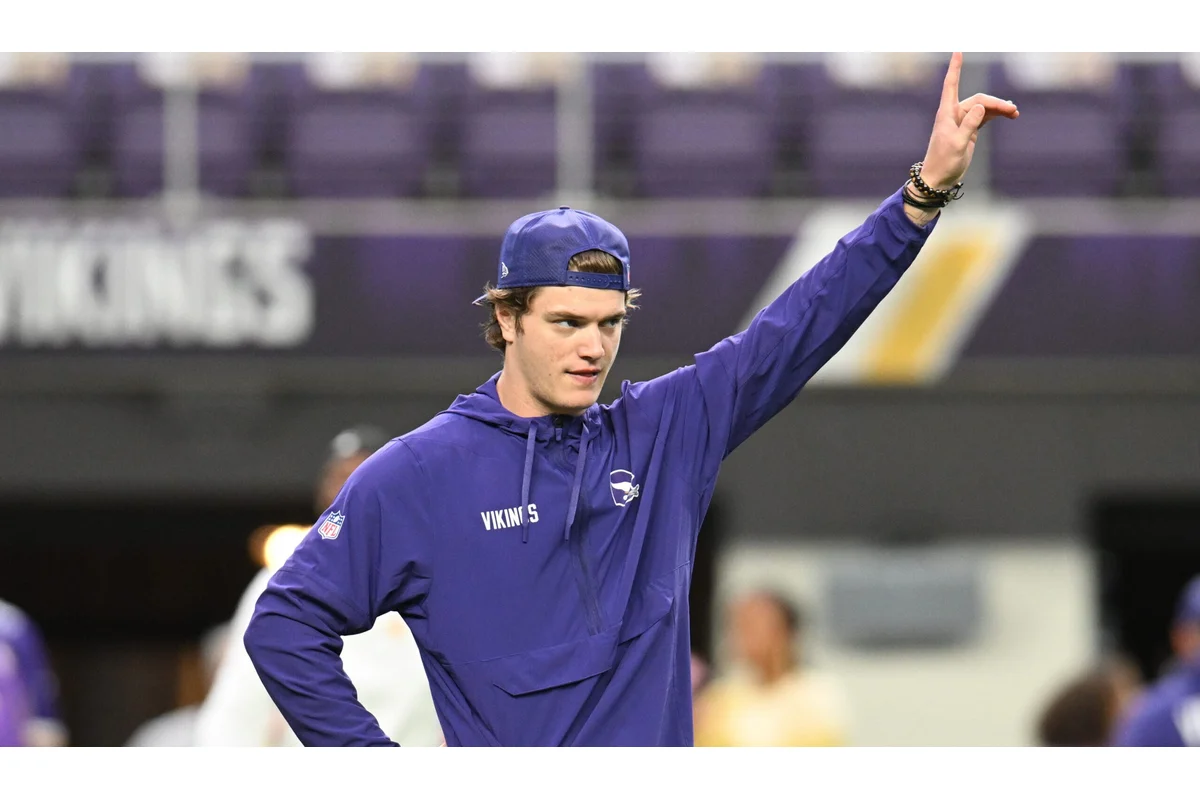
The Minnesota Vikings are expressing uncertainty about whether J.J. McCarthy can serve as their long-term franchise quarterback. Despite selecting him 10th overall in the 2024 NFL Draft, questions have surfaced regarding McCarthy’s ability to handle fundamental responsibilities of the position, as well as his inconsistent performance on the field.
McCarthy, a former Michigan standout and national champion, missed his rookie season due to a right meniscus tear, delaying his NFL debut. The Vikings initially expected him to be the centerpiece of their offense, but uneven play and developmental hurdles have led to growing league-wide discussion and internal reconsideration.
Early Struggles and Team Reaction
After recovering from injury, McCarthy played 10 games during the 2025 season, registering 11 touchdown passes against 12 interceptions, compiling 1,632 passing yards. His irregular performance created uncertainty within the Vikings’ organization about his capacity to consistently lead the team.
Sam Darnold, who took over as starter during McCarthy’s absence, led Minnesota to a surprising 14-3 record. However, the Vikings decided to let Darnold leave in free agency, banking on McCarthy to fill the quarterback role permanently. That decision has come under scrutiny after Darnold won a Super Bowl with the Seahawks while McCarthy’s progress remained uneven.
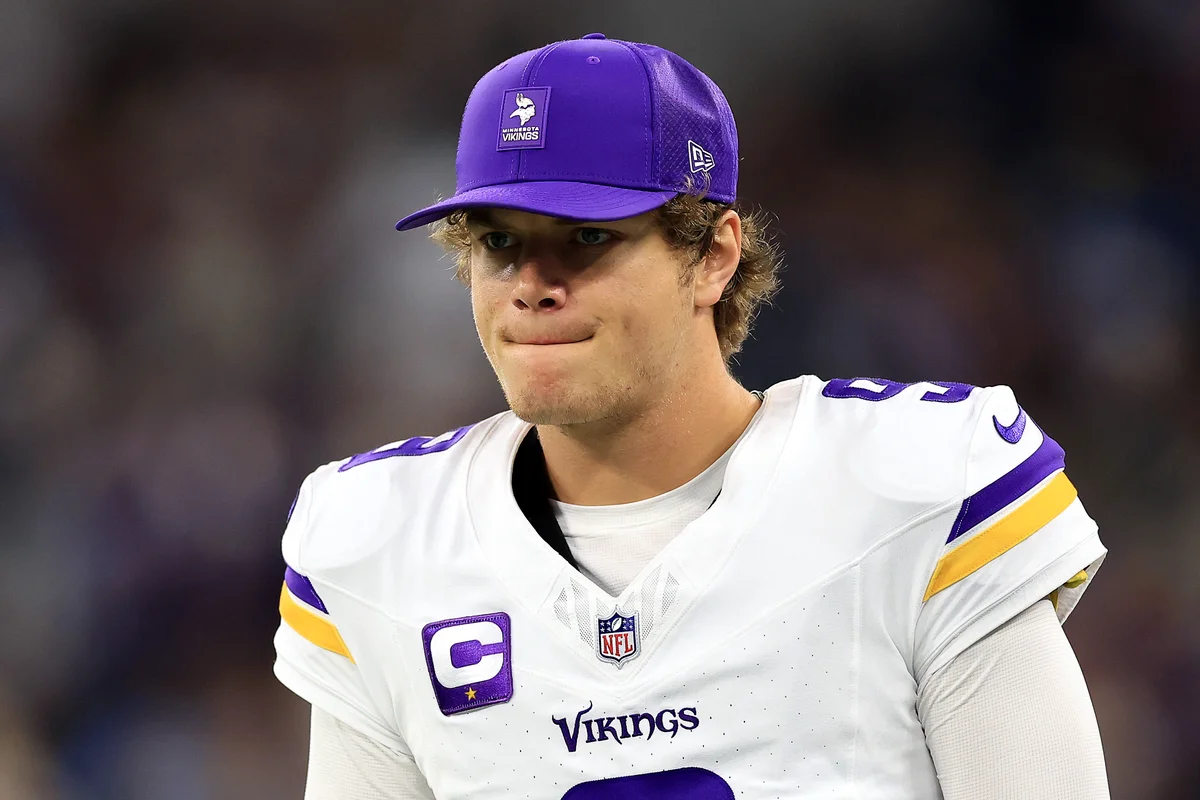
The Vikings also knew they were drafting a young player. What they did not envision, especially following an encouraging first training camp that preceded his torn meniscus, was the challenge posed by some of the more elemental aspects of being the face of a franchise,
The Athletic’s Alec Lewis wrote.
These growth hurdles have become widely known among NFL executives and coaches, and they were frequent topics in Indianapolis (for the NFL Combine).
Coaching Staff’s Observations and Development Goals
The Vikings coaching staff acknowledges the progress McCarthy has made but emphasizes that much development remains. Head coach Kevin O’Connell described McCarthy’s rookie season as a “development phase” full of teaching moments and challenges with basic quarterback skills like footwork and reading defenses.
The starting point is outside of some bumps and bruises here, he’s going to have a healthy offseason,
O’Connell said.
With his journey up and until this point, he’s gotten 10 starts where we’ve been able to see a lot of the things that we really, really liked about J.J. when we drafted him. We’ve seen some growth, we’ve seen some of that development time over time, but we’re still talking about quite a few opportunities of development phase and growth phase missed.
He knows it’s a big offseason for him. He didn’t need anybody to tell him that. He certainly didn’t me to tell him that. … He is hungry.
O’Connell added that the team aims to combine coaching, teaching, and a competitive environment, which he believes will foster McCarthy’s improvement by the 2026 season.
We’ve really got to push the gas pedal down and not replace development and coaching and teaching with anything but really enhance it with a really competitive situation that I think our whole team will benefit from.
Team’s Plans for Quarterback Position Moving Forward
While the Vikings do not appear to be outright replacing McCarthy at this point, they are exploring veteran options to bolster the quarterback room in case McCarthy fails to meet expectations. Reports indicate they want an affordable veteran presence through free agency or trade rather than investing heavily to find a franchise-altering passer immediately.
Names linked to Minnesota include former Vikings starter Kirk Cousins, whose tenure with the Falcons is concluding, as well as Cardinals quarterback Kyler Murray and Raiders veteran Geno Smith. None of these additions would require a large financial commitment but could provide insurance and competition behind McCarthy.
Inside sources within the team have described McCarthy’s play as unpredictable, fueling visible frustration from coach O’Connell during both media appearances and behind the scenes at the TCO Performance Center.
This resulted in visible stress for (coach Kevin) O’Connell in interviews and privately around the TCO Performance Center,
Lewis noted.
Implications for the Vikings and Their Quarterback Outlook
The Vikings’ situation underscores the difficulty of transitioning a highly touted college quarterback to NFL franchise leader status, particularly when early injuries and skill gaps emerge. Their willingness to seek out veteran quarterbacks reflects a pragmatic approach to balancing McCarthy’s development with the team’s immediate competitive goals.
McCarthy’s growth during the upcoming offseason and beyond will be critical in determining Minnesota’s future direction at the most pivotal position in football. The Vikings appear committed to pushing his progress while preparing for the possibility that they may need to supplement or eventually replace him if he cannot consistently perform at the required level.
For now, McCarthy remains the starting quarterback but faces the challenge of turning potential into reliable production to meet the high expectations set by his draft status and the franchise’s ambition.
