
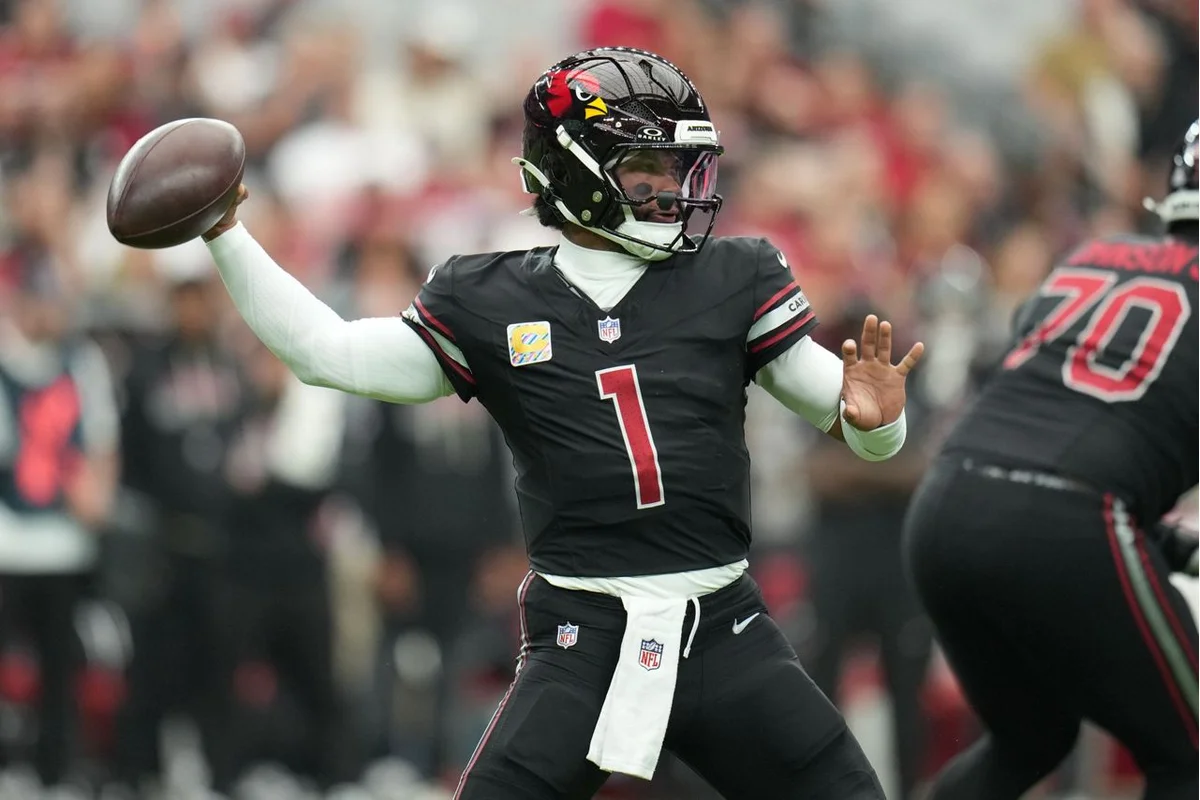
The Minnesota Vikings are preparing for a critical choice at quarterback as they consider bringing competition for J.J. McCarthy. Head coach Kevin O’Connell has emphasized the need for depth, with the recent development that the Arizona Cardinals plan to release Kyler Murray intensifying interest. The possibility of adding Murray, who is likely to accept a veteran minimum deal due to $36.8 million guaranteed still owed to him by Arizona, presents a complex scenario for Minnesota and other contenders.
Understanding the Difficulties Associated with Kyler Murray
On the surface, signing Murray is appealing. He boasts exceptional arm talent and notable achievements, including being the first overall pick in the 2019 NFL Draft, Offensive Rookie of the Year, and two Pro Bowl selections. His ability to evade pressure with agility and throw accurately from various angles sets him apart.
However, consistency in staying healthy has been a significant concern. Murray tore his ACL in 2022 and a foot injury limited him to five games that season. Before the NFL’s shift to a 17-game schedule in 2021, Murray played every contest in his first two seasons. But he has since missed substantial time: three games in 2021, six in 2022, nine in 2023, was active for all games in 2024, and missed 12 games in 2025. This history poses challenges, especially considering McCarthy’s own issues with availability, having missed 25 of his first 35 career games across regular season and playoffs.
The Impact of Murray’s Stature on His Play and the Vikings’ Scheme
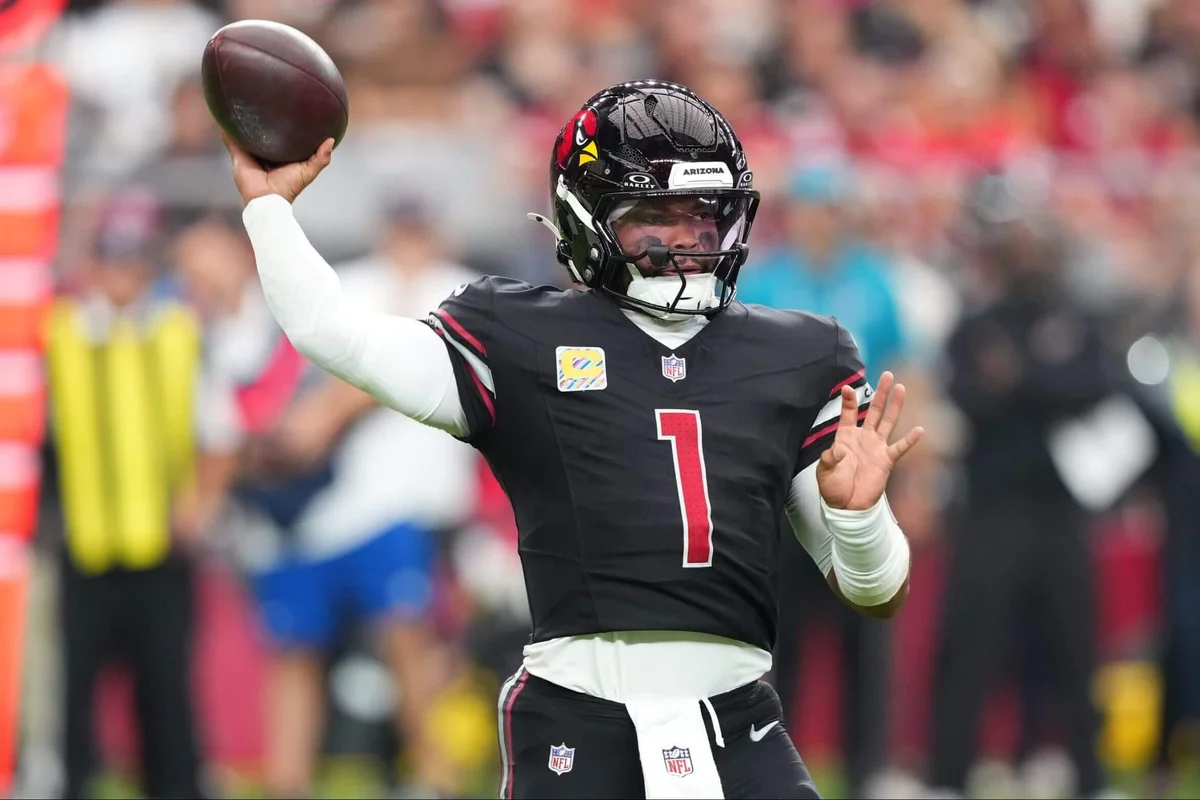
Murray’s height, listed at 5-foot-10 and 207 pounds, affects multiple facets of his game. His size makes it harder to see over the offensive line and influences his ability to get passes off cleanly over the line of scrimmage. While his rate of passes batted down is comparable to other quarterbacks, the physical limitations linked to his stature remain an ongoing hurdle.
Height-related challenges also affect his capability to throw over the middle of the field, a critical area for Kevin O’Connell’s offensive approach, which often emphasizes those intermediate throws. Murray’s skill set is more aligned with Air Raid-style offenses under coaches like Lincoln Riley and Kliff Kingsbury, where he makes fewer throws into the center of the field.
In his last full season with Drew Petzing as offensive coordinator, Murray completed 32 passes over the middle for 501 yards, with four touchdowns and one interception, including three high-impact throws and one turnover-prone play. By contrast, Vikings’ former starter Sam Darnold threw 104 passes in that same zone, completing over half for 1,316 yards, eight touchdowns, and four interceptions, while generating more big plays and turnovers. O’Connell has demonstrated willingness to tolerate turnovers if they bring explosive plays, making this a notable consideration.
Scheme Adaptations Could Mitigate Murray’s Limitations
Questions about whether Murray fits the Vikings’ offensive system have generated debate. However, recent reporting suggests that O’Connell has adjusted his offense to suit his quarterbacks’ strengths. According to The Athletic’s Alec Lewis, the Vikings reduced over-the-middle passing concepts in 2025 to simplify J.J. McCarthy’s reads.
“Applying touch to passes — a pre-draft question the Vikings themselves had — remained a struggle. In 2025, Minnesota also removed most of its over-the-middle passing concepts throughout the season to keep his line of sight as simple as possible,”
wrote Lewis.
“These limiting factors may not be deal breakers over the long haul. That said, NFL executives and coaches rarely have the benefit of viewing everything in the context of the long haul.”
This suggests that O’Connell might similarly adapt the offense for Murray by focusing on sideline throws, incorporating his mobility, and possibly adding read-option plays to keep defenses uncertain. His history of tailoring the offense to his quarterback’s skill set indicates that schematic concerns should not be viewed as fixed obstacles.
Given Murray’s veteran minimum contract status, exploring this option is a low-risk move with high upside. Should it prove successful, the Vikings could potentially secure their starting quarterback for years to come.
Other Quarterback Options and Roster Considerations for the Vikings
Alongside Murray, the Vikings have shown interest in Geno Smith, hoping his history of steady play can provide similar stability. Meanwhile, offensive coordinator Klint Kubiak faces the task of replicating the success other teams have seen when effectively supporting veteran quarterbacks, as the Seahawks did previously.
Trade discussions around players like Jonathan Greenard also influence the Vikings’ roster blueprint, as acquiring value in these moves could shape the team’s trajectory and depth beyond just the quarterback position.
What Lies Ahead for the Vikings at Quarterback
The arrival of Kyler Murray with the Vikings would introduce a blend of dynamic talent and notable challenges centered on durability and scheme compatibility. Given Kevin O’Connell’s adaptive offensive approach and the low financial risk, pursuing Murray could provide Minnesota with a strong quarterback foundation. This decision will be crucial for the team’s direction as they aim to balance immediate competitiveness with long-term stability at a pivotal position.
