

The New England Patriots’ tenure with wide receiver Stefon Diggs ended after a single season, a move that many fans anticipated but found unsettling. The announcement surfaced in early March 2026, with the team framing the release as a consequence of salary cap constraints. However, this explanation does not capture the full picture behind the Patriots’ choice to part ways with Diggs as they entered the new league year in Foxboro.
Despite Diggs’ veteran presence and vocal leadership that head coach Mike Vrabel valued for his offense, breaking the three-year, $63.5 million contract signed in 2025 never seemed certain. While the contract appeared substantial, it was heavily front-loaded, meaning only $6 million of Diggs’ 2026 salary would have become guaranteed if he remained past mid-March. His fit as a primary slot receiver and reliable target for quarterback Drake Maye did not outweigh concerns the organization had, both on and off the field.
Financial Considerations Beyond the Salary Cap
Contrary to the Patriots’ official narrative that salary cap pressures forced the decision, insider analyst Greg Bedard of Boston Sports Journal revealed that cash flow and budget management played a critical role. Although the NFL’s 2026 salary cap reached a new high of $301.5 million, the Patriots’ internal budgeting is reportedly managed with a more restrictive cash perspective, driven by team ownership under Robert and Jonathan Kraft.
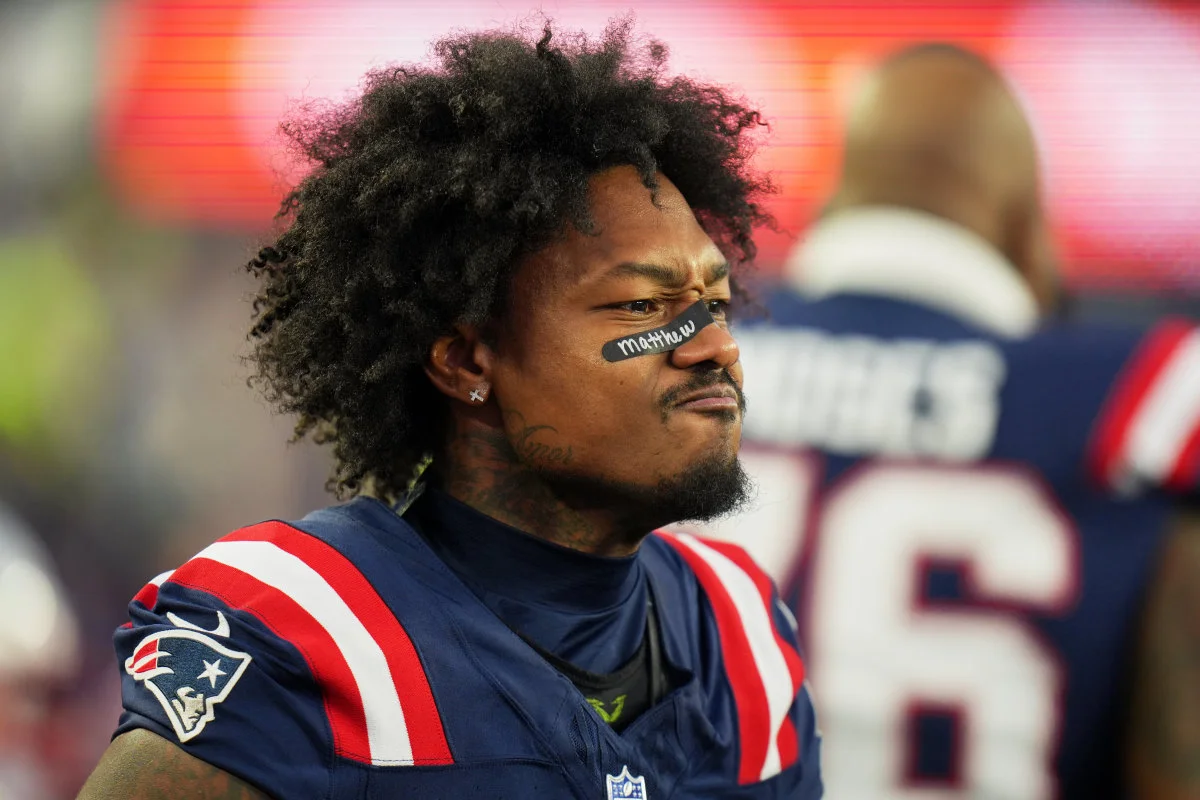
Parting with Diggs freed $21.7 million in actual cash for the offseason, potentially expanding the team’s spending capacity by more than $60 million depending on how much latitude the Kraft family grants Mike Vrabel regarding the three-year cash budget. Bedard explained,
“The biggest benefit of parting with Diggs now is that the Patriots have now freed up another $21.7 million in cash to spend this offseason… Depending on where the Krafts draw the line on the cash budget, New England could now have more than $60 million more in cash to spend to help the team. It’s $60 million if the Krafts allow Mike Vrabel to be over the three-year cash budget by $11 million. If the Krafts approve more, the Patriots would be able to go even further.”
Contract Structure and Its Impact on the Release
Diggs’ deal was structured as a de facto one-year commitment despite the nominal three-year length. Of the total contract value, only $22.6 million was guaranteed, and nearly three-quarters of that guarantee was paid upfront. His later cap hits, $26.5 million for both 2026 and 2027, were largely placeholders that could be mitigated through a contract restructure. This flexibility meant the Patriots could have converted more of his 2026 salary into guaranteed money to lessen cap hits and extend his tenure.
Instead, the Patriots opted for a clean break with an $11.4 million dead-cap charge, according to Spotrac. This financial decision coincided with Diggs’ on-field inconsistencies and off-the-field complications, notably a serious legal allegation citing felony strangulation involving a female personal chef. These factors collectively influenced the franchise’s choice to move forward without him.
Evaluating Diggs’ Performance and Fit with the Team
While Diggs matched a 1,000-yard receiving season and filled the slot receiver role essential in Josh McDaniels’ offensive scheme, his impact was below the transformative level the Patriots had long sought for their wide receiver corps. He occasionally struggled in key playoff moments, and at age 33, concerns about his longevity and overall reliability contributed to the hesitancy about keeping him on the roster.
His presence was supportive as a security blanket for rookie quarterback Drake Maye but ultimately insufficient to justify the sizable commitments needed for the remaining contract years. Given the team’s ambitions and financial restrictions, retention was not the favored option.
Breaking Down the Salary Cap and Cash Spend Dynamics
The 2026 salary cap milestone of $301.5 million marked a historic threshold for the NFL, yet many teams, including the Patriots, consistently exceed this figure in actual cash spent. In 2025, 21 out of 32 NFL teams paid more than $300 million in player salaries based on cash flow, underscoring that salary cap rules and real spending don’t always align tightly.
In the Patriots’ case, they entered the 2026 league year with over $35 million in salary cap room available. This scenario implied that a restructure for Diggs was financially viable, and pairing him with other external targets, such as Alec Pierce or A.J. Brown, was an option on the table. However, the weight of the Kraft family’s budgeting priorities and the team’s broader financial commitments outweighed this possibility.
Looking Ahead for the Patriots’ Offseason Moves
The Patriots’ release of Stefon Diggs signals a determined focus on managing their cash budget under long-term ownership control while pursuing roster flexibility. This decision may open avenues for investing in younger receiver options or reallocating funds to other positions needing reinforcement.
Although the traditional “cap casualty” explanation offered by national media outlets is a simplified narrative, the true story involves a layered blend of financial strategy and player evaluation. Moving beyond outdated PR spin could better serve the team’s transparency and fan understanding in future personnel decisions.
Patriots supporters should watch closely how the team reallocates resources during free agency and the draft, as these moves will reveal the Krafts’ willingness to support coach Mike Vrabel’s vision within the financial constraints they impose.
Stefon Diggs thanks the Patriots. A source says the Patriots have informed him he will be released at the start of the league year. Ties to finances, as cap charge was spiking from $10.5m to $26.5m. pic.twitter.com/bh1OlZbTrU — Mike Reiss (@MikeReiss) March 4, 2026
Stefon Diggs thanks the Patriots. A source says the Patriots have informed him he will be released at the start of the league year. Ties to finances, as cap charge was spiking from $10.5m to $26.5m. pic.twitter.com/bh1OlZbTrU
— Mike Reiss (@MikeReiss) March 4, 2026
