
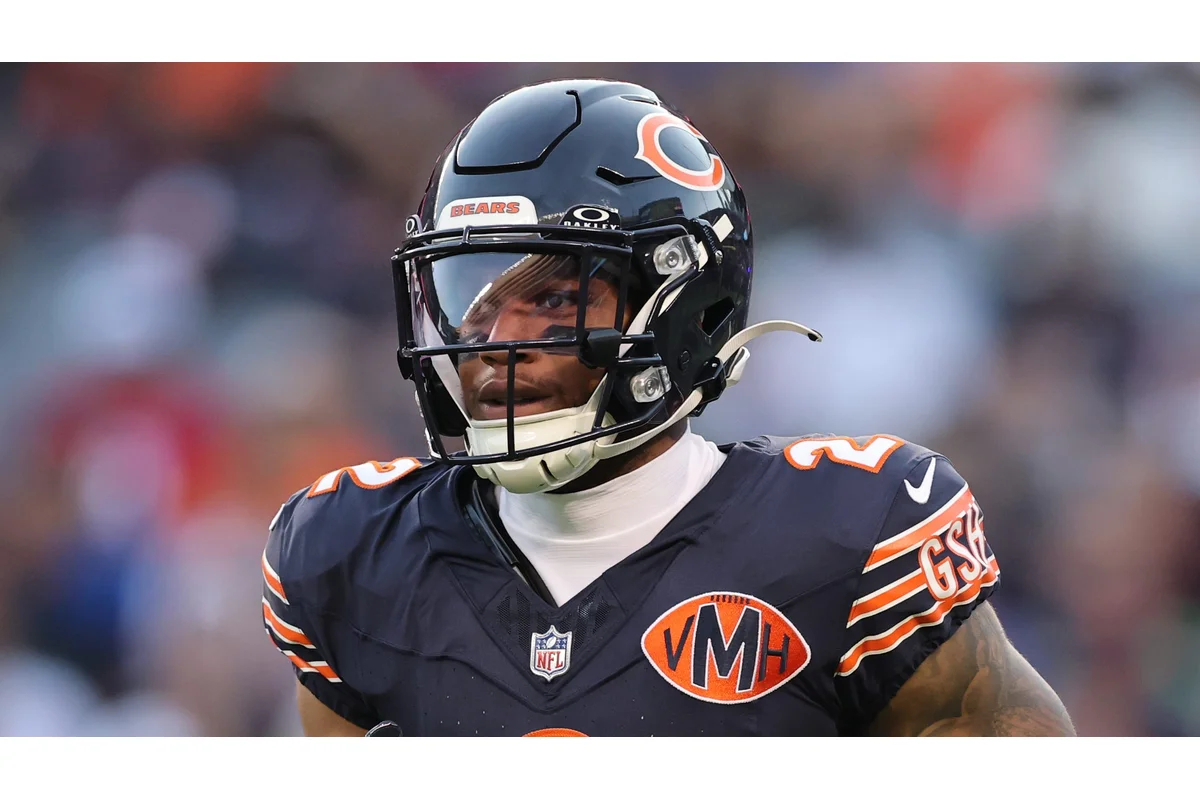
The NFL offseason trading period has already sparked significant moves well before the official free agency window opens on March 9. In one of the most talked-about transactions, the Buffalo Bills acquired wide receiver DJ Moore from the Chicago Bears, a deal that has drawn considerable scrutiny given its timing and financial implications as teams prepare for the 2026 season.
This article examines the details behind the Bills’ trade for DJ Moore, along with other notable trades involving the Chiefs, Texans, Lions, Browns, Titans, Jets, and Rams, analyzing how these front office decisions might impact each team’s future.
Buffalo Bills’ Acquisition of DJ Moore: An Ambitious Push at Wide Receiver
The Bills landed WR DJ Moore along with a 2026 fifth-round pick in exchange for a 2026 second-round pick going to the Bears. This move comes after a period in which Buffalo’s front office, led by Brandon Beane, had been criticized for underinvesting in the receiver position. Although Beane previously dismissed such criticism, his recent decision to trade a higher draft pick to secure Moore marks a clear change in strategy.
Moore’s journey to Buffalo has been tumultuous. After a solid rookie season with Chicago that earned him a lucrative extension, his performance deteriorated notably in the following years. Under new offensive coordinator Ben Johnson, Moore’s yards per route run. and overall effectiveness declined sharply, culminating in a season where he ranked below average for NFL receivers. Some questioned his commitment during Chicago’s playoff loss, where a lackluster route contributed to a critical interception.
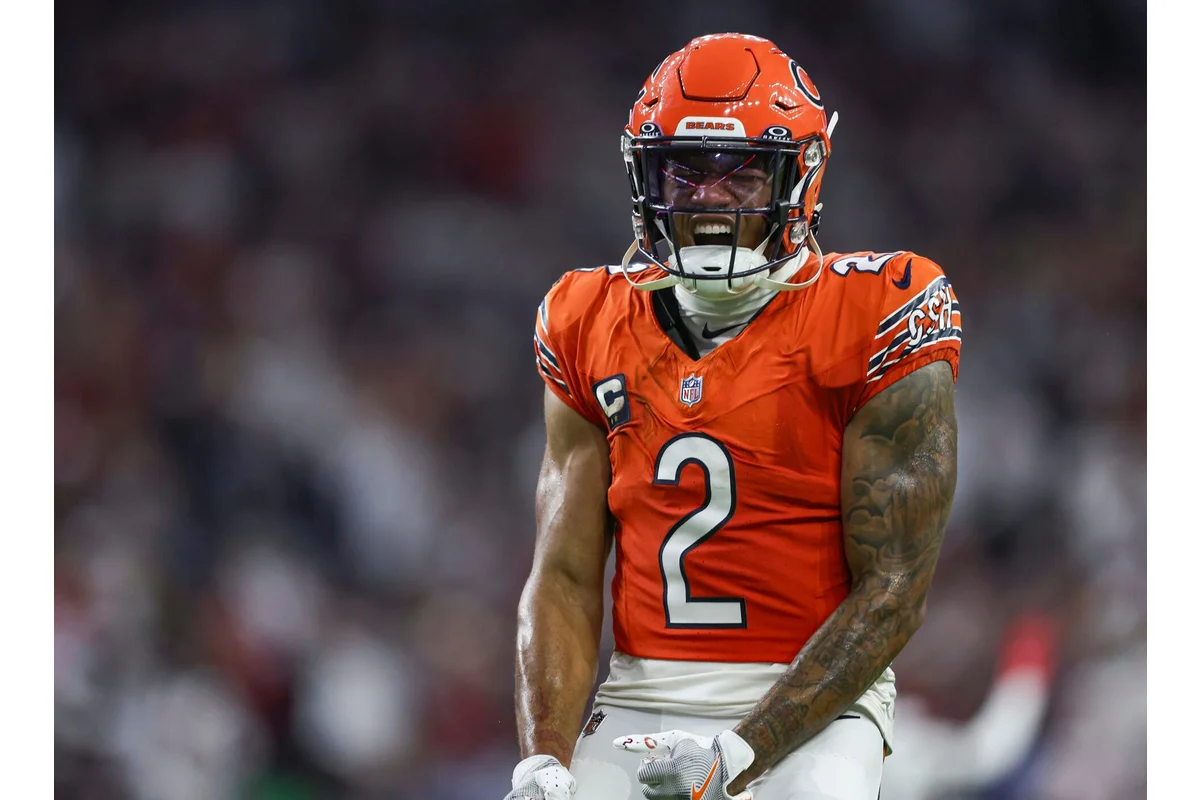
Despite these concerns and facing a contract that guarantees $24.5 million in 2026 and fully guaranteed salaries in 2027 and 2028—an unusually heavy financial commitment—the Bills chose to absorb Moore’s substantial contract. This includes a $90 million, four-year deal with significant guaranteed portions, a commitment that makes this trade risky given Moore’s recent struggles and age of nearly 29.
The Bears likely found this deal advantageous, offloading a disappointing asset and reallocating guaranteed money toward rising talents like Rome Odunze, Luther Burden III, and Colston Loveland, whom they view as their future receiving core. Chicago received a valuable early-round draft pick, which provides flexible resources to bolster other roster needs.
Analysts note that while Buffalo correctly identified the need to bolster their receiving corps around quarterback Josh Allen, the method chosen—sacrificing draft capital for a player with declining production and a burdensome contract—raises doubts. Alternative targets available in free agency, such as Mike Evans or Alec Pierce, might have posed less financial risk without costing a draft pick, though they come with uncertainties of their own.
Ultimately, the Bills’ decision signals a willingness to prioritize immediate offensive improvements despite potential salary cap ramifications, acknowledging the pressure to enhance the weapons around their elite quarterback in pursuit of Super Bowl contention.
Rams Pursue Defensive Upgrade with Trent McDuffie Trade
The Los Angeles Rams secured cornerback Trent McDuffie by sending four draft picks to the Kansas City Chiefs, including a 2026 first-round selection. McDuffie, regarded by many insiders as an elite cornerback, brings top-tier man-coverage skills to a Rams secondary that was a weak point last season.
McDuffie’s consistent excellence is evident through his yards allowed per coverage snap metrics, maintaining levels well above NFL averages for cornerbacks. At 25, McDuffie not only boosts the Rams’ defense but provides versatility, having experience across outside and nickel defensive back roles.
This aggressive acquisition reflects the Rams’ determination to capitalize on their championship window, especially with quarterback Matthew Stafford coming off an MVP-caliber season at age 38. The cost, however, was steep, with the Rams giving up multiple draft assets that could have yielded younger, cost-controlled players.
While McDuffie’s current salary is reasonable, a likely extension will push his cap hit higher, adding to the financial burden already imposed by this high-stakes deal. The Rams’ gamble is that McDuffie’s impact justifies sacrificing future draft capital, though the volatility inherent in cornerback performance creates risk.
For the Chiefs, the trade fits into their long-standing strategy of developing defensive backs under coordinator Steve Spagnuolo and then exchanging veterans for draft capital. This approach allows them to manage salary cap space and rejuvenate the roster, especially as they face hard choices around retaining free agents like Jaylen Watson amid salary constraints.
Texans Acquire Running Back David Montgomery in Bid to Boost Ground Game
Houston acquired running back David Montgomery from the Detroit Lions, sending guard Juice Scruggs and two draft picks in return. Montgomery, 29 years old, provides a veteran presence for a Texans rushing attack that ranked near the bottom of the league in efficiency last season.
Montgomery had phases of solid performance in Detroit, contributing positively in yards over expected, a metric that adjusts for offensive line quality. Nevertheless, his role diminished with the rise of Jahmyr Gibbs, and his receiving production also declined compared to earlier career output.
The Texans’ decision to spend draft capital on Montgomery raises questions, considering his age and the potential to find similarly productive running backs at lower costs or through the draft. His contract is moderate, costing Houston $6 million in cash for 2026, but it may not represent significant long-term value.
Detroit benefits significantly from this trade, obtaining Scruggs—a reclamation project interior lineman—and draft selections to address its own backfield needs or invest elsewhere. The trade offers the Lions flexibility to build around emerging talents like Gibbs, making it one of their more favorable offseason moves.
Cleveland Browns Begin Offseason Rebuild by Acquiring Tytus Howard
As the Browns face extensive turnover along their offensive line, they traded a 2026 fifth-round pick to the Texans for tackle Tytus Howard. Howard, a versatile lineman with experience at guard and tackle, could help stabilize Cleveland’s front alongside a likely young quarterback, whether Shedeur Sanders or another emerging signal-caller.
Despite the potential fit, Howard’s recent performance metrics have been underwhelming, placing him in the lower quartile for run and pass blocking efficiency. His upcoming contract extension adds notable financial commitment, with a two-year, $45 million deal in place that, considering his production, appears overpriced.
The Browns remain cap-strapped entering 2026 and risk allocating significant resources to a below-average starter at a position critical for protecting their quarterback. This move initiates what is expected to be a comprehensive rebuild of their offensive line.
From Houston’s perspective, trading Howard frees cap space and allows the Texans to focus on improving blocking around quarterback C.J. Stroud. With multiple offensive line spots open for competition, the Texans can manage their financial priorities while addressing pressing roster gaps.
Jets Swap Edge Rusher Jermaine Johnson for Defensive Tackle T’Vondre Sweat
The New York Jets traded edge rusher Jermaine Johnson to the Tennessee Titans in exchange for defensive tackle T’Vondre Sweat. Johnson, coming off a Pro Bowl season with 7.5 sacks, saw inconsistent production overall and battled injuries, whereas Sweat, a younger second-round pick, has contributed steadily as a nose tackle.
The Jets’ decision reflects a desire to strengthen interior defensive line play, where Sweat’s presence should improve run defense and provide some pass rush. Sweat’s rookie contract cost is modest compared to Johnson’s $13.4 million fifth-year option salary, making this move fiscally beneficial for New York while aiming to upgrade key defensive areas.
Tennessee acquired Johnson to bolster their edge rush, a position of need. However, given Johnson’s inconsistent production and higher salary, the trade is viewed with skepticism. The Jets’ front office prioritizes cost-effective players with upside and additional years of team control, positioning this as a savvy deal to manage roster composition in the longer term.
Implications and Outlook for 2026 NFL Offseason Moves
These early trades set a tone of calculated risks and strategic repositioning across several NFL teams gearing up for the 2026 offseason. For the Bills, the DJ Moore acquisition highlights the tension between immediate competitive ambitions and prudent salary cap management as they aim to support elite quarterback Josh Allen.
The Rams and Chiefs trades reflect contrasting philosophies: the Rams investing heavily in a proven star cornerback to maximize their closing championship window, while the Chiefs focus on draft capital and roster sustainability amid cap limitations.
Meanwhile, the Texans and Browns engage in rebuilding processes, attempting to address glaring roster weaknesses with their respective trades, though with varying degrees of optimism about the outcomes. The Jets’ trade signals a shift toward youth and cost control in a defense needing both immediate and developmental improvements.
As the legal free agency period officially begins, these moves form just part of the complex chessboard teams must navigate, balancing financial constraints, player potential, and long-term roster construction. How these trades ultimately affect the playoff picture and Super Bowl contention will unfold over the coming seasons.
As part of today’s trade, Buffalo will be guaranteeing $15.5 million of DJ Moore’s 2028 base salary, per his agents Drew Rosenhaus and Robert Bailey. Moore’s 2026 salary is fully guaranteed, and his 2027 salary becomes fully guaranteed next week. https://t.co/8CihwAE2Bb
— Adam Schefter (@AdamSchefter) March 5, 2026
