
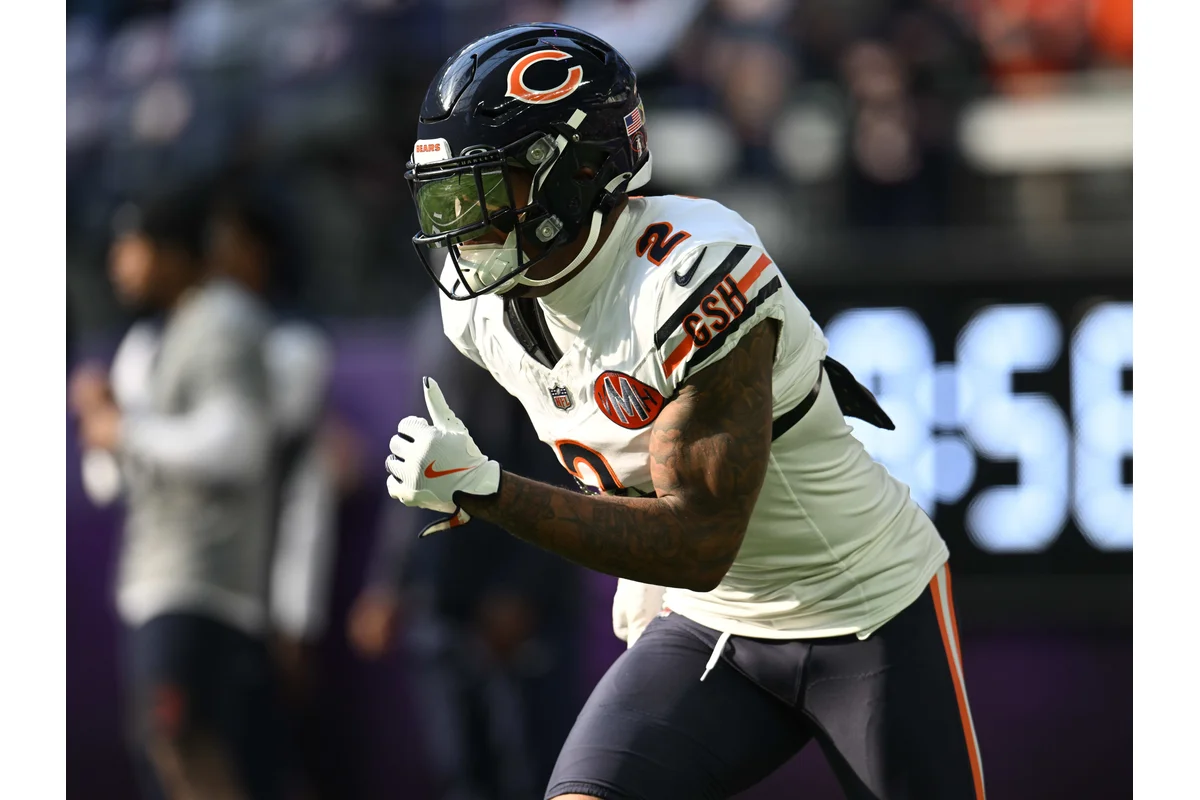
The Buffalo Bills publicly expressed strong support for wide receiver Keon Coleman despite recent criticisms from team owner Terry Pegula. While the organization has emphasized unity and confidence in Coleman’s potential, their acquisition of veteran receiver DJ Moore from the Chicago Bears casts doubt on that stance. The trade suggests the team may be prioritizing immediate impact over Coleman’s development as a key offensive weapon.
Trade Details Reflect Confidence in Moore Over Coleman
Bills general manager Brandon Beane had indicated a “full reset” around Coleman, and head coach Joe Brady reportedly advocated firmly for the 2024 second-round draft pick used to obtain Moore. Bringing in an established, highly paid pass-catcher like Moore signals a shift in strategy that appears to deprioritize Coleman despite prior endorsements.
Star quarterback Josh Allen recently voiced his support for Coleman following the team’s early playoff exit in the 2025 season, a display of faith from the franchise’s leader. However, adding Moore seems to contradict Allen’s message, implying the organization may be looking elsewhere to enhance their receiving corps.
Team Dynamics and Contract Considerations Influence Roster Decisions
The arrival of Moore does not necessarily reflect a breakdown between Allen and the front office, as Allen has remained engaged in shaping the team during the transition after Sean McDermott’s departure. Still, this move challenges the Bills’ public narrative about backing Coleman fully.
Contract situations provide additional context: Coleman is under team control until 2027 and has a relatively modest average salary of $2.5 million annually, primarily functioning as a big-bodied field stretcher. Conversely, Moore’s contract extends through 2030, and he offers versatility by operating effectively in short and intermediate routes.
Statistical Snapshot Highlights Coleman’s Role and Reliability
During the 2025 season, Coleman appeared in 13 games with six starts, recording 38 receptions out of 59 targets for 404 yards and four touchdowns. Despite this contribution, he was inactive for multiple late-season games, further reflecting uncertainty about his role in the team’s immediate plans.
Implications for the Bills’ Offensive Strategy Moving Forward
This trade underscores the Bills’ intent to compete at a high level by acquiring proven talent like DJ Moore, even if it undermines earlier commitments to developing Coleman. As the team aims for a Super Bowl run, balancing veteran leadership with young player growth will be crucial. How this dynamic affects Coleman’s future with the franchise remains a significant storyline for the 2026 season.
THE WOLFE OF BALL STREET: Combine buzz edition
— Jeremiah Love named draft’s best player by multiple team execs + where to watch for potential top-5 pick
— Details from Bills & Keon Coleman’s team meetings, what’s next amid trade rumors
— Latest on Anthony Richardson trade talks pic.twitter.com/9rI2HyV974— Cameron Wolfe (@CameronWolfe) March 3, 2026
Joe Brady says that he "stood on the table" for Keon Coleman. Says Coleman is not done being a Buffalo Bill.
Brady says he talked to Keon and told him the best thing that could happen for Keon was Brady being named head coach, since he fully supports him
— katherine fitzgerald (@kfitz134) January 29, 2026
