
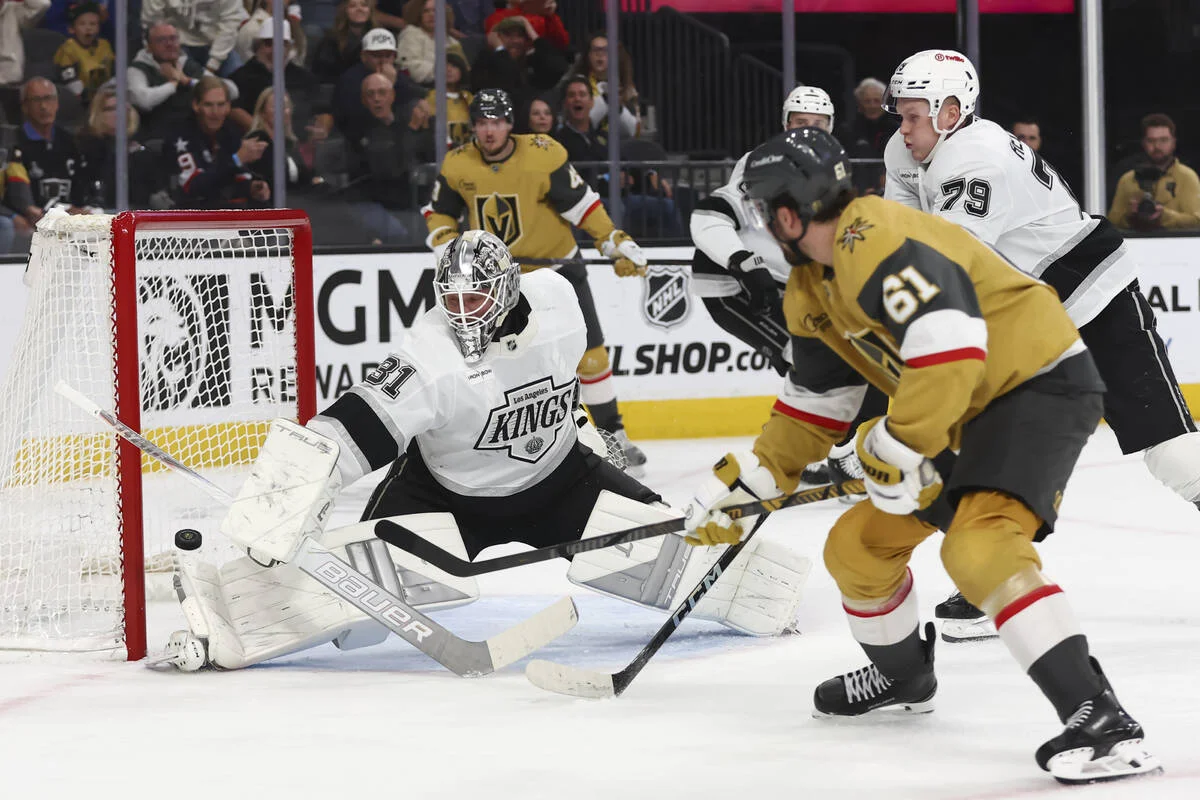
Artemi Panarin decided to join the Los Angeles Kings after a period of careful consideration during the recent NHL free agency. The winger revealed that former teammate Patrick Kane was one of the few who kept reaching out to him while he weighed his options. Panarin made it clear that the Kings were always his preferred destination, notifying the New York Rangers of this preference just hours before his trade to Los Angeles.
Cautious Negotiations and Emotional Weight Behind the Decision
Despite his openness about wanting to play for the Kings, Panarin admitted that General Manager Ken Holland took his time finalizing the deal, which caused some anxiety. He compared the process to being a free agent once again, emphasizing that he was unwilling to sign with a team he didn’t truly want to join. Panarin even mentioned that if Los Angeles hadn’t offered him a contract, he might have returned to Russia.
Reflecting on the negotiations, Panarin hinted at how much the Kings might have underestimated his desire to stay in Los Angeles, saying,
“
If Kenny knew how much I wanted to play for the Kings, he probably would’ve given me $5 million.
”
Eventually, Panarin secured a two-year contract worth $22 million shortly after the trade was completed, highlighting his interest in stability over frequent moves.
Prioritizing Stability Over Frequent Moves
After playing for three NHL teams already, Panarin expressed a strong desire to settle down in one place, citing family considerations. He said,

“
I don’t like to switch teams back and forth. I played already with three teams. I have two kids, a dog, a wife. It’s just too much stuff. I don’t want to be rented for a couple months, then go somewhere else.
”
Balancing professional demands with his personal life was a key factor in his decision to commit to the Kings.
Contract Talks Fueled by Fluctuating Offers and Rumors
The weeks leading to the trade were marked by uncertainty. Initial negotiations broke down when the Kings hesitated over a $45 million extension, sparking rumors about Panarin receiving a higher offer, allegedly up to $60 million, possibly from the Seattle Kraken. Although Panarin did not confirm exact figures, he stressed that money was not his primary motivator, stating,
“
(This decision was) not so much about money. Do you want to play with guys or not want to play with guys?
”
Discussions with Vladislav Gavrikov, a defender who previously spent nearly 180 games with Los Angeles, helped solidify Panarin’s preference for the Kings. An amusing side note emerged about Panarin’s jersey number choice. He wants to wear 72, but that number is currently held by Bailey, the Kings’ mascot. Panarin joked about the possibility of gifting Bailey a designer Louis Vuitton dog jacket to negotiate a switch.
Uncertainty and Discontent with the Rangers’ Contract Offer
Panarin also confirmed that the Rangers wanted him to accept a shorter contract with a lower average annual value, resembling the approach Anze Kopitar took but differing from the final pact Panarin made with the Kings. He suggested that the Rangers’ wavering commitment influenced his decision, saying,
“
I don’t know if I should say this but I feel like the contract offer (said), ‘We’re not sure if we want you or not.’ We talked not much in the beginning before the season starts and then after, obviously, my start of the season was not great. And then probably we talked in the middle of year, but not much.
”
In tough moments like the Rangers’ 10-2 loss to Boston on January 10, Panarin realized the deal might be impossible, reflecting,
“
Even if (GM Chris Drury) wanted to give me a deal, he probably can’t.
”
Soon after, Drury delivered the news face-to-face.
The Broader Impact of Panarin’s Move to the Kings
Artemi Panarin’s choice to sign with the Los Angeles Kings over presumably higher offers from other teams marks a significant moment in his career, emphasizing personal fit and team chemistry above financial gain. His desire for stability and to play with preferred teammates likely influences the team’s dynamics and positioning going forward. It also signals how players weigh multiple factors—beyond salary—in deciding their next NHL destination.
With Panarin committed for two years, the Kings hope his skill and leadership will strengthen their lineup. Meanwhile, the Rangers face the challenge of rebuilding relationships after this highly publicized departure. As the team moves forward, Panarin’s journey stands as a reminder that in professional sports, passion for the game and personal considerations often outweigh the allure of bigger contracts.
