
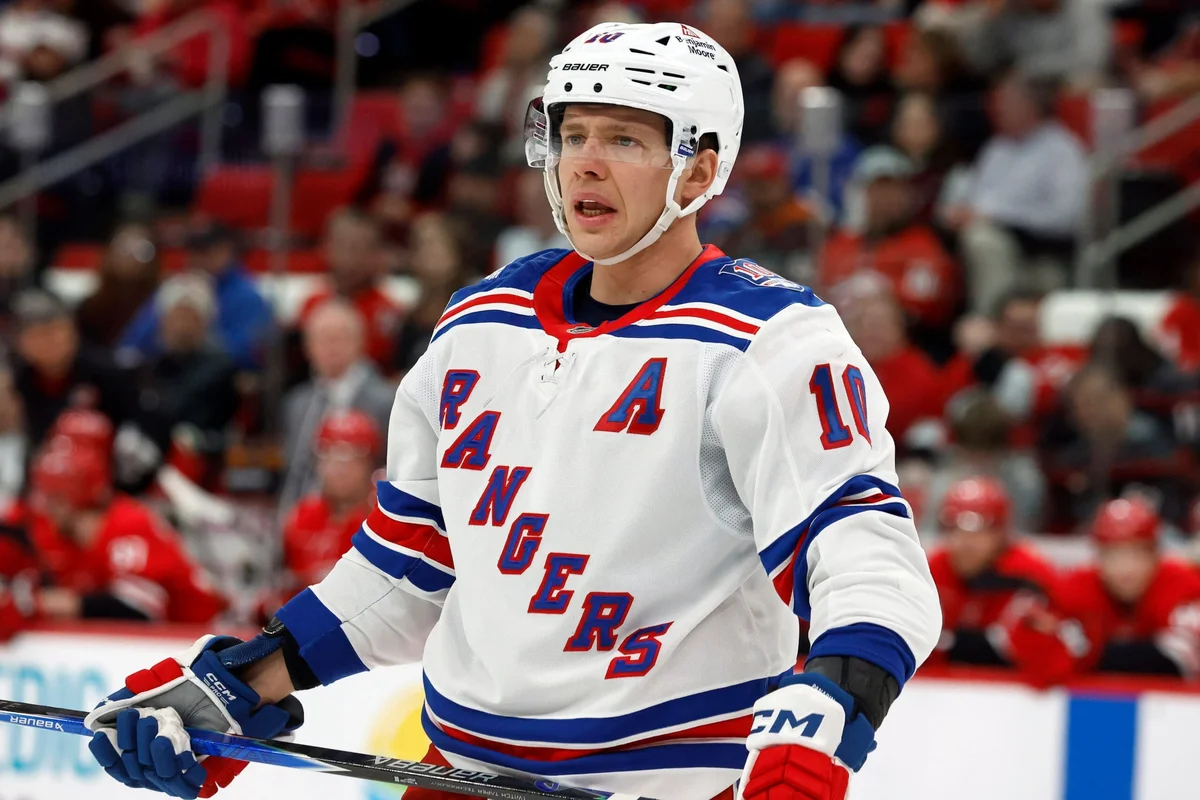
Artemi Panarin secured a rare move in the NHL by exercising his full no movement clause to dictate his trade destination, choosing the Los Angeles Kings over other offers. On Wednesday, Panarin was officially traded from the New York Rangers to the Kings and immediately signed a two-year contract extension, signaling his commitment to the new team. His move highlights a player’s increasing leverage in NHL transactions, particularly for those holding such clauses.
Commitment to Los Angeles Over Other Destinations
Panarin emphasized that his decision was driven more by personal connection and fit rather than financial incentives or length of contract.
“I never wanted to go anywhere else,”
he said, confirming his exclusive desire to play for the Kings. He explained the importance of feeling comfortable with a team, teammates, and the organization, noting conversations with former Kings defenseman Vladislav Gavrikov helped cement his decision.
“I tried to find a team for myself, where I want to be, so it was kind of about feeling. Obviously, you look at the players, and then I spoke with Gavrikov the last couple days a lot. He introduced me to a great organization, great teammates in there and obviously a great spot to live. I just want to play for these guys, for that organization. Other teams were on the list too, but I actually never wanted to go anywhere else.”
Panarin also admitted his desire to join the Kings was so strong that, jokingly, he suggested that if the team had not wanted him, he might have returned to Russia to continue his career at home.
Choosing Fit Over Contract Length and Money
While Panarin’s contract extension spans just two years, which is shorter than he might have preferred in a perfect scenario, he valued the right fit over the term or salary.

“I’m a guy who is not thinking that much about money,”
he explained.
“Maybe it seems funny, but it’s not an important thing for me, because like I said before, I just want to play for the guys and I just want to play for the organization. It’s a pretty short deal for me, that’s not what I’m looking for but also, like I said, because I wanted to play there only, for the Kings, I didn’t have much options.”
Both Panarin and the Kings agreed to the two-year deal as a way to begin their partnership with the possibility for extension beyond 2028. The contract extension was essential to the trade, as the Kings needed assurance that Panarin would be part of their team beyond an interim period.
“I didn’t want to be rented for a couple months and then go somewhere else, I just looked for a team who wants me, who can sign me right away, because they’re just not renting me for a couple months.”
Connections Within the Kings and Early Communication
Panarin’s move was made easier by existing relationships on the Kings’ roster. He has some familiarity with current Kings forward Andrei Kuzmenko, with whom he had dinner several times during Kuzmenko’s tenure in Vancouver. This connection, combined with communication from other members of the organization, further convinced Panarin that Los Angeles was the right place for him professionally and personally.
Jim Hiller, a member of the Kings’ staff, spoke about his recent phone call with Panarin, describing an enthusiastic and engaged player ready to contribute.
“We had a really good conversation [yesterday] afternoon before the game, I really enjoyed the conversation,”
Hiller said.
“We got into it right away, didn’t take long, and he’s excited, that’s the most important part. He’s really excited. He’s had good conversations with Gavy, kind of knows what to expect from the area, the team, the organization, he’s just ready to be an LA King. That’s what I got from him. Not just get in here and play, but to be an LA King and really help the team, push the team forward.”
Panarin’s Role in Shaping the Kings’ Offense
The Kings have entered a critical phase in their season and have relied heavily on Panarin’s ability to invigorate their offense. After struggling in recent games leading into the Olympic break, the Kings are counting on their new star to elevate their scoring capabilities. Panarin understands that while he has to integrate into the team’s system, he must also be allowed some offensive freedom to maximize his impact.
Ken Holland, the Kings’ general manager, stated that the organization will maintain their system but will provide Panarin with the latitude to express his skill set:
“He’ll play within the way the Kings play the game, but with that will come freedom on the offensive zone to try and make plays.”
Panarin himself acknowledged the need for balance between his individual creativity and the team’s structure:
“Yeah, I’ve got to work in the system, they have some systems like that and I’ve got to find some open space in that system, that’s probably how it will work. I don’t see it like I just can probably come there and then just play how I want to play, but I also know the Kings signed me because I can do offensive stuff, so I don’t want to lose that stuff too. I’ve just got to find balance. I’m sure we can find balance.”
Looking Ahead: Panarin’s Impact on the Kings’ Playoff Push
With the Olympic break offering an extended period for adjustment, Panarin is set to debut with the Kings in practice on February 18 at the Toyota Sports Performance Center in El Segundo. The timing allows him to acclimate to his new environment and teammates before the team resumes competition.
Panarin expressed optimism about this transition time, noting,
“Maybe it’s probably the perfect timing, because Olympics break is pretty long this year and it gives to get used to a new team. Like I said before, I want to play for the team and win with the team.”
The Kings, who have long sought a player of Panarin’s caliber, anticipate his arrival to inject much-needed energy and skill as they aim for a postseason berth. The organization’s clear intent is to build around Panarin’s strengths and provide him with the support necessary to lead them forward during this crucial stretch of the season.

