

The National Hockey League has resumed sending its top players to the Winter Olympics for the first time since 2014, marking its sixth overall participation since 1998. This NHL Olympic hockey impact reshapes the competitive landscape and medal prospects for nations traditionally strong in men’s hockey.
While hockey enthusiasts benefit from seeing elite NHL talent on the Olympic ice, this involvement significantly influences team performances and medal outcomes. Below is an in-depth look at how NHL participation shifts advantages among leading hockey nations and which countries perform strongly even without NHL players.
Canada’s Depth and Dominance When NHL Players Join
Canada remains the dominant force in Olympic men’s hockey, boasting the highest number of gold medals overall. Historically, their success stretches back well before NHL players joined the Olympics. However, with NHL stars available, Canada’s medal ceiling rises substantially, turning their roster into an almost All-Star caliber lineup.
Canada has won nine Olympic golds in men’s hockey, including five of the first six tournaments. From 1998 through 2014, when NHL players were present, they secured three gold medals (2002, 2010, 2014). Meanwhile, without NHL players, Canada still earned six gold, four silver, and three bronze medals but recently struggled, finishing with no medal in 2022, fielding mainly non-NHL players.
Heading into the current tournament, Canada is still the favorite largely thanks to its unmatched depth and talent pool. Even players omitted from this elite group could realistically compete for medals if placed on other countries. Despite this advantage, gold is not guaranteed—for example, Canada’s goaltending strength this year introduces uncertainty in elimination rounds.
U.S. Olympic Hopes Rise With NHL Talent Reintegration
The United States, while historically a strong hockey nation, won its only gold medals without NHL players, most notably the 1980 “Miracle on Ice.” Since NHL participation resumed, the U.S. has earned two silver medals in 2002 and 2010 but has yet to claim gold in that period, often falling to hockey powerhouses like Canada in critical final matches.
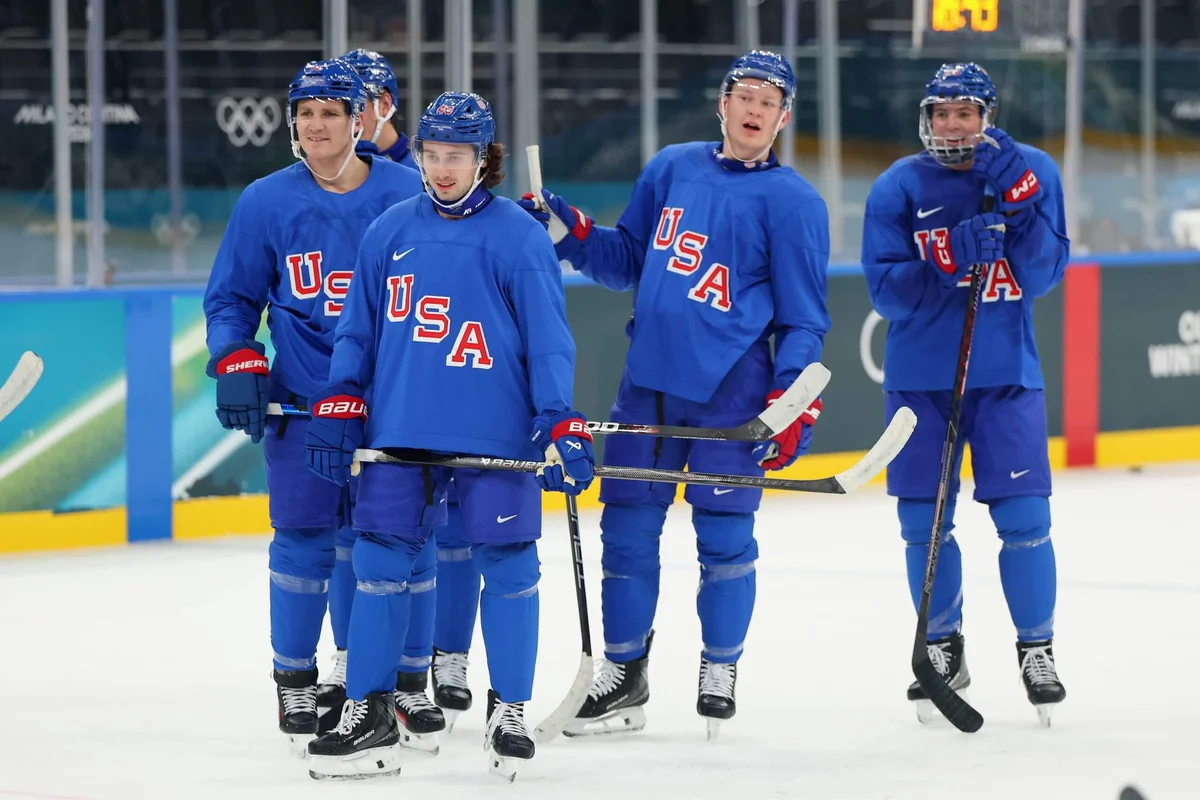
This year, the U.S. team is exceptionally deep and has perhaps the strongest goaltending trio in the tournament, including Connor Hellebuyck, Jake Oettinger, and Jeremy Swayman. With offensive stars such as Auston Matthews, Jack Eichel, and the Tkachuk brothers, plus top defensemen like Quinn Hughes, Charlie McAvoy, and Jaccob Slavin, the Americans have legitimate hopes to end their 46-year gold medal drought.
Sweden’s Balanced Approach Brings Consistent Success
Sweden remains one of the elite hockey nations, excelling through a disciplined system and team structure as much as through star power. They have claimed nine Olympic men’s hockey medals, including two golds, with their first gold in 1994 coming without NHL players. Their second gold was captured in 2006 with contributions from stars such as Henrik Zetterberg, Niklas Kronwall, and Niklas Lidstrom—players well known for their NHL careers.
While their success with NHL players has been more modest, including a silver medal in 2014, Sweden maintains a sustained presence on the podium irrespective of NHL involvement by emphasizing strong defense and teamwork.
Finland’s Consistency Bolstered by NHL Talent
Finland is renowned for its tightly defensive style and persistent international competitiveness. Their first gold medal came only recently in 2022, achieved by a team composed mainly of Finnish professionals supplemented by some former NHL players. NHL participation has improved Finland’s consistency in medaling at the Olympics, with four medals during tournaments involving NHL players.
Before NHL players joined Olympic competition, Finland had earned three medals, including one gold in 2022 combined with professional but non-NHL rosters. Their defensive discipline and strategic play remain hallmarks that enable them to compete effectively, though NHL talent is often a crucial factor for finnishing among the medalists.
Impact of NHL Players on Czechia’s Medal Prospects
NHL involvement is critical for Czechia’s competitiveness on the Olympic stage, shifting them from quarterfinal hopefuls to legitimate dark-horse contenders. Since Czechoslovakia’s split, Czechia has won two Olympic medals—gold in 1998 and bronze in 2006—both when their lineup included NHL stars such as Hall of Famers Dominik Hasek and Jaromir Jagr.
Today, Czechia boasts a blend of NHL talents like David Pastrnak, Tomas Hertl, Martin Necas, and Filip Hronek, supported by players from their domestic leagues, enhancing their ability to challenge top teams. NHL participation clearly transforms their potential from middle-tier to strong medal contenders.
Germany’s Rise With NHL Players On Board
Historically a long shot, Germany’s Olympic hockey program is elevated significantly when NHL talent is included. Their three Olympic medals — two bronze and a silver in 2018 — highlight this growth. The presence of a star like Leon Draisaitl alongside emerging NHL players such as J.J. Peterka, Tim Stutzle, and Moritz Seider creates a team capable of exceeding expectations and making a strong tournament run.
Switzerland’s Chances Improved by NHL Talent Availability
Switzerland aims to secure only its third Olympic hockey medal—and first since 1948—thanks to NHL participation. While the Swiss have advanced internationally through strong domestic play, NHL stars such as Nico Hischier, Kevin Fiala, Timo Meier, and Roman Josi offer a clearer path to upsetting more established powers. If Switzerland can couple this talent with solid goaltending, they have the potential to surprise opponents and contend in the knockout stages.
Anticipation Builds as NHL Players Influence Olympic Outcomes
With teams now preparing and experimenting with line combinations, excitement is mounting for what promises to be a compelling men’s Olympic hockey tournament. The return of NHL players heightens competition, intensifies expectations, and creates uncertainty about traditional medal outcomes. Fans, whether longtime hockey followers or newcomers, can expect high-stakes drama that will showcase the profound NHL Olympic hockey impact across nations.
