
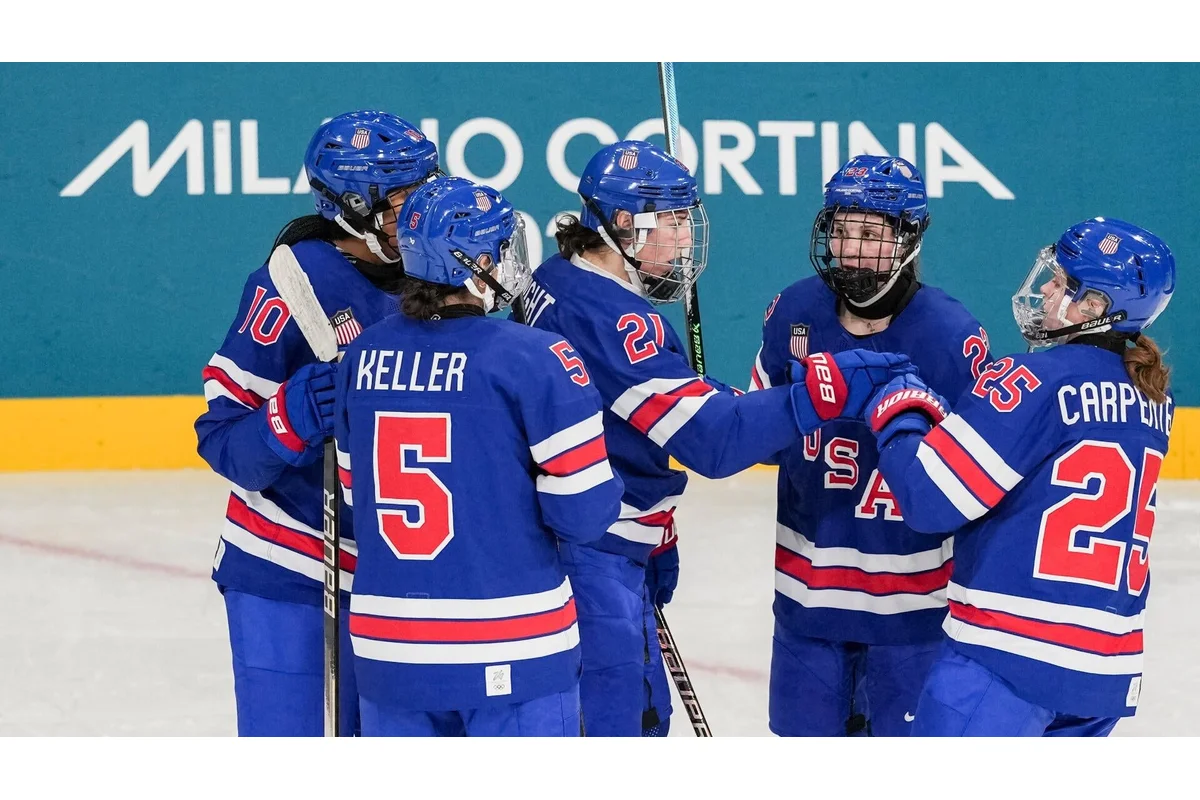
MILAN, Italy — National Hockey League players are making significant adjustments to new playing environments and rules at the Milan Cortina Olympics, as NHL stars return to the Winter Games for the first time since 2014. After a 12-year hiatus, players from rival NHL teams have united to represent their countries in pursuit of Olympic gold, beginning Wednesday.
This tournament offers an opportunity long anticipated by athletes who missed the past two Olympics following the NHL’s decision to opt out in 2018 and 2022. However, this return disrupts the familiar daily routines that many NHL players rely on, including structured practice and game schedules developed over years in the league.
Adjusting to Different Ice Surfaces and Playing Styles
With the NHL’s Olympic break starting on Friday, players faced limited time to gel with new teammates and adapt to the international rink specifications. Unlike the NHL’s larger ice arenas, Olympic rinks are shorter, requiring players to quickly recalibrate their strategies. Additionally, the International Ice Hockey Federation (IIHF) rules, which differ from the NHL’s, have altered gameplay dynamics.
Forward Sebastian Aho of Finland’s Carolina Hurricanes highlighted the contrast in routines, saying,
“You skate in the morning at the same time, you play most of the time (at the) same time, you know every rink, you know all the players. I’m not saying it’s easy at all, but at least it’s familiar.”
Aho’s remark underscores the challenge of departing from established NHL schedules and arenas.
Other players have noted the importance of adapting to the IIHF’s rules to avoid penalties. Sam Bennett, a late addition to Canada’s roster, emphasized,
“The rules are a little different here. Obviously it’s important that you don’t take penalties or sit in the box.”
The prohibition of fighting, a physical aspect permitted in the NHL but banned in IIHF competitions, also demands players modify how they maintain intensity. Brock Nelson, center for the Colorado Avalanche and representing the United States, observed,
“Everyone’s cognizant of it and thinking about it but also at the same time you still want to play with that same edge.”
Coaches Manage Pre-Tournament Preparations Amid Heavy Media Presence
The NHL stars’ Olympic return has attracted extensive media attention, with several teams attempting to shield players during practice sessions. At the Santagiulia Arena complex, newly constructed for these Games, some squads, including favorites Canada, limited press access to avoid distractions before competition.
Canada’s coach Jon Cooper explained the decision to close practices, stating,
“It was only done because the rink’s too small,”
and added,
“It’s just distractions and people, there’s just issues to have so many people here.”
Cooper’s remarks highlight logistical challenges posed by the compact practice facility adjacent to the main arena.
Similarly, Sweden’s head coach Sam Hallam described the controlled practice environment as providing needed tranquility, noting,
“Sometimes it’s just nice to have that calmness,”
and further added,
“It’s no mysteries, we’re not going to invent something new out there. But just keeping it a bit calm is nice.”
His comments came ahead of Sweden’s opening match against host nation Italy.
Significance of NHL Players’ Adaptation at the Olympics
The NHL’s renewed presence at the Winter Olympics marks a major moment for international hockey, uniting the sport’s top talents under their national flags. Players’ adjustments to unique rink dimensions, stricter IIHF rules, and the intense Olympic atmosphere will be critical to their teams’ successes. The ability to swiftly align in team dynamics and gameplay style could shape medal outcomes as the tournament unfolds at Milan’s state-of-the-art venues.
As the Games progress, the experiences of NHL stars adapting to these conditions may influence future NHL participation decisions and offer insights into bridging league play with international competition standards.
