
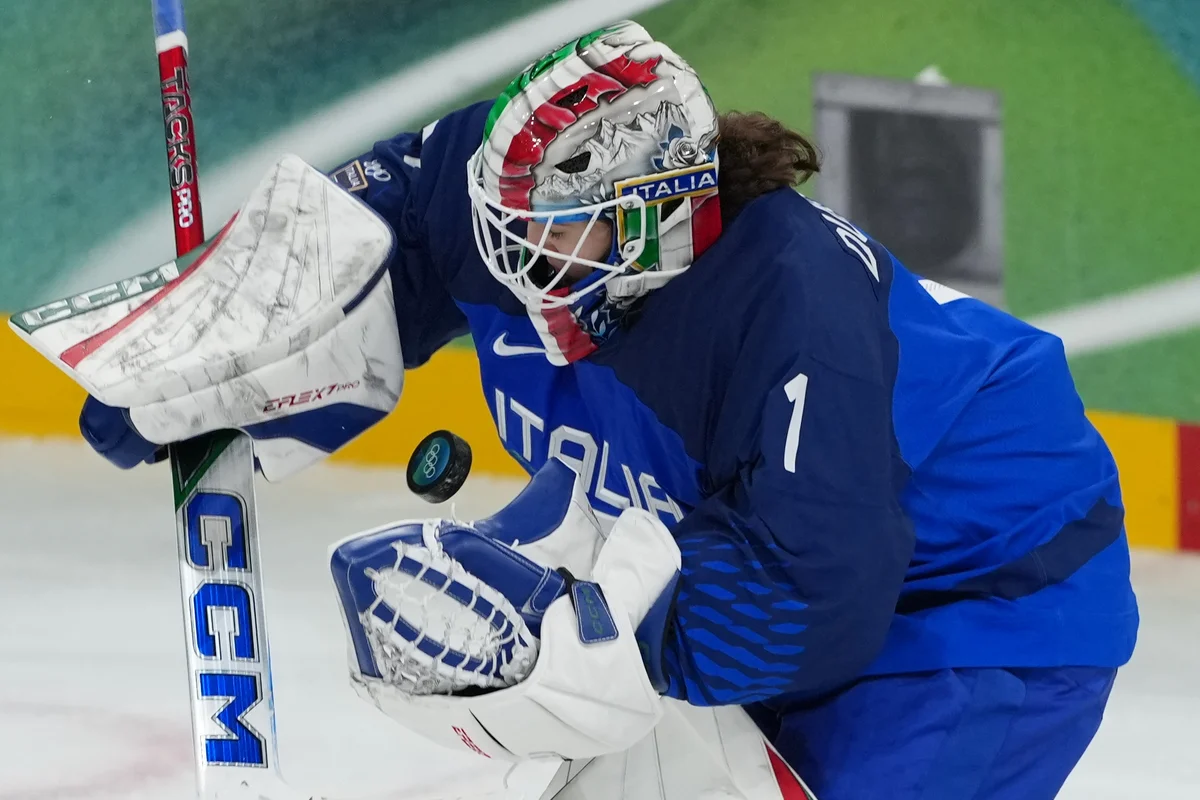
This year marks the return of National Hockey League (NHL) players to the Winter Olympics after a 12-year absence, offering fans a showdown of the world’s elite hockey talent. Although NHL players and some NHL referees will participate, the tournament games will follow a distinct set of NHL Olympic hockey rules governed by the International Ice Hockey Federation (IIHF), differing in several critical aspects from those used in the NHL.
Variations in Game Timing and Flow
A noticeable difference in game timing is how the clock operates: Olympic matches start at 0:00 and count upward, unlike NHL games that begin at 20:00 and count down. Additionally, intermissions between periods are shorter in the Olympics, with only 15 minutes allotted for breaks in Milan, compared to the NHL’s standard of 18 minutes. These adjustments affect the overall pacing of the games.
Differences in Rink Dimensions and Icing Procedures
The rink used in the current Olympic tournament is slightly smaller than a standard NHL rink due to the design of the new hockey arena. However, the fundamental gameplay rules remain consistent, with some nuanced differences especially in icing calls. The NHL employs a hybrid icing rule where players race to the faceoff spot before officials stop play, whereas under IIHF rules, the play is whistled dead as soon as the puck crosses the goal line, eliminating high-speed races down the ice.
Furthermore, the trapezoid areas behind the nets, present in NHL arenas and integral to goaltender puck-handling restrictions, are absent in international play. In the NHL, a goaltender playing the puck outside the trapezoid receives a two-minute minor penalty for delay of game, but in Olympic hockey, the goaltender can freely handle the puck anywhere behind the net without penalty.
Stricter Regulation on Physical Play and Contact
Officials in the Olympic tournament enforce a more stringent approach to hits to the head compared to NHL referees. While NHL officials exercise discretion in penalizing illegal checks to the head, ranging from minors to game misconducts, IIHF officials issue fewer minor penalties and apply automatic game misconducts alongside major penalties to deter dangerous hits. This heightened vigilance prioritizes player safety and discourages reckless physical contact.
Zero Tolerance for Fighting in Olympic Hockey
Fighting rules under the IIHF are considerably more severe than in the NHL. Any player who initiates a fight is immediately ejected and penalized with a five-minute major. Unlike NHL games, where fighting is tolerated to some extent, the Olympics strictly prohibit it to maintain sportsmanship and safety. The notorious brawls in the 4 Nations Face-Off, which saw three fights in the first nine seconds, underscore the contrast; such chaos is not permitted in the Olympics.
Distinct Overtime and Shootout Formats
When games remain unresolved after regulation, Olympic overtime rules diverge from those in the NHL. Preliminary rounds feature a five-minute, three-on-three sudden-death period, similar to the NHL, where the first goal wins. However, shootouts differ significantly; Olympic shootouts require a minimum of five rounds rather than three, and after the third shooter, players may attempt multiple shots as often as needed, unlike the NHL’s rule that every shooter must go once before any can shoot again.
The elimination stages introduce further changes: playoff, quarterfinal, and semifinal games have an extended 10-minute overtime period before proceeding to a shootout. Most notably, the gold medal game eliminates the shootout entirely, opting for continuous 20-minute sudden-death periods until a winner is declared, emphasizing endurance and decisive play.
Looking Forward to an Intense International Competition
As fans gear up to witness some of the finest hockey competition in over a decade, understanding these NHL Olympic hockey rules clarifies what sets this tournament apart. The blend of NHL talent operating within IIHF rules creates a unique dynamic that highlights international differences in playing style and officiating. The tournament’s format and regulation adjustments are designed to prioritize player safety, maintain fair competition, and deliver thrilling moments that define Olympic hockey’s global prestige.
