

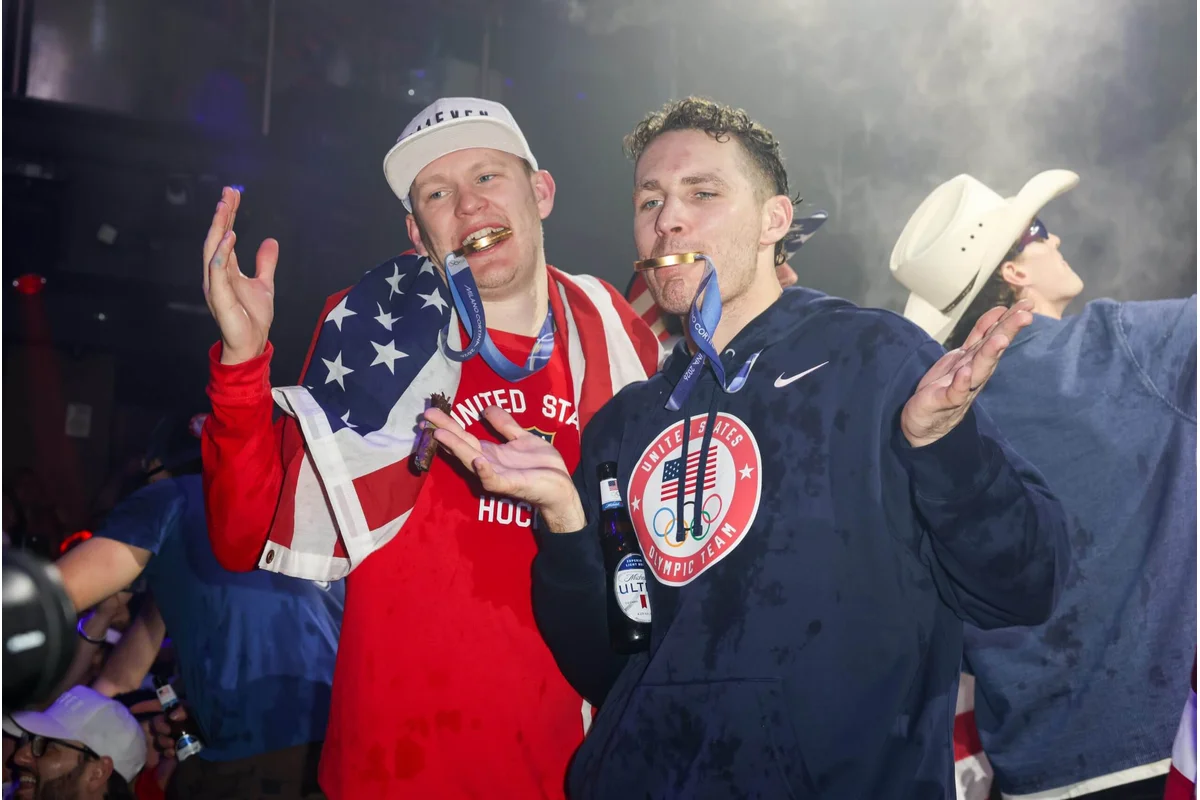
Brady Tkachuk, a key player for Team USA’s men’s hockey squad, has publicly rejected an AI-created video that falsely depicts him insulting Canadians following their recent Olympic victory. This incident took place shortly after the United States defeated Canada 2-1 in overtime to secure gold at the 2026 Winter Olympics on February 22, 2026, heightening tension between fans and officials.
The controversial clip, which was distributed by the White House on TikTok, featured manipulated audio accusing Tkachuk of using offensive language toward Canadians, calling them “maple syrup-eating f–ks.” However, the video also displayed clear discrepancies between the audio and the athlete’s lip movements, prompting Tkachuk to speak out against the misleading portrayal.
Details Surrounding the AI-Generated Clip and Tkachuk’s Reaction
The 26-year-old hockey star, who plays professionally in Canada for the Ottawa Senators, told the Associated Press,
“It’s clearly fake because it’s not my voice and not my lips moving.”
He firmly denied any association with the offensive remarks or any intention to insult Canadians.
He added,
“I’m not in control of any of those accounts. … I know that those words would never come out of my mouth.”
Reiterating his stance, Tkachuk stated,
“I would never say that. That’s not who I am,”
emphasizing his respect despite the competitive atmosphere.
Tkachuk Denies Involvement in Other Controversial Audio During Post-Win Call
In addition to the AI video, Tkachuk also rejected the claim that he was the voice shouting “close the northern border” during a locker room phone call with then-President Donald Trump following the gold medal game. He clarified,
“I’ve been seeing stuff that people think it’s me, but if you watch the video, that’s not my voice and something that I never say.”
Expressing confusion over the spread of the false accusations given his commitment to playing in Canada, he commented,
“I don’t really know how that kind of took a storm on its own when I play here and give everything I have here.”
Context of the Locker Room Call and the Team’s White House Visit
During the locker room call, President Trump personally invited the U.S. men’s hockey team to visit the White House to celebrate their Olympic success. The team accepted, attending the State of the Union address on February 24 as honored guests.
Trump praised the athletes as
“a group of winners who have made our nation proud,”
prompting the U.S. Capitol attendees to chant “USA.” He also acknowledged the U.S. women’s hockey team, who declined the White House invitation but planned to visit separately to commemorate their own gold medal victory.
During the call, Trump joked,
“You do know that. I do believe I’d probably would be impeached [if the women’s team wasn’t invited],”
highlighting the political sensitivity surrounding the recognition of the women’s team.
Jack Hughes Comments on Team’s Excitement and Women’s Team Absence
Jack Hughes, whose golden goal secured the first men’s Olympic hockey gold for the U.S. since the 1980 Miracle on Ice, shared his thoughts with the Daily Mail. He stated,
“Everything is so political. We’re athletes. We’re so proud to represent the U.S. and we get the chance to go to the White House, meet the president. You know, we’re proud to be Americans.”
He continued,
“No matter what your views are, we’re super excited to go,”
emphasizing the team’s enthusiasm despite the political controversies.
Regarding the women’s team not attending the White House event, Hughes acknowledged their demanding schedules. This aligned with USA Hockey’s official explanation of
“previously scheduled academic and professional commitments following the Games”
as the reason for their absence.
Implications of the Incident Amid Heightened Political and Social Sensitivity
The circulation of fabricated AI media falsely attributing offensive behavior to a widely respected athlete like Brady Tkachuk underscores the challenges posed by emerging technologies in political and social discourse. The White House’s acknowledgment of “Contains AI-generated media” in the clip signals an awareness of the potential for misinformation, yet the incident has already stirred unease among fans, athletes, and officials.
As athletes continue to navigate their roles on the international stage amid digital manipulation and politicization, this controversy highlights the need for critical scrutiny of online content. Tkachuk’s firm denial and the broader context of the U.S. men’s hockey team’s celebrations suggest ongoing tension but also a commitment to sportsmanship and national pride.
