
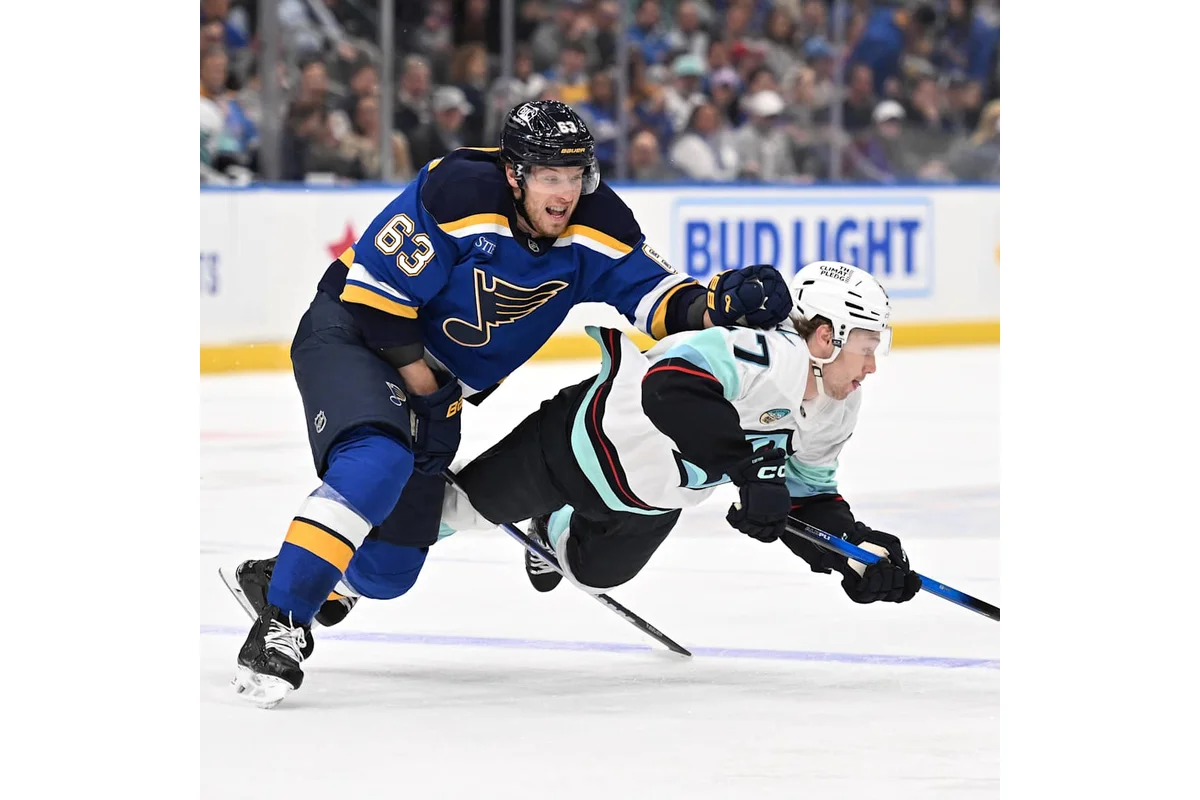
The St. Louis Blues have a rich legacy with their fans, but maintaining continuity with team captains has been a persistent issue. Even during an era with limited player movement before free agency became widespread, Blues captains rarely held the position for long periods.
Brian Sutter stands as the longest-serving Blues captain, leading the team for nine seasons. Following him, David Backes and Chris Pronger each captained the team for five years. Beyond those tenures, several captains served roughly four-year terms. An unusual situation occurred with Brett Hull, who was captain for part of four seasons but was unexpectedly stripped of the role by then-coach Mike Keenan.
A Constant Shift in Captains Amid Recent Departures
Professional sports often operate under a demanding
“what have you done for me now?”
mentality. With Brayden Schenn’s exit less than three years after Ryan O’Reilly left, the Blues have experienced a revolving door of leadership in a short span.
Fans and analysts alike wonder who will step up as the next captain, hoping the individual won’t follow the trend of brief tenures. While Robert Thomas is widely viewed as the presumptive leader, there’s a compelling argument to consider Jake Neighbours for the role.
Robert Thomas: The Obvious but Complex Choice
Robert Thomas has been groomed as the future captain for several seasons. As a central figure in the franchise’s promotion, appearing in numerous commercials and frequently leading the team’s scoring, Thomas represents the face of the Blues.

From a talent standpoint, Thomas arguably boasts the most skill on the roster, making him a logical candidate for captaincy.
However, leadership extends beyond raw talent and scoring ability. Although it’s common to assume the best player should lead, the history of hockey shows otherwise.
Some of the game’s greatest leaders—Mario Lemieux, Wayne Gretzky, Sidney Crosby, and Alex Ovechkin—combine exceptional skill with leadership, but the Blues’ history suggests leadership qualities sometimes come from different factors.
Leadership Beyond Skill: The Value of Intangibles
Not every captain is the team’s top performer. David Backes, for example, was not necessarily the most skilled player during his tenure, but his leadership was undeniable. Similarly, Garth Butcher may not have been the top defenseman on the team he captained, yet he led effectively.
Leadership can manifest through setting an example or simply embodying the intangible qualities of a true leader. This is where Jake Neighbours stands out.
Neighbours may not lead the team in scoring—he is projected as a potential 30-goal scorer rather than a point-per-game player—but his style emphasizes grit and presence, particularly in front of the net, a critical area analysts often point to as vital for playoff success.
Jake Neighbours’ Leadership Style and On-Ice Impact
Over the past few seasons, Neighbours has consistently maintained a net-front presence, a characteristic that has become increasingly rare on the team. His willingness to engage in physically demanding, unglamorous work exemplifies leadership by action.
In addition to his playing style, Neighbours possesses an “It” factor that’s difficult to teach. Since his arrival as a draft pick and rookie, he has demonstrated a perspective on the game—focused on selflessness, teamwork, and sacrifice—that surpasses many veterans’ understanding.
This mature mindset, combined with his steady demeanor, indicates a natural leader who could inspire teammates without relying solely on statistical dominance.
Comparing the Leadership Flaws and Strengths of Thomas and Neighbours
While Thomas has been the captain-in-waiting since Schenn, fans should recognize that basket of leadership skills doesn’t belong exclusively to him. Thomas, a high-scoring player with an 80-point potential (and possibly higher if surrounded by the right supporting cast), has faced rumors of trade interest, including a proposed deal to Buffalo.
The Blues’ broadcast team has at times emphasized Thomas as the franchise’s cornerstone during recent coverage, highlighting his importance.
However, there are subtle concerns about his fit as a captain. Visible frustration in moments of adversity may undermine his leadership effectiveness. Fans often notice Thomas’s body language when things aren’t going well, a factor that can negatively influence team morale.
In contrast, Neighbours maintains an even-tempered presence, rarely exhibiting overt emotional swings, except for spirited moments like fights or celebrations, conveying steadiness.
Longevity and Future Potential Give Neighbours an Edge
Age and contract status also play roles in captaincy considerations. Neighbours, at 23, is younger than Thomas, who is 26. Both are far from the latter stages of their careers, but Neighbours likely has more prime years ahead.
Thomas’s contract locks him in until 2031, while Neighbours is under contract through 2027, with the possibility of a more affordable next deal. The Blues have already entertained trade offers for Thomas, suggesting his future with the team might not be as secure as Neighbours’s.
Unlike Thomas, Neighbours has not been linked to potential trades despite the team’s struggles, indicating the organization’s faith in his long-term value.
Given these factors, naming Neighbours captain entering the 2026-27 season could provide the Blues with stable leadership for an entire decade, allowing him to wear the “C” until age 34.
Supporting the Best Leader for the Team’s Future
If the Blues ultimately decide to name Robert Thomas captain, the organization and fans should rally behind him fully. However, looking forward, Jake Neighbours presents a persuasive case as the franchise’s preferred option for sustained leadership.
His combination of on-ice grit, mature perspective, and consistent presence make him a candidate who could anchor the team’s culture and identity during the next generation of Blues hockey.
