
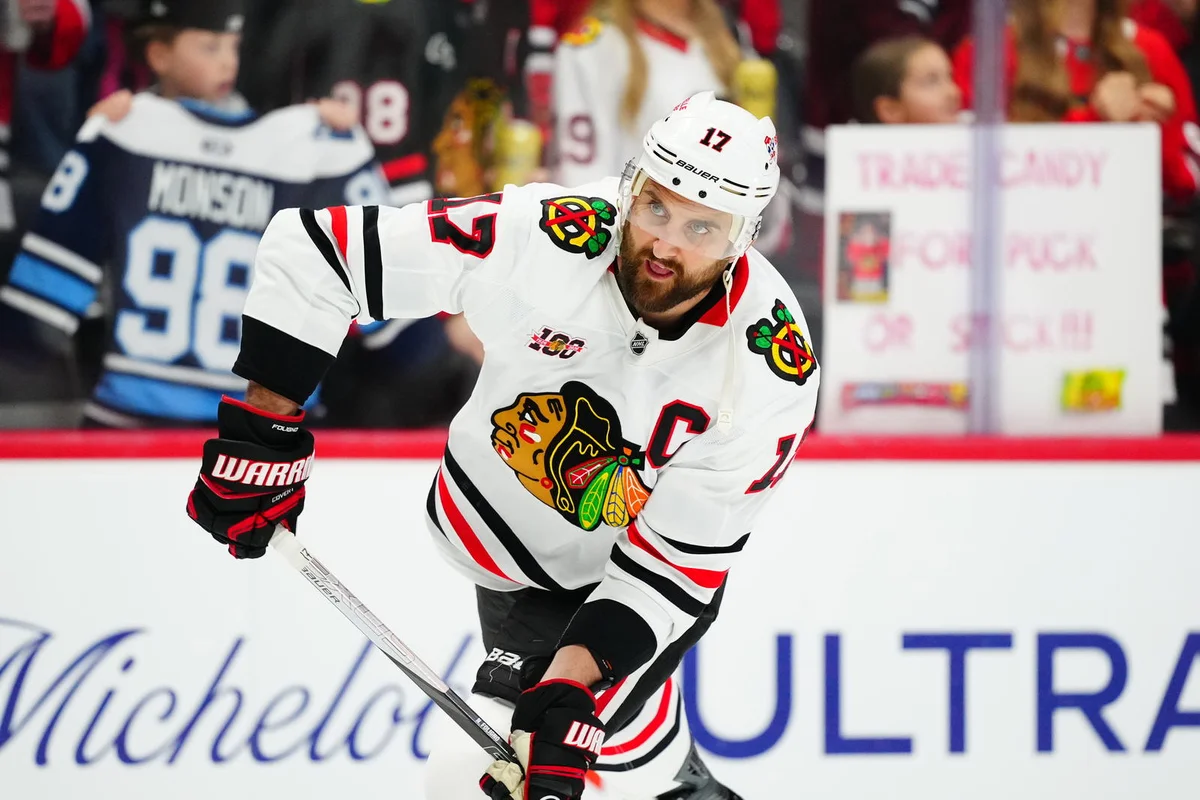
During Sunday’s game in Dallas, Blackhawks rookie Oliver Moore suffered a right knee injury after a collision with the end boards, which removed him from play and worsened Chicago’s shortage of centers. This development came moments after teammate Sam Rinzel scored his third NHL goal in a contest that ultimately ended in a 4-3 overtime defeat to the Dallas Stars. The injury had an immediate effect, disrupting the Hawks’ momentum and leaving the team further shorthanded as they battled on the road.
Game Details Highlight Challenges for Blackhawks
Rinzel celebrated his goal but quickly shifted focus to assist Moore off the ice, signalling the severity of the injury. Chicago gained an early two-goal lead but could not sustain it, as the Stars capitalized in a scrappy, physical game marked by close-range, contested goals. The Hawks’ goalie, Arvid Soderblom, who was starting in place of the ill Spencer Knight, made several tough saves but was beaten on a tip-in by Miro Heiskanen just 22 seconds into overtime.
Head coach Jeff Blashill acknowledged the difficulty of the winning goal, admitting,
“I would just say you’re going to give that [shot] up, and it went in.”
Following the game, Blashill confirmed Moore would miss the upcoming match against the Mammoth but did not disclose further details about the extent of the injury.
Offensive Struggles and Defensive Pressure Undermine Hawks
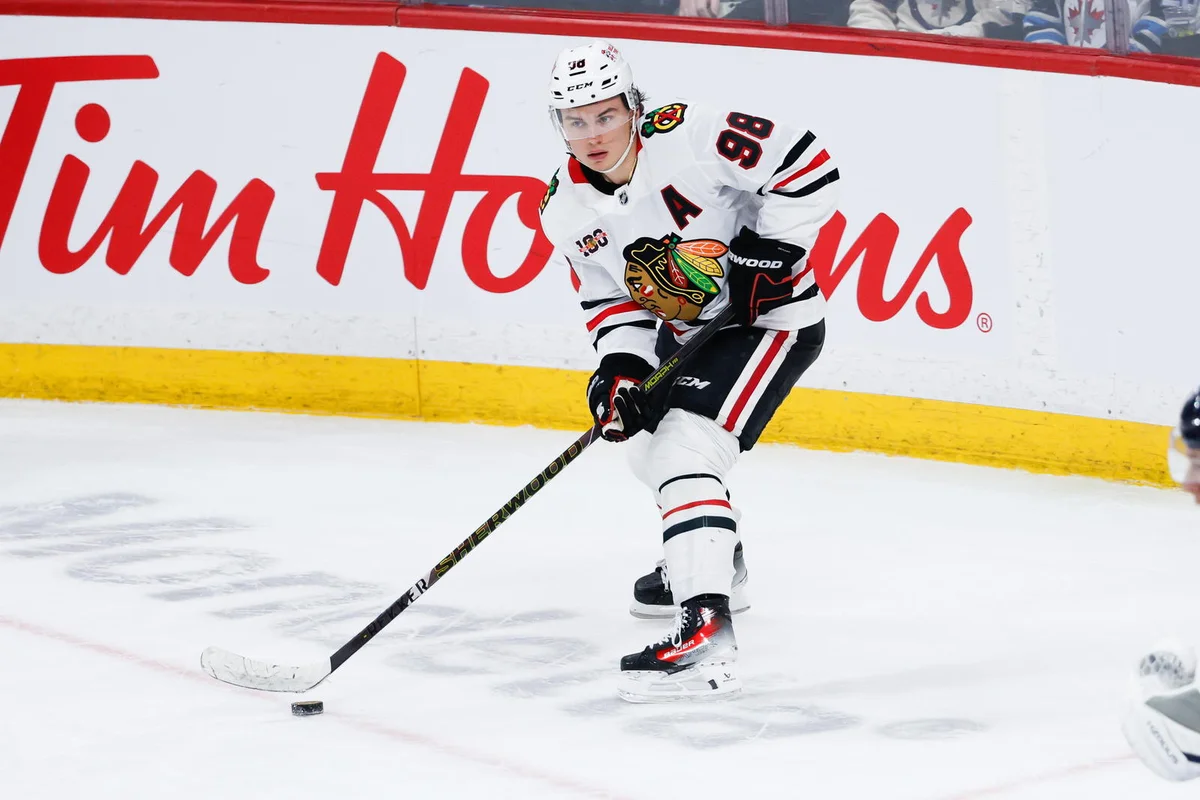
The Stars dominated shots on goal with a 32-17 advantage, maintaining control particularly during a nearly shotless second period for Chicago. Connor Bedard managed to break through late in the game, scoring a rare goal from 54 feet with the goalie pulled, marking the first time this season the Blackhawks scored under those circumstances. However, the team’s overall shot selection and offensive execution left much to be desired, with Blashill pointing to missed opportunities.
“We’ve got to make sure we have a good shooting mentality,”
he said.
Depth Issues at Center Create Strategic Difficulties
Chicago’s problems at center, already strained by prior trades of Jason Dickinson and Nick Foligno, grew more acute with Moore’s exit. The team struggled at faceoffs, converting only 31 of 97 in the past two games, a clear reflection of the shallow depth in that role. Rookie Nick Lardis was called up and given limited ice time on Sunday, but as a winger, he does not provide direct reinforcement to the center position. Lardis expressed relief at returning to a familiar environment, aiming to prove his reliability and consistent two-way play to earn coaches’ trust.
Youth and Inexperience as a Long-Term Strategy
The Blackhawks are intentionally fielding a youthful roster to develop experience, despite short-term growing pains. Most of their recent games, excluding a blowout win against the Mammoth, have been decided by just one goal, but the team has lost five such close contests. Defenseman Matt Grzelcyk, the team’s oldest player at 32, commented on the challenging learning curve but stressed the importance of growth throughout the season.
“It’s not the most comfortable thing always, but you learn from experience,”
Grzelcyk said.
“Hopefully [the kids] can take these next 20 games to heart and build toward the future, for next season, [and] not just wait until the offseason to do that.”
Outlook Amid Ongoing Center Shortage and Team Development
The injury to Oliver Moore intensifies an existing crisis in Chicago’s center depth, complicating strategy and execution for upcoming games. The Blackhawks must navigate these issues while continuing to give young players time to develop in pressure situations. How the team manages Moore’s recovery and addresses the shortage at center will be critical in shaping their performance through the remainder of the season as they aim to transform growing pains into future success.
GOAL: Sam Rinzel rips a shot from the slot for his 3rd goal of the season, though Oliver Moore was shaken up on the play. pic.twitter.com/0dVFNqKMHH
— BHF (@BlackhawksFocus) March 8, 2026
