
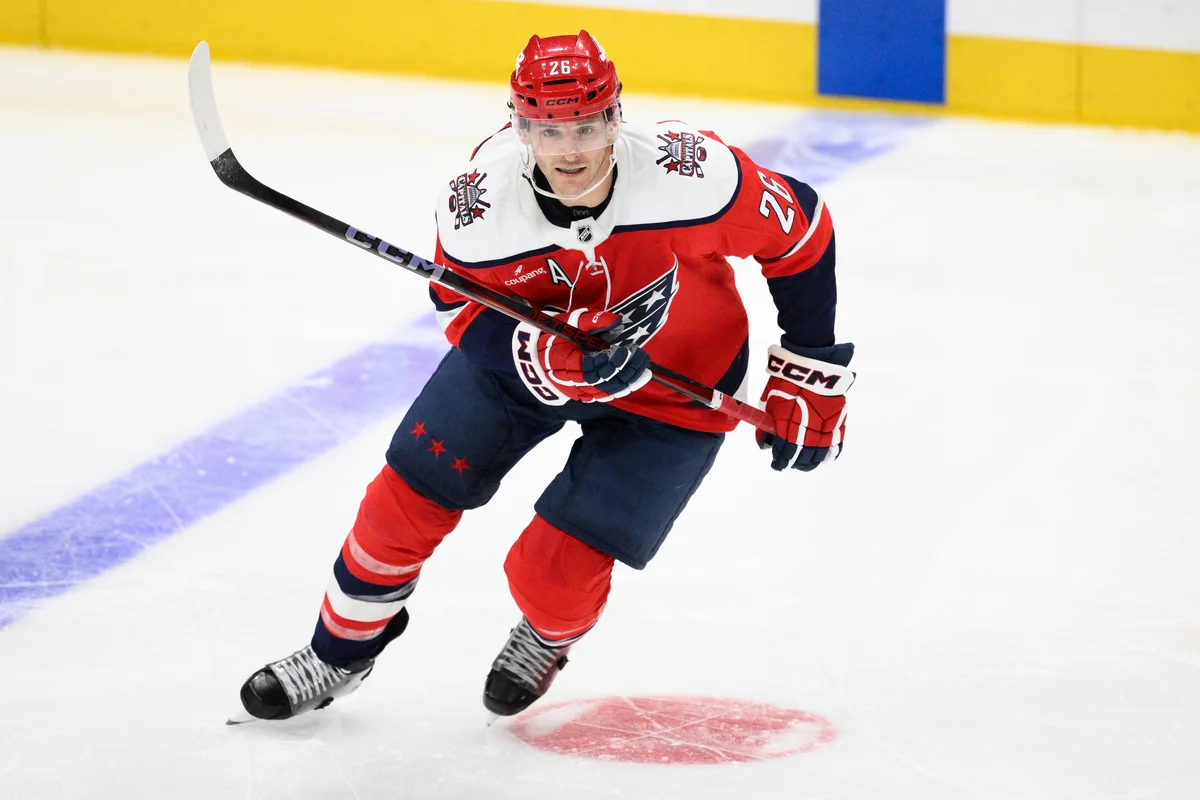
Artemi Panarin, a prominent NHL winger, made a notable decision in the 2026 mid-season trade by declining a move to the Washington Capitals and instead joining the Los Angeles Kings. This pivotal career change occurred after the New York Rangers agreed to trade Panarin on February 4, ending weeks of speculation surrounding his future, as the Rangers had started to reshape their roster and sidelined him in late January.
Panarin waived his full no-movement clause to approve the trade and committed to a new two-year deal with the Kings beginning with the 2026-27 season, valued at $22 million total and an average of $11 million annually. The Rangers retained 50% of the remaining salary from the contract he originally signed in 2019.
Negotiations with Washington Faltered Over Key Player and Contract Terms
During the period when Panarin’s trade prospects were actively discussed, Washington emerged as one of the leading contenders to acquire him. The Capitals sought to strengthen their offense to support captain Alex Ovechkin in the playoff race and reportedly proposed a contract extension of approximately $12 million per year. However, talks reached an impasse when New York requested 21-year-old winger Ryan Leonard in return. The Capitals regarded Leonard as untouchable and declined to include him in the trade package, causing the negotiations with the Rangers to stall.

Panarin’s control over his trade destination, afforded by his no-movement clause, allowed him to weigh options carefully. Former NHL forward Nikita Filatov, who spoke with Panarin on the podcast This is Hockey, Bro. NHL, provided insight into the decision-making process, emphasizing that the choice came down significantly to the appeal of the city and the opportunity presented by Los Angeles.
City Appeal and Team Role Influenced Panarin’s Final Decision
Filatov explained that Panarin favored Los Angeles largely because of the city itself, stating,
“I asked him about this one too. Why he didn’t choose Washington? And honestly, it’s pretty straightforward. And we’ve talked about this. If you compare Washington and Los Angeles as cities, well, obviously, he is picking Los Angeles.”
Filatov also noted that both the Capitals and the Kings were similar in terms of how close they were to contending for the Stanley Cup at that moment, remarking,
“And if you compare Washington and L.A. as Clubs in terms of being contenders for the Stanley Cup right here and now, they are pretty much equally far off. They’re comparably far from being contenders. They’re kind of in the same tier. And that’s pretty much it.”
Additionally, Panarin was persuaded by the role Los Angeles envisioned for him as the team prepared for future changes, especially with veteran players like Andre Kopitar leaving and Drew Doughty nearing retirement. Filatov said,
“He really wanted, like we all said, to play in a great, beautiful city, for a club with history. The franchise, the brand. Plus, a factor that played a big role was that the management and coaches made it very clear to him that with Kopitar leaving the team and Doughty nearing the end of his career, they see Panarin becoming the centerpiece. The face of the entire organisation.”
Implications of Panarin’s Move for NHL Teams and Future Prospects
By selecting the Los Angeles Kings, Panarin not only embraced a new market but also positioned himself as a central figure in a team undergoing significant transition. This trade signifies a major shift in the NHL landscape, particularly as the Kings count on him to lead the franchise moving forward while the Capitals continue their search for offensive reinforcement around Ovechkin. The complex dynamics of salary demands, player value, and team strategy played crucial roles in this high-profile outcome.
As Panarin begins his journey with the Kings, his impact will be closely watched by fans and analysts eager to see if the Kings can evolve into genuine contenders with his contribution. Meanwhile, the Capitals’ trade rejection underscores the delicate balance teams maintain when negotiating talent acquisitions while protecting promising young players like Ryan Leonard.
The full history of the negotiations and all the possible destinations Artemi Panarin could have ended up in straight from the"Panarin Called" segment. Specific options with Canes and Washington. The reasoning behind his final choice and plenty of behind-the-scenes details pic.twitter.com/bDIzssrrPg
— Uggg (@Uggg_uggg) March 6, 2026
